In earlier posts—February 25, 2025, May 20, 2025, and June 21, 2025—I examined proposals by Donald Trump to enlarge his own powers and those of the executive branch. Since then, the president has plowed ahead, issuing a barrage of new executive orders. Hence, this addendum to explore four topics not previously covered: killing alleged drug smugglers, the duty to obey illegal orders, the seizure of Nicolas Maduro, and the activities of ICE (Immigration and Customs Enforcement).
For the most part, I’ll be addressing the legal and constitutional implications of Trump’s actions, not whether they are necessary or desirable from a public policy perspective. My intent is not to resolve these questions, or even to identify all the underlying issues, but rather to raise just a few of the concerns that have to be addressed. To begin …
Can the president summarily kill alleged drug smugglers?
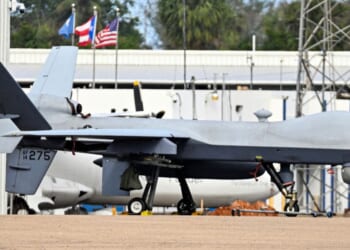
By ordering the military to bomb alleged drug couriers on Venezuelan boats that posed no imminent threat, Trump converted a law enforcement function into wartime conduct, without congressional authorization. Drug smugglers are not enemy combatants, and drug trafficking is not a capital offense. At least one boat was in international waters. Reportedly, it was turned around and heading back to Venezuela. Moreover, the smugglers were supplying US demand, not trying to kill their US customers. And Trump’s supposed target, fentanyl, comes to the United States from Mexico, not South America. Yes, some cocaine comes from Venezuela, but it’s headed mostly to Europe, not the United States.
The administration is authorized to classify foreign drug gangs as terrorist organizations, but the relevant statute does not authorize military force. It bars entry into the United States, bars Americans from providing “material support” to the terrorists, and requires financial institutions to block specified transactions. In the past, suspicious boats have been interdicted, not bombed. The smugglers have provided intelligence, but obviously not if they’re dead.
The Secretaries of State and Defense haven’t released information on who was killed, where the attacks occurred, or what intelligence prompted the operation. More than 20 boats were bombed with substantial fatalities. The Uniform Code of Military Justice bars unauthorized killings, and the Pentagon has recognized that international laws bar murder in peacetime. The persons aboard the boats may have been coerced to be there; they may have been unaware of their cargo, or they may simply have been paid couriers. We don’t know; but we do know that their actions were not punishable by death. Even under wartime rules, the military may not kill civilians who aren’t engaged in hostilities.
Until a week ago, no one had challenged the president, and there was some question as to who would have standing to sue. But several families of deceased couriers have now filed a wrongful death suit against the United States. Meanwhile, Republicans blocked legislation that would require the president to seek authorization from Congress. And Trump’s Office of Legal Counsel advanced the flimsy argument that the War Powers Act doesn’t apply to the Venezuelan drug smugglers because US forces were not in harm’s way. That proposition would permit drone warfare without limit – especially if the victims were defenseless.
Next, on a related topic …
Do soldiers have to obey illegal orders?
In November, six Democrats in Congress released a video urging soldiers not to obey illegal orders. Trump posted on social media, “Seditious behavior, punishable by death… Hang them.” Setting aside Trump’s unhinged language, did he have a point? For starters, unless the six Democrats incited imminent lawless acts, they were protected by the First Amendment. Eighty years ago, at Nuremberg, the classic defense, “I was just following orders,” was rejected. And courts have subsequently applied that principle – e.g., when prosecuting the My Lai massacre in Vietnam. Under the Uniform Code of Military Justice, if a reasonable “man of ordinary sense and understanding” would know that an order is illegal, he has a duty to disobey. That’s called the “manifestly unlawful” test. The duty is strongest when the order is unlawful on its face. For example, shooting a prisoner is plainly illegal. But it’s not illegal to bomb a home suspected of sheltering terrorists, even if collateral damage is possible.
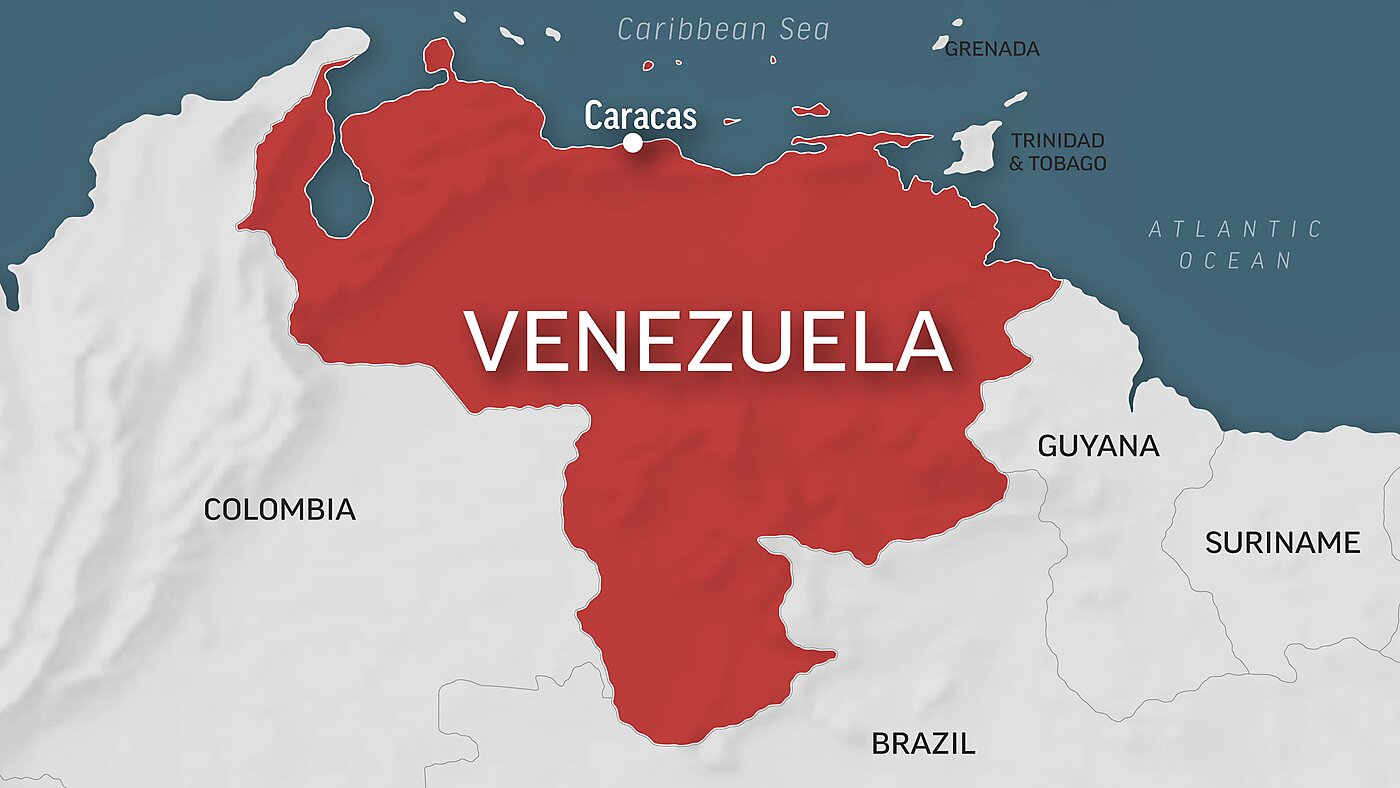
According to the Washington Post, Secretary Hegseth ordered that all alleged smugglers on the first Venezuelan boat be killed. If that’s true, he ignored the Defense Department’s Law of War Manual, which says, “Orders to fire upon the shipwrecked would be clearly illegal.” “It is forbidden to … conduct hostilities on the basis that there shall be no survivors.” Meanwhile, Hegseth fired top military lawyers, saying they’d be “roadblocks” to following Trump’s orders. He also said, we “don’t fight with stupid rules of engagement. We untie the hands of our warfighters to intimidate, demoralize, hunt and kill.” Never mind that there was no threat from two injured Venezuelans clinging to a boat’s wreckage. In short, the orders were “manifestly unlawful”—meaning, from my perspective, they need not have been obeyed.
Continuing with the Venezuelan conflict …
Was the president authorized to seize Nicolas Maduro?
Trump claimed his actions were primarily directed at the enforcement of our drug laws. But that’s wholly inconsistent with his pardon of a Honduran political crony, who was a convicted cocaine kingpin. So, was the overthrow of the Venezuelan government an act of war? Imagine if Maduro had sent special forces to the United States, kidnapped President Trump, and installed a new government. Indisputably, that would be an act of war.
By acting without international legitimacy or congressional authority, Trump violated the Constitution and, in the process, encouraged authoritarians in China, Russia, and elsewhere. Admittedly, there’s ample precedent for commitments of US forces without declaring war. In fact, our forces were quickly withdrawn from Venezuela, and casualties were de minimis. But Congress’s approval to commence a war cannot be based on the length or casualty count of a conflict that’s already in process. Moreover, the U.N. Charter (which is binding on the United States) doesn’t permit using force against a foreign state without its consent, a self-defense rationale, or a Security Council resolution.
Nonetheless, US courts cannot order Trump to obey the U.N. Charter. That question arose when we invaded Panama—which was also illegal under international law—but it didn’t stop us from prosecuting Noriega. Nor will it stop us from prosecuting Maduro. His presence in the United States is what matters, not how he got here. And even if he claims immunity as a head of state, Trump is probably justified in denying that claim because the Venezuelan election was illegitimate.
Stepping back for a moment and taking a broader look: Here are the criteria for a just war, as aggregated from the writings of several scholars: (1) There’s a grave public evil to be redressed. (2) The war is authorized by a legitimate public authority. (3) Our vital interests are at stake. (4) We can achieve success without using force that’s grossly disproportionate. (5) We take measures to avoid collateral damage. (6) We exhaust non-violent alternatives. (7) We have the support of our allies and the public. And (8), we’ve identified our objectives and have an exit strategy.
Now, ask yourself whether our recent actions in Iran and Venezuela, and our threatened actions in Greenland, Columbia, and Cuba meet those criteria. By my count, our Venezuelan invasion met three criteria and failed four, with the question of vital interests up for grabs.
Turning to the domestic front …
Has ICE exceeded its immigration enforcement authority?
After the deaths in Minneapolis of US citizens Renee Good and Alex Pretti, Americans began to question the legality and prudence of Trump’s aggressive immigration policies. Last summer, a California federal judge temporarily blocked ICE from abridging speech and assembly rights in Los Angeles (a First Amendment violation), from detaining people without reasonable suspicion (a Fourth Amendment violation), and from denying Miranda rights to be represented by a lawyer (a potential Fifth Amendment violation). Armed and masked ICE officers in unmarked cars had been confronting anyone at bus stops and other pickup locations who looked Latino, spoke Spanish, or appeared to work as day laborers or car washers. But, in September, the Supreme Court (6–3) issued an emergency order temporarily allowing ICE to proceed, pending further litigation.

Here’s what the Court seemed to say, although it’s hard to know for sure because there was no written majority opinion: First, we accept the government’s representation that ICE had reasonable suspicion for its detentions. Second, profiling may be ok as long as arrests aren’t driven primarily by race. Third, the state didn’t demonstrate that ICE’s intervention was politically motivated.
My two reactions: (1) It’s not surprising that the Court would defer to the president on immigration, which is clearly within the scope of federal executive authority. (2) The Court’s order was temporary, without permanent effect, until the issuance of a decision on the merits.
Meanwhile, more suits are pending, which raises this baseline question: What are the rights of illegal aliens? Here’s a very quick summary: First, they are subject to, and can be superseded by, national security concerns. Of course, that’s also true with respect to the rights of US citizens. Beyond that, illegals have speech and due process rights; they have the right to contact a lawyer, remain silent, refuse unreasonable searches, appeal deportation, ask for asylum, and claim protection under the Convention Against Torture. On the other hand, they can be detained somewhat longer without a warrant, and they have no right to a bond hearing or a government-appointed attorney. Moreover, immigration courts are part of the executive branch; their judges can be fired at will, and the usual criminal protections don’t apply.
On balance, whatever one may think about the wisdom of Trump’s policies, the means by which many of them are implemented exceed legal and constitutional limits.