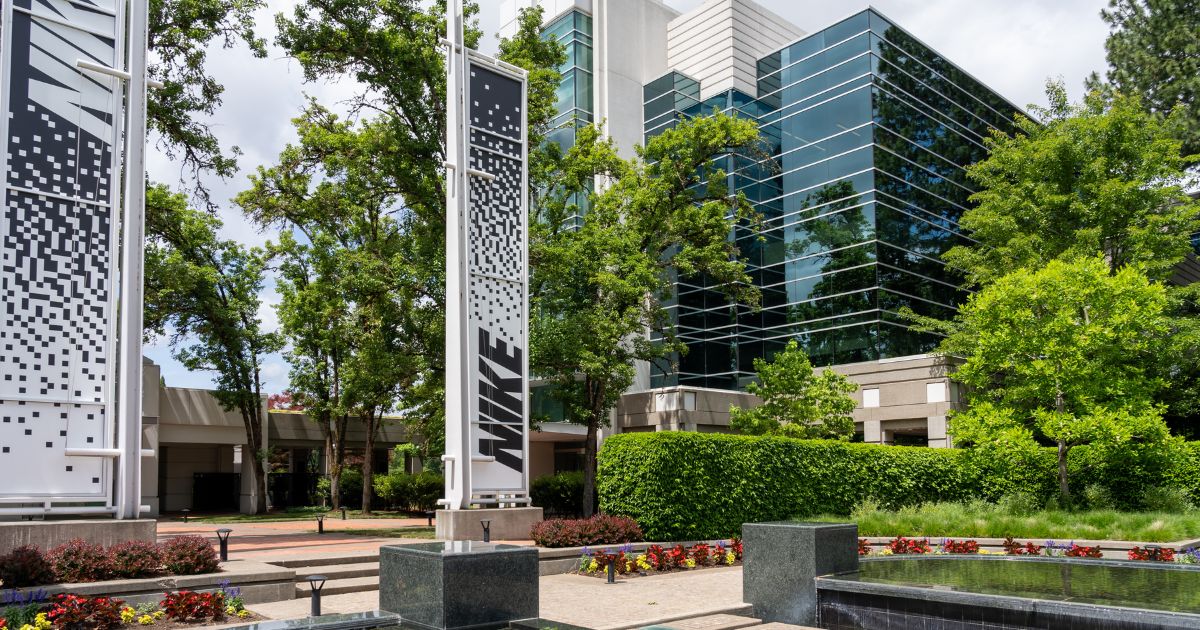
It appears President Donald Trump and his administration is ready to “just do it” when it comes to apparel conglomerate Nike.
And by “it,” we mean investigate Nike for “systemic race discrimination allegations” that negatively impacted white workers.
The U.S. Equal Employment Opportunity Commission announced Wednesday that it was filing a subpoena to compel Nike to release troves of information — including about its Diversity, Equity and Inclusion policies — related to these allegations that Nike discriminated against white workers.
The EEOC is investigating Nike over DEI-related intentional race discrimination.
Specifically, the court filings note that Nike may have engaged in “a pattern or practice of disparate treatment against white employees, applicants and training program participants in hiring, promotion, demotion, or separation decisions, including selection for layoffs; internship programs; and mentoring, leadership development and other career development programs.”
The EEOC’s probe — and the subpoena that came with it — was aimed at digging into those allegations, with some of the document requests reaching back as far as 2018.
Investigators asked for details on how layoff decisions were made, how the company collected and used employees’ race and ethnicity data (including whether that data played any role in executive pay), and records tied to 16 programs that were said to limit mentoring, leadership, or career development opportunities based on race.
When the company did not fully comply with the subpoena, the agency escalated the matter.
Now, the EEOC ultimately decided to go to federal court, filing an enforcement action to compel production of the missing information and push the investigation forward.
“When there are compelling indications, including corporate admissions in extensive public materials, that an employer’s Diversity, Equity, and Inclusion-related programs may violate federal prohibitions against race discrimination or other forms of unlawful discrimination, the EEOC will take all necessary steps—including subpoena enforcement actions—to ensure the opportunity to fully and comprehensively investigate,” EEOC Chair Andrea Lucas said via statement.
She further noted: “Title VII’s prohibition of race-based employment discrimination is colorblind and requires the EEOC to protect employees of all races from unlawful employment practices. Thanks to President Trump’s commitment to enforcing our nation’s civil rights laws, the EEOC has renewed its focus on evenhanded enforcement of Title VII.”
This is exactly why so many Americans have grown cynical about the way “DEI” is sold versus how it’s actually practiced.
You can dress it up in corporate jargon and mission statements, but when policies start sorting people by race for hiring, promotions, pay, or access to opportunities, you’ve crossed a bright moral and legal line.
The country fought for decades to get to a place where the law treats people as individuals rather than as avatars of a racial category. Reversing that principle doesn’t become noble just because it’s wrapped in progressive language.
And let’s be honest about what this does inside a workplace. When employees believe race is a factor in who gets hired, who gets promoted, or who gets cut, trust collapses. Merit becomes suspect, resentment festers, and everyone is encouraged to see their coworkers less as teammates and more as competitors in a zero-sum identity game.
That’s not “equity” by even the most charitable definition of the term. Instead, it’s institutionalized division, and it corrodes the very idea of fairness that civil rights law was meant to protect in the first place.
Worse, the logic behind these policies is fundamentally corrosive: it assumes discrimination can be cured with more discrimination, just pointed in a different direction.
That’s not progress; it’s a recycling of the same ugly idea with a different target. If racism is wrong when it harms black employees, it’s just as wrong when it harms white employees — or anyone else. A truly colorblind system doesn’t keep score by skin color, and it doesn’t need 16 different race-sliced programs to justify itself.
That’s why this case matters beyond Nike, and why the EEOC’s move deserves support.
The law is supposed to be evenhanded, and civil rights are supposed to belong to everyone, not just the politically fashionable victims of the moment.
If the Trump administration is serious about enforcing that principle, cracking down on race-based corporate policies is exactly the right place to start — because racism is still racism, no matter who it’s aimed at or how prettily it’s branded.

Advertise with The Western Journal and reach millions of highly engaged readers, while supporting our work. Advertise Today.