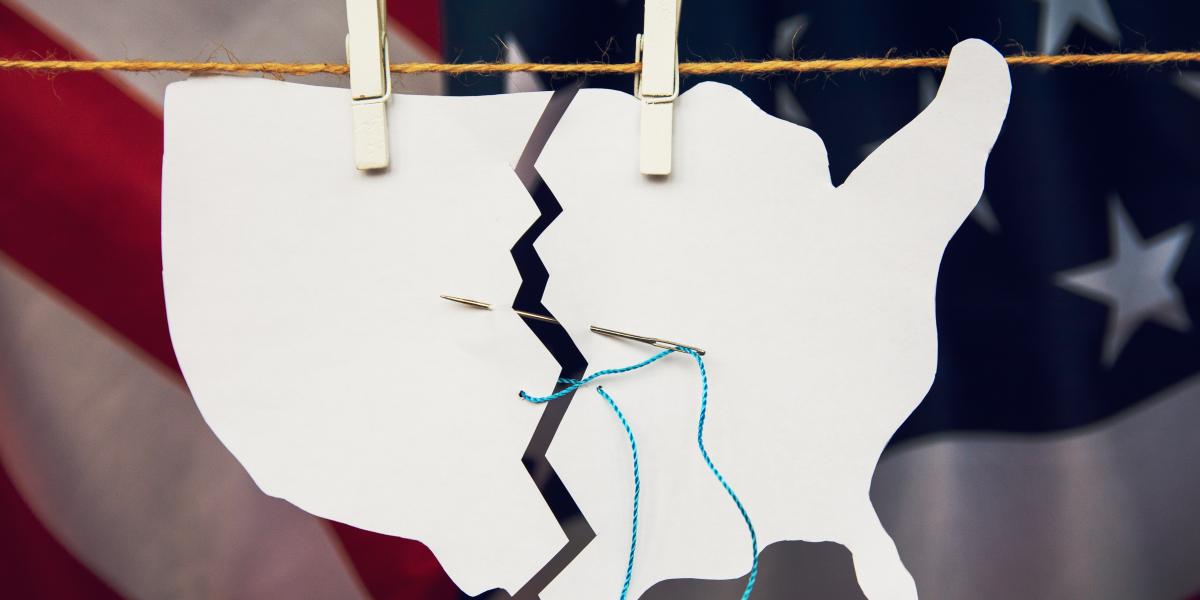
The historian Frank L. Owsley is often described as a “sectional historian,” meaning that he was a Southern historian, born in Alabama, writing from a Southern perspective. Similarly, the historian Clyde Wilson has been described as “a Southern historian” who is “a Southern partisan in the best sense,” namely, one who offers “a Southern perspective on American history – one that yields interesting and important insights.”
As long as the sectional historian openly discloses his standpoint, he is in a unique position to offer insights into history that are lost to those who attempt to explain history from a neutral and impartial outsider perspective. This is not to say that outsiders cannot offer useful insights into history. On the contrary, Owsley praises Northern historians who recognize that simplistic narratives trivializing the grievances of the South are unhelpful in ascertaining the truth. The truth requires as full as possible an understanding of history, without which mankind is doomed to keep repeating the same mistakes.
In his preface to Clyde Wilson’s From Union to Empire, Joseph Stromberg says: “It is the function of history and the role of the historian to help us understand who we are and how we got into the situation in which we find ourselves.” In that light, Stromberg commends Wilson as “noteworthy for being one of a vanishing small group of professional historians who do not regard Southern life and history as one dark, Gothic misfortune after another.” In understanding the ideological conflict between sectionalism and nationalism and the implications for contemporary politics, a time comes when readers sense that there is more to be learned from American history than can be gleaned from the endless sermons about historical slavery which activists, such as the journalists behind the New York Times 1619 project, constantly serve up.
In her biographical essay on the Southern Agrarians, Virginia Rock explains that, as a sectional historian, Owsley was “never too judicious or too impartial.” Rock observed that, “A sectional allegiance, Owsley has maintained, can sometimes result in an analysis that comes closer to the truth.” His aim was to give his readers a deeper understanding of the South rather than simply to offer what establishment historians euphemistically describe as a “nuanced” view of history guaranteed never to rock the academic boat or offend sensitive readers. A historian who discloses his sectional standpoint is much more valuable to the reader than the approach adopted by Marxist historians—who claim that their historical narratives are objective and “nuanced” while brazenly promoting historical materialism and class conflict views of history.
In his essay “The Fundamental Cause of the Civil War: Egocentric Sectionalism,” Owsley explains that there is much insight to be gained from an explicitly sectional perspective and that in truth, given the wide regional variations in a country as large as the United States, it would be difficult to acquire meaningful insight into history by analyzing all regions through a uniform interpretative lens. Owsley’s view was that “the very nature of the American state makes one or the other type of sectionalism inevitable,” in which case the priority should be to ensure that sectionalism is treated in a positive rather than a destructive manner:
…let me hasten to say that there are two types of sectionalism: there is that egocentric, destructive sectionalism where conflict is always irrepressible; and there is that constructive sectionalism where good will prevails – two types as opposite from one another as good is from evil, as the benign is from the malignant.
Within the Southern tradition lies an important vein of limited government and state rights that challenged the centralization of federal power historically championed by New England intellectuals. Owsley saw positive sectionalism in a light very similar to John C. Calhoun’s theory of the concurrent majority—the expression and defense of sectional interests could serve as a check on the centralization of power: “Such provincialism or sectionalism becomes a national asset. It is a brake upon political centralization and possible despotism. It has proven and will prove to be, if properly directed, a powerful force in preserving free institutions.”
Owsley gives three reasons why sectionalism proved to be destructive rather than positive in the years leading up to the civil war. First, he explains that no section should see itself as “the real America” while denouncing the other sections as imposters or traitors. That would defeat the whole point of regionalism, which is intended as a means of cooperation rather than a foundation for mutual denigration. Second, no section should seek to amass to itself more power than is held by the others, as that would defeat the whole point of sectionalism as a balance of power. Third, which Owsley sees as most important, is what he calls “comity of sections.”
In his view, conflict between North and South was triggered by a failure to observe this principle—“That is, the people in one section failed in their language and conduct to respect the dignity and self-respect of the people in the other section.” The point here is not that all sections should come to some false “agreement” which is usually just another way of one section imposing its will on the other. The point is, rather, that all sections should exhibit the mutual respect for their differences on which peaceful co-existence depends.