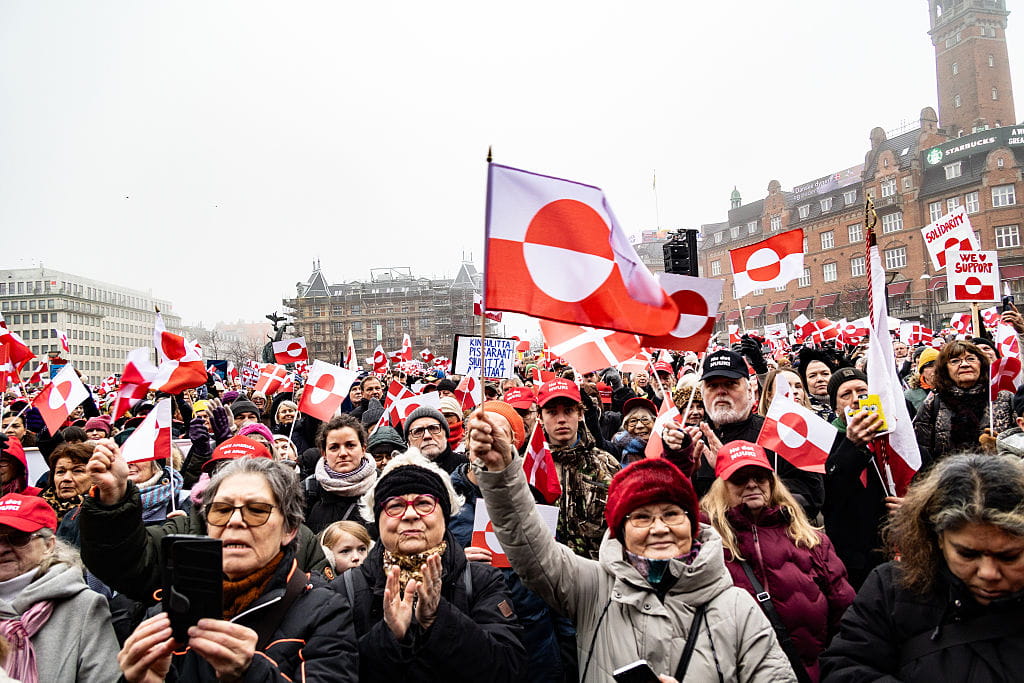
The dollars and cents of a major acquisition.
Will Greenland greet America as a liberator, conqueror, or customer? As Liberty Nation News‘ Michele White reported, President Donald Trump has taken his crusade to purchase the Danish territory to the next step: imposing tariffs on several European countries until the United States concludes its transaction of the Arctic island. The world’s largest economy has done it before, and it may do it again. But can it afford to?
Dollars and Cents of Buying Greenland
While no official proposal has been submitted, experts have estimated that the Trump administration’s purchase of Greenland could cost as much as $700 billion. Reports suggest that the White House has considered paying each Greenland resident up to $100,000, equaling approximately $6 billion.
Proponents would say this is worthwhile considering the national security concerns. Others would argue that Greenland possesses vast natural resources, particularly those the US administration values most: critical minerals, crude oil, and natural gas. No total value has been published, but economic observers project Greenland could be worth trillions of dollars.
This could be a tremendous investment and would fulfill a tenet of the president’s objective to establish a sovereign wealth fund. However, this would have been a valuable proposition if the nation’s capital were not drowning in red ink. The United States is inching toward a $39 trillion national debt, Washington is poised for another $2 trillion budget deficit, and interest payments eat up a quarter of individual income tax revenues.
What would Dave Ramsey say?
At the same time, if Greenland’s resources are utilized, which could be challenging because of harsh Arctic conditions, could it be one of the solutions to America’s ailing financial condition? The country has a history of making historic purchases that have proven fruitful in the future.
Buying and Selling Land
At the start of the 19th century, the United States completed the Louisiana Purchase from France for $15 million. Napoleon needed the money to fight Britain, and the Americans wanted to expand territory to secure critical trade routes and boost their agricultural industry. The deal also put the kibosh on French colonial power on the continent.
In 1867, the United States purchased Alaska from Russia for $7.2 million. Moscow was in financial dire straits, and Washington viewed the region as a strategic economic landscape to bolster trade with Asia. Skeptics initially assessed it as a barren wasteland, but the Klondike Gold Rush and the oil discovery confirmed that it was a profitable transaction for America.
Fifty years later, Americans embarked upon a deal with Denmark to acquire the sugar-rich Virgin Islands. The Danish government viewed it as a land that bled red ink when sugar prices collapsed. The US government saw it as an opportunity: a national security asset, a strategic naval base, and another tool for expanding trade.
Ultimately, a country founded on market principles engaged in dealmaking on a global scale throughout its history. Greenland would be another chapter in the historical record.
Games
A year ago, critics laughed at the president’s suggestion about taking Greenland from the Europeans. One year later, as Trump celebrates the first anniversary of his second term, nobody is laughing. Perhaps buying the territory is all in earnest. Or maybe it is an endeavor to push the 27-member trade bloc to expand military spending for the region. Lo and behold, the European Commission recently approved a plan to increase spending in Greenland by 130% over the next few years, from exploiting its resources to bolstering defense.
Whether the United States buys Greenland or pushes Europe to spend more on defense, President Trump wins either way. It is the Art of the Deal all over again and the start of the Donroe Doctrine.
Liberty Nation does not endorse candidates, campaigns, or legislation, and this presentation is no endorsement.