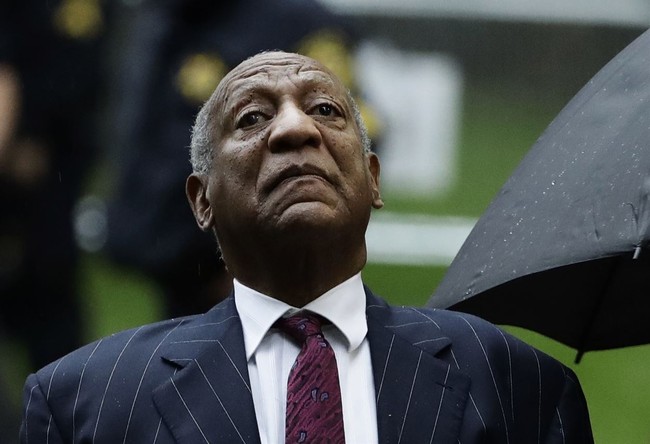
Bill Cosby now faces another civil trial connected to accusations of sexual assault that date back decades. Once known as America’s Dad for a generation, Cosby has spent the last several years in and out of courtrooms.
The latest case moves forward even after the Pennsylvania Supreme Court overturned his 2018 criminal conviction and ordered his release from prison in 2021. Now in his 80s, Cosby continues to deny all allegations against him.
Cosby’s legal history remains tangled and deeply controversial. In 2018, a Pennsylvania jury convicted Cosby on three counts of aggravated indecent assault involving Andrea Constand, a former Temple University employee. He was sentenced by Judge Steven O’Neill to three to ten years in prison.
The Pennsylvania Supreme Court later ruled that Montgomery County DA Kevin Steele should not have pursued criminal charges after an earlier prosecutor had indicated Cosby wouldn’t face prosecution in that case. The court determined the promise created a legal barrier that prosecutors violated when they filed charges years later.
Cosby walked free after serving nearly three years behind bars.
The new civil case reflects a legal avenue that still allows accusers to pursue claims even after the criminal conviction collapsed. Constand continues to maintain that Cosby drugged and assaulted her in 2004. Several other women have filed civil actions in recent years under laws that temporarily reopened statutes of limitations for sexual assault claims.
Courts in several states created those legal windows after intense public pressure from advocacy groups seeking to allow older cases to move forward. Cosby’s legal team argues the renewed lawsuits rely on allegations that can’t be fairly tested decades after the events supposedly occurred.
Dozens of women have publicly accused Bill Cosby of sexual misconduct dating back to the 1960s and 1970s, with allegations describing encounters involving drugs and incapacitation, while others describe coercion or assault.
The sheer number of accusations has shaped public opinion in powerful ways. Many observers look at the total volume of accusations and conclude the pattern must mean something. At the same time, the American legal system doesn’t operate based on accusations; courts require proof that meets strict legal standards before guilt can be declared.
The Cosby case leaves many people wrestling with conflicting instincts; dozens of accusations create a powerful emotional reaction that can’t be ignored. American law holds that guilt must be proven beyond a reasonable doubt in criminal cases.
That standard protects every defendant who stands before a judge or jury. Cosby’s overturned conviction illustrates how fragile high-profile prosecutions can become when legal procedure breaks down. A case that once appeared settled suddenly collapsed because prosecutors crossed a line the court determined they couldn’t cross.
Cosby’s public image once centered on fatherly wisdom, humor, and the groundbreaking success of The Cosby Show. His reputation collapsed almost overnight as accusations spread across the country during the 2010s. The collapse produced a cultural reckoning about celebrity, power, and accountability. Reruns were pulled, colleges revoked honorary degrees, and entertainment institutions distanced themselves from a performer who had once dominated American comedy.
Another trial begins, and the uncertainty returns with it. Some Americans look at the number of accusations and believe the conclusion already writes itself. Others see a criminal conviction that vanished after the Pennsylvania Supreme Court found a fundamental due-process violation. Both realities sit side by side in a kind of Schrödinger’s cat experiment, leaving the country with a case that refuses to cleanly settle into either certainty or closure.
PJ Media VIP members support independent voices that continue asking difficult questions others avoid. Join today and receive 60% off a membership when you use promo code FIGHT.