Welcome to “The New Monroe Doctrine,” where I give you an update on what’s going on in the Western Hemisphere, south of our border, especially as it relates to the United States.
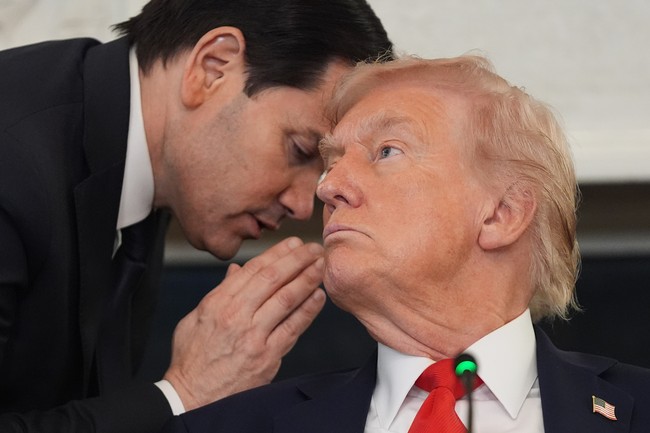
Okay, folks. We’re a month into 2026, and Donald Trump and Marco Rubio have already toppled a narco-terrorist dictator and are helping Venezuela free itself from nearly three decades of Chavismo. Plus, they are well on their way to kicking communism out of Cuba for the first time in nearly 70 years.
If the next eleven months are anything like this, we’re going to have a lot to talk about.
But tonight, I want to focus on something that is going to happen this year beyond those two headline-grabbing situations. I know I sound like a broken record when I say this, but a large portion of the Western Hemisphere is taking a big swing to the right. People are sick of socialism and leftist policies. Countries like Bolivia, Chile, and Honduras have elected United States-aligned and, in some cases, Trump-like candidates in recent months.
What’s driving this? A few things, actually, but crime is the biggest. Gangs and cartels are wreaking havoc. Cocaine production is up. Murder rates are up. Extortion rates are up. Mass migration — yes, this isn’t just a United States thing — is up, and it’s leading to violence and overwhelming infrastructure. People across the Americas are sick of feeling unsafe in their own neighborhoods. They see what Nayib Bukele did for El Salvador, and they want candidates who will do it for them.
As a matter of fact, Chile’s new president-elect, José Antonio Kast, is in El Salvador right now touring CECOT. Several other leaders in the region have been consulting with Bukele on topics like crime and building new prisons in recent months, as well.
Economics is another driving factor, though in some countries, the two intertwine. People are sick of inflation, stagnant economies, and a lack of jobs. Javier Milei is widely seen as the region’s go-to leader on that topic, and he’s doing everything he can to encourage momentum throughout the Americas, not just in Argentina.
There are other issues. Many people are tired of China’s heavy hand in their country and feel they’re losing their sovereignty or selling their souls for shoddy results — projects that never materialize or lag behind, and products and services that are subpar. They’d rather partner with the United States than sit at the feet of the Chinese Communist Party.
With that in mind, four major Latin American countries — Costa Rica, Peru, Colombia, and Brazil — go to the polls this year, and what happens there could have a huge impact on our country, as well as the region’s big push to eradicate socialism.
Costa Rica
Costa Rica is probably the least exciting country on the list because it’s already center-right and already one of our greatest allies. Crime is becoming a big problem there, however, and the current president, Rodrigo Chaves, has begun cracking down. He’s in the midst of building a big CECOT-style prison, and he and Bukele have been partnering up on various initiatives in recent months. Costa Rica is also a great partner to the U.S. on anti-drug trafficking measures.
Costa Rica goes to the polls on Sunday, and the woman who is likely to become the next president is Laura Fernández. She’s a member of Chávez’s party, and his hand-picked choice to take the reins. She’s polling around 39-43%, depending on who you ask, while all of her opponents poll at 10% or less. There are many undecided voters in the country, but many like that she is extremely tough on crime, so that may solidify her win. She must get 40% or more of the vote on Sunday or the country will hold a run-off in April. The winner takes office in May, and I may actually be there around that time, so that could be interesting.
Peru
Admittedly, Peru is the country in Latin America that I think I know the least about politically, so I’m relying heavily on other sources here, but its citizens go to the polls on April 12, with a run-off scheduled for June, and there will probably be a run-off. Why? You have to get 50% of the vote to win, and there are something like 37 candidates.
Things are also a bit volatile there. This will be the country’s ninth president within the past decade. According to the Americas Society/Council of Americas (AS/COA), “The frequent turnover is a result of Peru’s powerful but fragmented Congress, which holds impeachment power and has blocked successive presidential agendas.”
The good news is that the candidates leading at the moment are pretty conservative: Congresswoman Keiko Fujimori is a right-winger and daughter of a former president; Rafael López Aliaga is the mayor of Lima, and AS/COA calls him “a Trump admirer”; and Carlos Álvarez, a comedian and TV host, has painted himself as an outsider. All three seem to be hardliners on crime, and crime seems to be the issue driving voters to the polls. Well, in Peru, voting is mandatory for all adults under the age of 70, so I guess I mean driving their preferences.
Peru is already pretty conservative and a U.S. ally that Trump and Rubio have been courting even harder in recent months, but if someone like Fujimori or López Aliaga wins, I suspect that will strengthen our partnership, especially when it comes to security. There’s also the possibility that Trump could endorse a candidate. Personally, I’m going to have to learn more about it before April, but it generally seems like it’ll stay to the right.
Colombia
Oh, Colombia. Let’s hope your horrific Gustavo Petro experiment is over. Petro — who spent most of this week either protesting ICE or talking about how he does “great things” and is “unforgettable” in bed — only has about seven months left in office.
In its entire history, he’s Colombia’s first — and let’s hope only — left-wing president. Petro’s approval ratings are low. He’s accomplished nothing but a resurgence in crime and probably a record for the most social media posts written by any head of state in history. So it would make sense for Colombians to choose a non-socialist new president on May 31, right?
There’s a strong possibility they will, but it’s still anyone’s guess. Leftist Senator Iván Cepeda currently leads the polls, but Abelardo de la Espriella, a right-wing lawyer who is tough on crime and a big fan of Milei, Bukele, and Trump, is inching toward him. There’s also a huge group of undecided voters who could sway the election one way or another.
What’s happening in Venezuela could also play a role. Colombians have dealt with mass migration from Venezuela, due to Maduro, and now, there are concerns about security as the country goes through its transition away from that era, so that could drive some people to vote for the guy who they feel will keep the country safe.
I’d also like to point out that recent polling suggests that 81% of the country wants a president who will have a good relationship with the United States. To put that into perspective, Petro stood outside in New York City in September and asked our military to form a coup against Trump. That led to a war of words between the two presidents, and it landed Petro on OFAC’s Clinton List. However, after he saw what we did to Nicolás Maduro, he called Trump up and asked to talk. Now, he is supposed to visit the White House next week, and you know I’ll be covering that, assuming he doesn’t get plastered and lost along the way.
Petro aside, Colombia is already a great U.S. ally economically. If the pro-Trump candidate wins, expect a better partner in counternarcotics operations.
Brazil
Brazil is definitely the biggest wild card here. The current left-wing president, Luiz Inácio Lula da Silva, is up for re-election on October 4. He’s the frontrunner with 36-48% of the vote, depending on which poll you read. But it’s not a sure thing just yet.
Flávio Bolsonaro, son of the Trump-aligned ex-president Jair Bolsonaro, is his biggest competition at the moment, and he’s polling 23-33%. That gap is narrowing. Crime and security concerns could give Bolsonaro another future boost, but it’s really too early to tell.
However, if this past weekend is any indication, there’s still a big right-wing movement in the country. Tens of thousands of people gathered in São Paulo this week to demand freedom for Jair, who is currently in prison, along with amnesty for political prisoners. There’s a lot of hope that this movement will grow and back Flávio for president.
Na Paulista ficou bonito também.
Liberdade para Bolsonaro e os presos Políticos pic.twitter.com/mVAHqHiEdn
— Pavão Misterious 🇧🇷 (@misteriouspavao) January 25, 2026
If the younger Bolsonaro somehow pulls this off, this could be one of the biggest things to happen in the hemisphere this year. Brazil is one of our major trading partners, so we’re looking at economic and trade boosts, major security cooperation, and, perhaps most importantly, a big blow to China.
So, on top of what’s going on in Venezuela and what will likely be going on in Cuba soon, these elections are some of the most important events to watch in the Americas this year.
A few other things
There is a lot of other stuff going on — with so much focus on Latin America now, it’s hard to keep up — but here are a few things you may have missed this week.
1. The Trump administration made the decision to put tariffs on goods from any country sending oil to Cuba, leaving the Communist nation with about two-three weeks of oil reserves left to sustain itself. Read more here: Cuba’s Bad Day Just Got a Whole Lot Worse.
2. The Trump administration also opened the skies over Venezuela up to United States airlines for the first time in nearly seven years. It’s a sign that things are moving quickly and going well. Read more here: Sky High: Trump’s Latest Move in Venezuela Signals Opportunity on the Horizon.
3. In case you missed it, Rubio put on a heck of a master class on Venezuela and the Western Hemisphere this week when he testified before the Senate Committee on Foreign Relations. I have lots of quotes and videos here: Western Hemisphere, Baby! Rubio Puts on a Venezuelan Master Class.
4. Could a free Venezuela be Trump’s Berlin Wall moment? María Corina Machado thinks so. I do too. Read more here: Trump’s Berlin Wall Moment?
5. Something that’s not getting much attention is that young people, particularly college students in Venezuela, are standing up to the regime all of a sudden. Literally getting in their faces…they’ve lived their entire lives under socialism, and they are over it. I wrote more about that here: Did Trump Embolden Venezuela’s Sleeping Giant?
6. Speaking of Machado, she met with Rubio this week at the State Department and has been meeting with members of Congress here in the U.S., as well as European leaders via satellite. The MSM still goes out of its way to paint her as unimportant to the current transition in Venezuela, but from what I hear, she’s in regular contact with Rubio and has talked to Trump a few times, and nothing could be further from the truth.
I am very grateful to Secretary of State @SecRubio for the meaningful conversation we had today.
This meeting confirms the priority that President Trump’s administration has assigned to the threats, challenges, and opportunities facing the Americas, and especially Venezuela.…
— María Corina Machado (@MariaCorinaYA) January 29, 2026
7. If you’re looking for an update on Venezuelan political prisoners, I believe 302 have been released now. The regime has also just announced that it’s potentially granting them amnesty, but what actually happens remains to be seen. Delcy Rodríguez spoke with Trump and Rubio yesterday, and all of a sudden, things are moving, so I’m guessing they reminded her that there’s always room for a second wave. As a matter of fact, Rubio said during the hearing on Wednesday that it is not off the table.
There is soooo much other stuff going on, but I’ll stop there. It’s a lot to digest, plus my friend and our managing editor, Chris Queen, gets testy that he has to edit all of this on Friday nights. Just kidding… but I want to leave you with two videos.
The first is a group of young children in Cuba having their own little protest. “We want water,” they chant, because, well, they don’t have access to clean drinking water. Every time I see something like this, it just makes the people “protesting” ICE and whatever else in our country look more pathetic. Go out and find a real problem to solve. They have no idea what it’s truly like to suffer.
🚨| URGENTE: Niños protestan en Cuba junto a sus padres y familias en Las Tunas, pidiendo agua ante el colapso eléctrico en la isla. 🇨🇺 Ni la ONU ha salido a apoyar a estos niños cubanos, solos ante la tiranía comunista. Dale ME GUSTA Y RT porque la dictadura quiere OCULTAR ESTO. pic.twitter.com/Z5E1OR2uyb
— Eduardo Menoni (@eduardomenoni) January 29, 2026
And I’ll leave on a happy — and adorable — note. First, I’m going to confess that I spent 45 minutes this morning trying to determine if this video is real or AI, with mixed results. But even with that caveat, I wanted to post it anyway because it represents the sentiment in Latin America now in a post-Maduro world.
The song this little girl is singing is a real one, though, that was created for an AI video by a Venezuelan music producer, and it has gone viral on social media. Some of the lyrics are: “Where is China? Where is Russia? Why didn’t they act? What’s the excuse? Maduro is in a federal prison, and now I ask myself: Where are the communists?”
At the end, the little girl yells Milei’s famous catchphrase, “Long live freedom, damn it!” and “Long live the freedom of Venezuela!”
🚨🇻🇪🇨🇴🇨🇳🇷🇺 | HAY ESPERANZA: Se volvió viral el video de una niña venezolana cantando “Los comunistas, ¿dónde están?”, una canción que celebra la captura de Maduro y cuestiona a las dictaduras de China, Rusia y aliados. pic.twitter.com/CtdW6uYaJA
— La Derecha Diario Colombia (@DerechaDiarioCO) January 29, 2026
Well, that’s it for me. As I say, Rubio isn’t handing me exclusives… yet, but we’ll see what next week brings.
Drop me an email if there’s something in Latin America or the Caribbean you want to learn more about (the link is in my bio).
Have a good weekend! And if you have people in Costa Rica, tell them to go vote!
The Western Hemisphere has never been hotter, thanks to Trump and Rubio, and 2026 is going to be a huge year. I’ll be covering it every step of the way. Sign up to become a PJ Media VIP so you don’t miss a single article. It’s also a great way to support conservative media and elevate our voices. Best of all, it’s less than $20 for the whole year. Come join us!