OAN Staff Cory Hawkins
5:33 PM – Friday, January 23, 2026
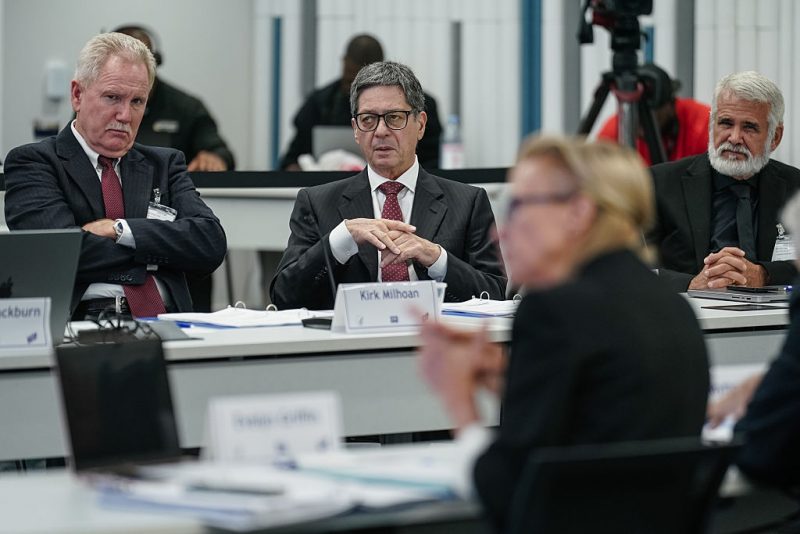
Kirk Milhoan, a pediatric cardiologist and Chair of the CDC’s Advisory Committee on Immunization Practices (ACIP), is calling for a reassessment of long-standing immunization policies, questioning whether the polio vaccine should remain a routine requirement for children in the United States.
The comments reflect a shift in the CDC’s approach to traditional vaccine stances under the influence of Health and Human Services (HHS) Secretary Robert F. Kennedy Jr., who has advocated for a broad re-evaluation of the U.S. vaccine schedule.
Milhoan bases his scrutiny of the polio vaccine on the principle of “individual autonomy” and his assessment that the risk-benefit ratio has changed since the mid-20th century. He further prioritized the role of personal choice in medical decisions.
Milhoan suggests that because U.S. sanitation and hygiene have improved drastically since the 1950s, the risk of domestic polio transmission is now low enough to make the vaccine less “worthwhile.”
He maintains that the decision to vaccinate should be a private conversation between a parent and their doctor, rather than a “heavy-handed” government requirement. In this context, Milhoan has been asked to explain why the ACIP might revise other existing recommendations, such as delaying the age for certain Hepatitis B vaccinations.
“Because we were concerned about mandates, and mandates have really harmed and increased hesitancy,” he added.
The newly organized ACIP has recommended several shifts in protocol, including the removal of thimerosal from influenza vaccines and the use of separate injections for measles, mumps, rubella, and varicella rather than combination shots.
These changes follow a reorganization of the committee’s membership, initiated by the HHS Secretary to address stated concerns regarding pharmaceutical industry influence. Milhoan noted that the panel intends to conduct further reviews of established vaccine guidance for children and pregnant women.
Meanwhile, this new direction has faced opposition from the American Academy of Pediatrics and other global health organizations, such as the World Health Organization (WHO).
The groups claim that departing from universal recommendations could lead to gaps in community immunity, citing the 2022 detection of poliovirus in New York wastewater as “evidence” that modern sanitation is not a substitute for vaccination in preventing outbreaks. While acknowledging that mandates are a point of public debate, they maintain that high vaccination rates have been the primary factor in keeping the U.S. polio-free for decades.
As of late January, official CDC guidance continues to recommend four doses of the inactivated polio vaccine (IPV) for children. However, the recent discourse within the ACIP suggests that a future formal vote could potentially move the polio vaccine from a universal recommendation to an “individual clinical decision.”
Stay informed! Receive breaking news blasts directly to your inbox for free. Subscribe here. https://www.oann.com/alerts
What do YOU think? Click here to jump to the comments!
Sponsored Content Below