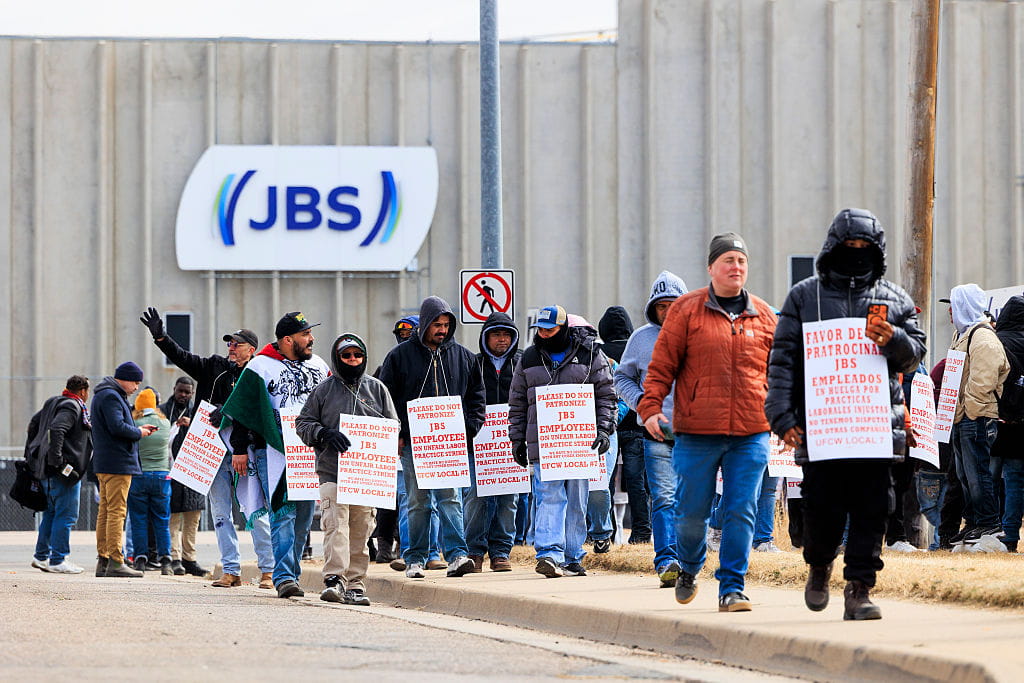
JBS Foods is battling its workers at a Colorado facility over wages and other policies the local union claims are unacceptable. Workers launched a strike against the company on March 16, exposing the economic tensions among corporations, workers, and consumers. The strike also highlights the problems with communism compared to free markets.
The JBS Strike
Headquartered in Brazil, family-owned JBS Foods is the largest meatpacker in the world, overseeing operations in Canada, Australia, Europe, New Zealand, and Mexico in addition to its prominent presence in the US meat-processing market. The company has recently launched production facilities in Georgia, Texas, and Iowa.
JBS reached an agreement with most US workers in a 2025 long-term contract covering about 26,000 workers employed in more than a dozen facilities in the United States. About 3,800 workers rejected that arrangement through their local union at the Greeley, CO, plant, which is now the target of the current strike.
The union claims its workers need higher wages to offset the higher costs of living in Colorado, and the two sides are disputing other policies regarding reimbursement for gloves and other work-related expenses. The Greeley plant is significant because it is one of the largest facilities in America, processing about 5% of all US beef and handling as many as 6,000 cattle daily.
Marxist Labor Battles Free Markets
Polls show an increasing number of Americans support Marxist ideology and policies, particularly young people and the college professors who indoctrinated them. The Greeley dispute exposes the fault lines in communist theory versus economic reality.
In the Marxist mind, of course, the workers are the good guys and JBS is an exploiting evildoer. Yet the same problems that beset rent control and minimum wage attach to the meat-processing industry: Higher wages push up consumer costs and hurt low-income earners and fixed-income retirees. In an unsurprising side effect, the strike has also undermined cattle prices as JBS cut back on livestock purchases, hurting ranchers nationwide.
JBS is often portrayed as a bogeyman, but high beef prices and a shortage of cattle for slaughter have inflicted severe losses on the company in recent years. It reported an operating loss of $64 million in 2024, followed by a $566 million loss for the first nine months of 2025. When processing companies cannot operate at scale due to low animal inventories (the United States has the smallest national cattle herd numbers in 75 years), fixed overheads inflict painful losses.

Higher wages for workers, however much deserved, must either be absorbed as additional business losses or be passed through to consumers already howling about high beef prices. Meat processing is extremely hazardous work, but then so is farming. Picking winners and losers may be a simple ideological choice for Marxist academics and social justice activists, but the real world of economics is a tad more complex.
Unregulated markets can foster abuse. In the past, JBS has been criticized for unfair trade practices and market monopolization that have consolidated meat processing and shuttered smaller competitors. Yet investors (including family-owned entities such as JBS) understandably seek a return on the risk of building massive facilities, or they would keep their money in their pockets and eschew new construction.
If investors don’t receive a return on investment, their businesses fail and go bankrupt. Unionized workers seeking higher wages have been known to push struggling companies into bankruptcy. Workers may not fare well when organized-labor strikes liquidate the target, close the factory, and evaporate all jobs.
Stakeholders v. Steakholders
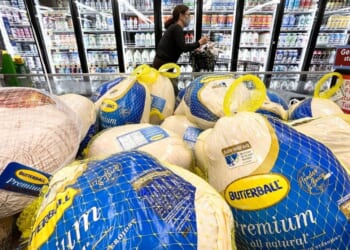
The stakes for JBS and its workers also impact consumer “steakholders.” US beef prices are already at record highs, as consumer demand remains healthy and livestock struggles to rebound. Indeed, livestock inventories have declined for years because ranchers and farmers have closed up due to slender margins and losses. Drought, low cattle prices, and input inflation have pummeled the American farmers who lack the luxury of unionizing. Have any Marxist college students volunteered to shovel manure or worm steers to rescue failing farms?
Markets are beneficial when they increase efficiencies through arbitrage and competition. The stock market initially signaled approval of the strike as JBS stock prices increased; then cattle prices dropped as potential processing interruption threatened to back up supplies. As the Colorado strike unfolds, it is these market pressures (not college professors and Utopian theorists) that will determine when the dispute is resolved and on what terms.