When I was in Israel in January, I spent weeks searching for a particular kind of ice cream. Despite the presence of ice cream freezers in every other shop, I came up empty. I was looking for Turbo, a protein-based ice cream—not because I was on a health kick but because its composition was the brainchild of Deni Avdija, now inarguably Israel’s greatest NBA player ever who just did something no Israeli has done before.
What I liked about the idea behind the ice cream wasn’t its recipe but that Avdija’s partner in the business was Raito, a startup named in tribute to the victim of a terror attack in Tel Aviv, who was a close friend of the CEO’s. It seemed to me quintessentially Israeli: a future-facing product rising from the ashes of past tragedy.
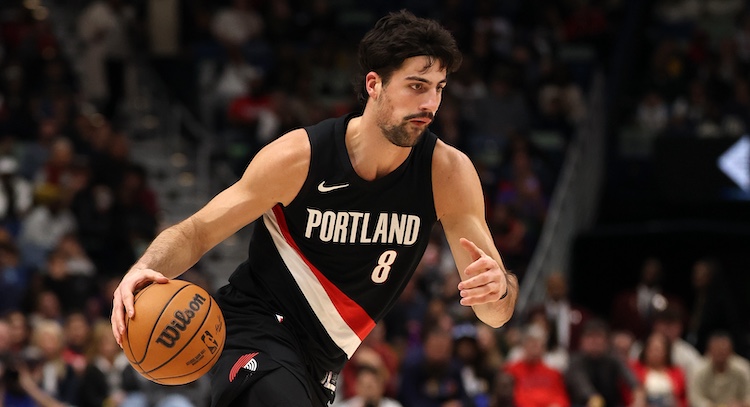
In keeping with the post-October 7 reality in which Israeli cultural exports must be twice as good to half the credit—or any credit at all in some cases—Deni Avdija was named last night to the NBA All-Star Game, earning more fan votes than LeBron James. He is the first Israeli national to make the NBA All Star Game. His numbers are undeniable: Avdija is one of just three players this season to average over 25 points, 7 rebounds, and 6 assists per game. One of the others is three-time league MVP Nikola Jokic.
Avdija’s Israeliness attracts less attention in such a global league than it might otherwise, and he has turned into a superstar at a time when some countries won’t let their artists perform at Eurovision because an Israeli is in the building; at a time when Israeli teams or their fans are barred from competitions “for their own safety”; and at a time when Israeli musicians and movie studios are blacklisted by their peers.
Avdija tries to stay out of the politics of it all, but when asked, he is defiantly patriotic. “This is my country, where I was born, where I grew up,” he told the New York Times recently. “I love my country; there are a lot of great things about my country. But obviously, not everyone is educated and knows what is going on, and that’s what pisses me off. Because if you are educated and know what is going on, it’s fine to say what you think and say who you think is right or wrong. But if you are not educated and you are not part of the Middle East, and you don’t understand how long this goes back and understand the consequences and everything … just don’t say anything.”
Avdija has the makings of a role model for another reason: The more that is asked of him, the better he gets. His parents were both former athletes, and his obvious talent earned him tough love from coaches when he was young. Far from getting special treatment, he received the opposite. “I knew his potential, and because of that, I wanted to make it tough on him,” Oded Shalom, Avdija’s coach on his Maccabi Tel Aviv youth teams, told the Times. “I wanted to make his life hard.”
As a result, Avdija told the paper: “I think I’m able to get through stuff without complaining or feeling sorry for myself. I’ve learned I can’t have any excuses. I’ve had to deal with a lot of stuff in my career: not playing, players being physical with me, no air space … stuff that frustrated me. But I think from a young age, I’ve always had to figure it out on my own. And I think that has made me tough.”
Avdija is only 25, but the head coach of the Portland Trail Blazers insists he’s “just carrying” the team this season, even though he’s been moved to a new position after a teammate’s injury.
Some are already calling him the greatest athlete Israel has ever produced. For now, he’s a bright spot in an unnerving time, running circles around the best competition in the world.