JERUSALEM’S OLD CITY, Israel – Hanukkah celebrates the rededication of the Second Jewish Temple in Jerusalem after the Maccabean Revolt and a victory over their Greek-Syrian oppressors. The revolt allowed the Jewish people to reclaim their Temple and practice their faith. A recent archaeological revelation highlights the Maccabean-Hasmonian era and much more.
Just inside the Jaffa Gate, along Jerusalem’s Old City walls, lies a hidden treasure that the public will be able to see in the years to come.
Archaeologist Amit Re’em of the Israel Antiquities Authority told CBN News, “If you want to know and see the story of ancient Jerusalem, one of the best places to see it is right here in the excavation in the Kishle.”
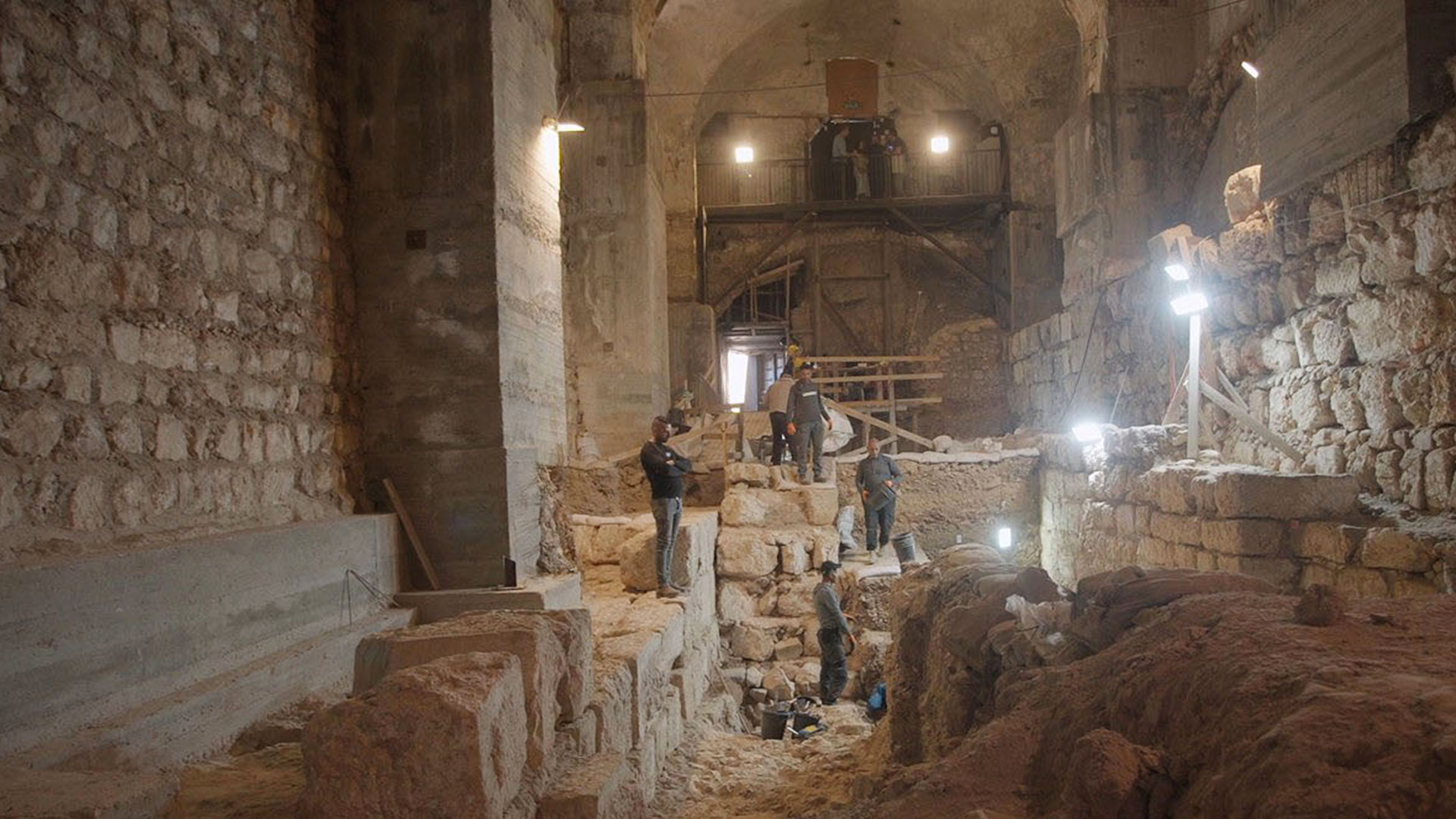
The Kishle, a former military compound and prison in the Tower of David Complex, tells thousands of years of the history of Jerusalem going from the rebirth of the State of Israel in 1948 back to Jewish Temple times.
Re’em noted, “We started to excavate in a British jail that was erected right here, near the Jaffa Gate, in the Kishle, in the 1930s.”
Kishle is a Turkish word from the Ottoman Era, meaning “winter shelter.” Re’em leads the excavation of the site.
As we visited the area, he told us, “This jail was built inside the Ottoman building built in the 1830s. And after we removed the floor of the Ottoman building and we removed the British jail, and we started the archaeological excavation, and we find a kind of industry from the time of the Crusaders, the 12th century CE.”
After digging deeper, they found two massive parallel walls with dirt fill in between them.
“And we think, according to all the archeological data, as evidence, that we are looking at the foundations of the private palace of King Herod from the first century BC,” Re’em revealed.
***Please sign up for CBN Newsletters to ensure you receive the latest news from a distinctly Christian perspective.***
Underneath was the main sewage system of the palace.
According to Re’em, “Our Hasmonean fortification was buried really deep, deep inside this system of the podium and the retaining walls in the foundations of Herod’s palace.”
Re’em has worked in this area from time to time since 1999. The current dig is preparation for the Tower of David Jerusalem Museum’s new Schulich Wing of Archaeology, Art, and Innovation.”
Museum Director Eilat Lieber stated, “In the upcoming couple of years, we are going to add a floating glass floor to this building. We are going to light the antiquities that people can enjoy and see the different layers from ancient Jerusalem.”
Liber explained that they want to use artifacts, projection technology, models, and more to tell the story of those who made history in Jerusalem.
“We just need to bring people in because everything is right here. Look up. You can see the remains from the British jail. You can see the marks that the prisoners left here, with the names, with the map of Israel, with a date,” she told us.
She sees it as a microcosm of the city.
“So you can touch the modern history of the state of Israel up here,” she noted. “And as you go down, you can reach different parts of Jewish history here in Jerusalem.”
“She added, “So this is the uniqueness of the site, and our mission is to bring it to the public, to the world as part of the renovation of the Tower of David Jerusalem Museum.”