Wesley Lowery determined to force his way back into the national discourse
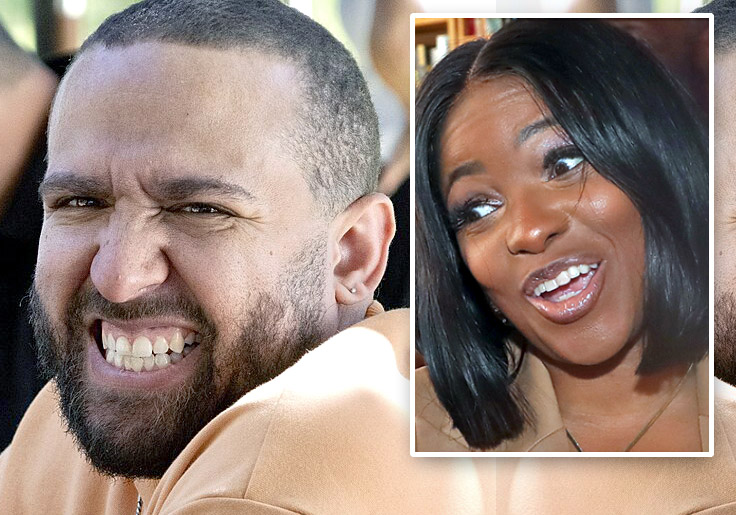
Wesley Lowery has been keeping a low profile since May, when the Columbia Journalism Review published a disturbing report on the accusations of sexual assault that forced his resignation from American University. He seems increasingly eager to insert himself back into the public discourse. On Monday, the disgraced Pulitzer Prize-winner weighed in on Rep. Jasmine Crockett’s (D., Texas) decision to run for U.S. Senate, and reminded Americans why Lowery—before his defenestration earlier this year—was one of the most celebrated journalists in all of media.
“The political class conventional wisdom is far too dismissive of Jasmine Crockett’s chances in Texas,” Lowery wrote on X, without evidence. He went on to accuse Crockett’s critics (of which, sadly, there are many) of being “oblivious to how transparently racist” they sounded.
Lowerey’s comments came after Crockett filed to run in the Democratic primary for U.S. Senate in Texas. The potty-mouthed progressive, regarded by some as a “toxic narcissist,” released a bizarre announcement video in which she sits in silence while audio plays of Donald Trump questioning her political talent. (Trump won Texas by almost 14 percentage points in 2024.) In her announcement speech, Crockett said the Democratic Party’s inability to win statewide races in Texas was due to racism and voter suppression. (She is taking advice from notorious election truther Stacey Abrams.) “What we need is for me to have a bigger voice,” Crockett told supporters, humbly.
Critics on the left and right were quick to point out that Crockett has no discernible interest in public policy. Her political celebrity rests entirely on her propensity to “clap back” at Republicans with profanity and sass. This includes her December 2024 denunciation of Latino Trump voters (of which there are many in Texas) for having a “slave mentality.” Crockett’s tirade was so transparently racist even MSNBC condemned her for it. The congresswoman has occasionally demonstrated a willingness to entertain bold policy proposals, such as the time she recalled hearing a “celebrity” whose name she didn’t remember suggest that “black folk not have to pay taxes.”
Zaid Jilani, a former blogger at the Center for American Progress, reacted to Crockett’s announcement by urging Democrats to “end their fixation with race and gender and evaluate candidates based on their merits instead” because there was nothing “racist” about wanting to win elections as opposed to losing them. (See also: Harris, Kamala.)
Lowery and others disagreed. Some liberal commentators criticized the Atlantic‘s profile of Crockett from earlier this year, which was widely cited after the congresswoman launched her Senate campaign. Critics accused staff writer Elaine Godfrey of racism for mentioning that Crockett wore “acrylic nails painted with the word RESIST,” and for noting that “the lock screen on her phone is a headshot of herself.” The profile included a number of details that did not reflect particularly well on Crockett, who called her office to berate a staffer during an interview, and at one point declared that she was “shutting down the profile and revoking all permissions.”
It was also racist, one presumes, for the Washington Free Beacon to report last month that Crockett failed to disclose her sizable stock portfolio, which includes ownership stakes in several marijuana firms.
Lowery, the disgraced sex pest who won the Pulitzer, has repeatedly denounced “objectivity” in journalism while comparing the Republican Party to the Ku Klux Klan. During his brief stint at CBS News, Lowerey produced a glowing profile of Chesa Boudin, the former San Francisco district attorney whose radical pro-crime policies incited liberals residents of the filth-riddled metropolis to recall him in 2022. Lowery used the occasion of Charlie Kirk’s assassination to promote his latest book, American Whitelash.
The women who accused Lowery of sexually assaulting them described their reluctance to speak out, given his status as a celebrity journalist and racial justice pioneer. “He was the golden boy, held up on this pedestal,” one said. “He was Mr. BLM.” Lowery, who rocketed to stardom after being arrested at a McDonald’s during the Michael Brown riots in Ferguson, Mo., accused the women of lying about being assaulted, and attacked the Columbia Journalism Review for publishing “false insinuations about complicated dynamics.”
It remains to be seen if Lowery’s support for Crockett’s candidacy will help her in the Democratic primary, where she’ll face off against state representative James Talarico, the boy-faced theology student sometimes described as “Beto O’Rourke 2.0.” He is best known for declaring that “God is non-binary” while arguing in support of transgender participation in female sports. He also follows an unusually high number of porn stars and escorts on social media.