When I taught economics at the University of Guelph, I assigned an optional book report on Bureaucracy by Ludwig von Mises, originally published in 1941. The assignment was strictly for bonus points.
Students would often visit me in office hours or after class to talk about the assignment, as many found the analysis in it surprising. But more surprising to me was how often students referred to the book as a “novel.”
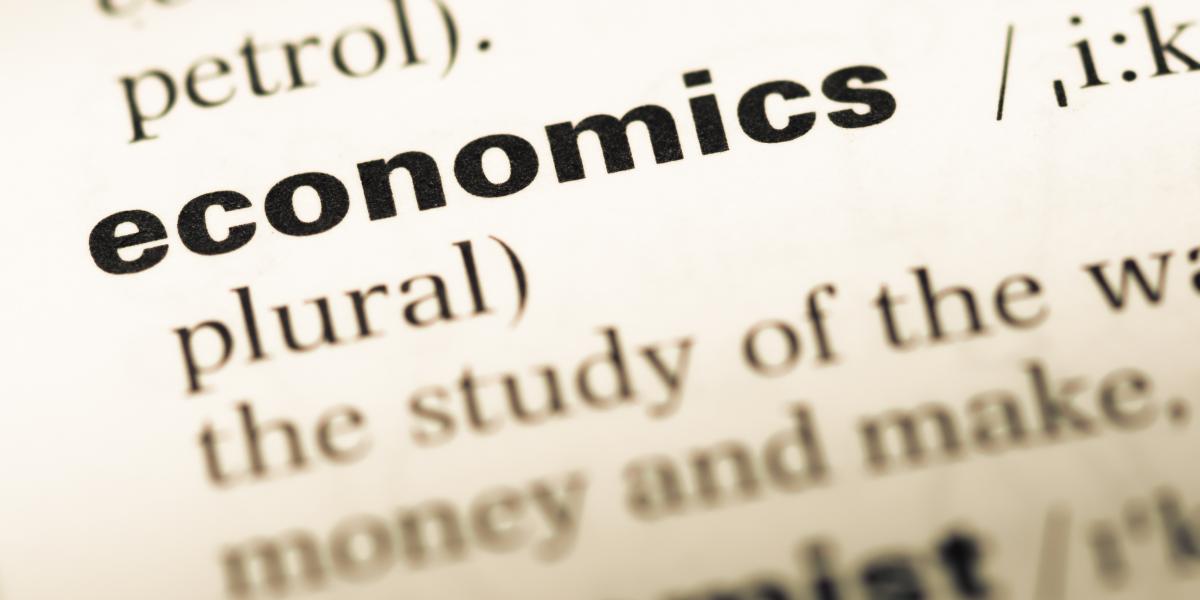
I thought this was funny at the time. But more and more, I’ve seen and heard people ask the question, “What is economics about?” Even worse, I’ve seen some economists attempt to answer this question earnestly.
Knowledge and Intentionality
Knowing what something is “about” requires knowing the intention behind it. English professors and literary critics often claim that a novel is “about” something or other. Often it is a simple plot summary, but sophisticated writers will make it a comment on the themes of the work. The Lord of the Rings could be said to be either about “hobbits, elves, and men on a quest to destroy the One Ring,” or it could said that it’s about “the triumph of good against evil.”
Similarly, people expect economics to be about some kind of theme or object: “the stock market”; or “GDP”; or “the economy” (whatever that is); or “money”; or economics is about “capitalism” or “socialism.”
This is a fundamental mistake. Novels are written by a single author, who has specific intentions when writing a story. It could be evoking a certain feeling, or telling a story using certain tropes, or persuading the readers to believe in God, or a million other things. What’s more is that critics attempt to psychologize the author and the reader when describing what a novel is about.
Economics, as a science, does not have a single author—so it does not have any intentions. Economics is not a novel. It’s not written by a single author. There is no theme or plot, no protagonists or antagonists. Economics does not have any “meanings” that need to be unearthed or deciphered.
Economics is a science. And as a science, it does not “focus” on anything, because only individual authors or readers can focus on things. As a science, economics is an explanation. More specifically, economics explainschoices.
To explain is to connect cause and effect. Many people confuse explanation and description. “Science,” they assert, “describes.” This cannot be true. Description is trivial; a toddler can describe. Naming things is also part of a description; yet dogs and cats recognize their own names and the names of many other household objects. Are toddlers and pets doing science whenever they describe things? Of course not.
Science is more serious than this. Distinguishing between the cause and effect is no small task. Consider a familiar example out of economics: does the earth rotate around the sun, or the other way around? For thousands of years, people from around the world looked at the sun going across the sky and concluded that the sun went around the earth. It took until Copernicus and his advanced mathematics to posit an alternative view point to even become conceivable, yet it still took several more decades for the full theoretical explanation to be developed.
Economics is similar. Economics explains the causes and choices—conscious, intentional actions—people make in different contexts. The choices could be in markets (like how much to pay for a stock, or whether a business should open a new location), or non-market contexts (like Robinson Crusoe alone on an island, the decision-making inside a police station).
Choices and Explanation of Choices
Many sciences and approaches can be said to be “about” choice; only economics explains it. Explaining choices is different than being “about” choices. There are a lot of ways to write “about” choices. Ethics considers whether a choice is good or evil. Politics considers whether a choice supports or opposes a policy. Jurisprudence considers whether a choice is legal or illegal. Medicine considers whether a choice is healthy or unhealthy. Psychology considers whether a choice was a choice at all.
By merely explaining choices, economics remains neutral compared to these other considerations. Whether the contexts or consequences of a choice are good or lawful or healthy are secondary.
In fact, many issues arise when these secondary considerations are taken to be primary, and the actual economics of the issue are ignored. Choosing whether to consider the outcome or judgment before or after the economic analysis may appear arbitrary, but this is a dangerous perspective. Understanding the objective explanation of the choice in question must always precede any judgments about the choice.
Consider another example outside of economics. Cyanide is well known as a deadly poison. Yet imagine that its medical effects were not known. How informative would judgments about choices regarding cyanide be in this case? If people did not even know that cyanide could be harmful, how dangerous could ethical, political, and psychological discussions of the choice to take cyanide or give it to others be?
Economics is similar. Many people do not understand that price controls practically always result in shortages (resulting in long wait times, rationing, or worse) or surpluses (leading to unemployment, overconsumption, or dumping). In either case, black markets will arise, and criminalize otherwise lawful people. The criminality then encourages the worst to rise to the top, challenging the political order.
Economics and Civilization
Understanding economics is the key to preserving civilization. Economics is considered a specialized and technical discipline. As such, few people care to study it. Despite this, virtually every person has deep and vigorous opinions on economic issues. This is because civilization itself is a consequence of choices. An unsurprising outcome, as all members of civilization have an interest in maintaining it as a whole or their position within it.
Mises recognized this problem in Bureaucracy. He ends the book by explaining that every citizen ought to become conversant in economics. Otherwise, they become “easy prey to demagogic swindlers and idiotic quacks. Their gullibility is the most serious menace to the preservation of democracy and to Western civilization.”
Don’t be a menace. Read Mises.