OAN Staff Lillian Mann
6:44 PM – Friday, April 3, 2026
Tehran has allegedly rejected a U.S. proposal for a 48-hour ceasefire and refused to participate in future talks in Islamabad, creating a significant setback to both the broader conflict negotiations and Pakistan’s mediation efforts, according to sources cited by The Wall Street Journal (WSJ).
Qatar has also since stepped down from its prior role as primary mediator, complicating ceasefire efforts even further. The Wall Street Journal noted that Turkey and Egypt were pushing for a solution by attempting to find a common venue for future meetings.
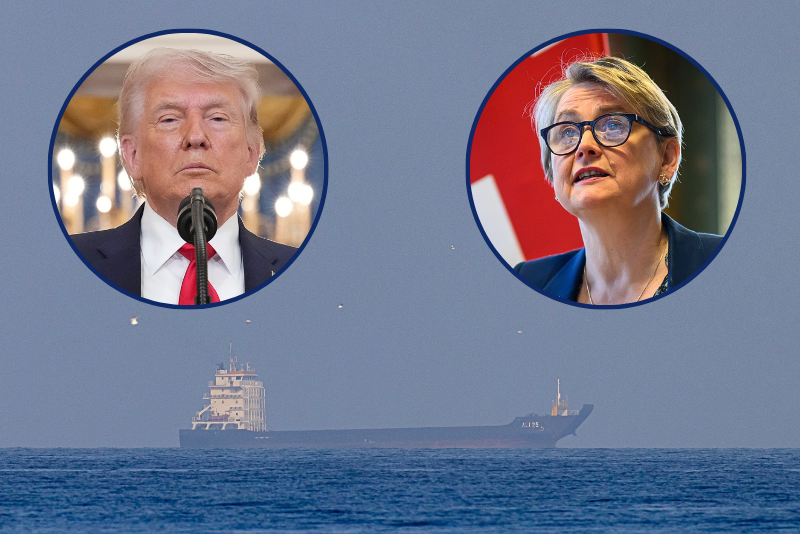
Notably, the U.S. was not present for the meeting, as President Donald Trump said it depended on other nations to “build up some delayed courage” and reopen the Strait. Trump later added that they “should have done it” earlier, encouraging the countries to “go to the Strait and just take it. Protect it. Use it for yourselves.”
“We will consider when the Hormuz Strait is open, free, and clear. Until then, we are blasting Iran into oblivion, back to the Stone Age,” Trump wrote in a social media post.
Tehran reportedly dismissed the latest U.S. demands as “unacceptable,” echoing a rhetorical stance frequently utilized in previous diplomatic standoffs.
Meanwhile, Washington has maintained that its allies have failed to sufficiently support the broader war effort or the security of vital shipping lanes. This pressure has forced the United Kingdom (UK) and other partner nations to seek a strategy for securing the Strait of Hormuz that avoids direct entanglement in the expanding conflict.
In an attempt to build a coalition capable of pressuring Iran to reopen the waterway, UK Foreign Secretary Yvette Cooper convened a virtual international summit on Thursday. While the complete list of participants remains undisclosed, representatives from more than 40 countries joined the session.
During the meeting, Cooper accused Tehran of “hijacking” the international shipping route to “hold the global economy hostage.”
She emphasized that the coalition’s priority remains diplomatic and economic intervention rather than military escalation, stating that the participating nations intend to exhaust every possible coordinated measure to restore transit through the Strait.
“Iran’s closure of the Strait of Hormuz is a direct threat to global prosperity,” Cooper asserted.
She further noted increased pressure from the United Nations (UN) to “bear down on Iran if the Strait remains closed,” adding that efforts are also underway with the International Maritime Organization to ensure the first stranded ships can begin moving again.
The UK secretary went on to emphasized the importance of the Strait to several areas, including trading routes for Gulf nations, energy exports to Asia and fertilizer supplies for farming in Africa.
“To that effect, partners today called for the immediate and unconditional reopening of the Strait and respect for the fundamental principles of freedom of navigation and the law of the sea,” she continued.
Historically, more than 130 ships pass through the Strait each day, carrying roughly a fifth of the world’s oil and gas.
Nonetheless, President Trump has explicitly stated that the United States does not need the oil from the Strait of Hormuz. In several addresses this week, he positioned the U.S. as energy independent, contrasting this with other nations that “desperately depend” on the waterway.
Stay informed! Receive breaking news alerts directly to your inbox for free. Subscribe here. https://www.oann.com/alerts
What do YOU think? Click here to jump to the comments!
Sponsored Content Below