We are on the eve of modern Europe’s most humiliating defeat. Donald Trump is pushing ahead with his peace plan for Ukraine, and there are no Europeans in the room. I am not surprised. The Europeans have no strategy of their own to end the war. All they want is to frustrate the peace process, for they have no agreed strategy to deal with post-war Ukraine.
How did Europe get in a position where it has no strategic choices left? It is quite a reversal. Machiavelli, an Italian, was one of the early architects of modern strategic thinking. Strategic diplomacy reached a peak with Metternich and Talleyrand, the foreign ministers of Austria and France: each played an instrumental role in the Congress of Vienna. This was the ultimate peace conference, one that provided Europe with stability and security for a century. After the Second World War, the diplomatic giants were mostly Americans such as George Marshall, George Kennan and Henry Kissinger.
Beside the chess-board type diplomatic strategist, there is another kind: the long-term strategic actor. The most successful modern example is China. China’s transformation began with the Third Plenum of the 11th Central Committee in 1978, at which Deng Xiaoping launched his economic reforms. It took three or four decades until these reforms translated into geopolitical power. During the transformation, uninformed Western opinion held that China was becoming more Western. The genius of the Chinese project was that it led others to underestimate it.
Both types of strategy, chess-playing and long-term scheming, have their place. Modern Europe has neither. We Europeans used to be good at the long-term stuff, like the Chinese today. The early European Economic Community was an example of a focused strategy to defragment Europe’s splintering economies. The single European market in the Eighties and early Nineties was the most important of the EU’s grand strategic projects, but also its last. To devise the single market, around 200,000 experts gathered in 2,300 technical bodies. They spent half a billion to one billion hours on it. That’s strategy. The euro was more ambitious than the single market, but it was not strategic, because the EU never built upon it. The EU could have turned the euro into a challenger to the US dollar, but that would have required different economic policies, like the introduction of a European sovereign bond.
When strategy fades, action turns first into reaction, and eventually into delusion. The Europeans do not have the foggiest idea of how to help Ukraine defeat Putin on the battlefield, and yet they dream of dragging him in front of the International Criminal Court in the Hague. Their discourse is about the rule of law. They are prosecutor, jury and judge in their imagined trials. They think of themselves as on the right side of the virtue-signalling spectrum.
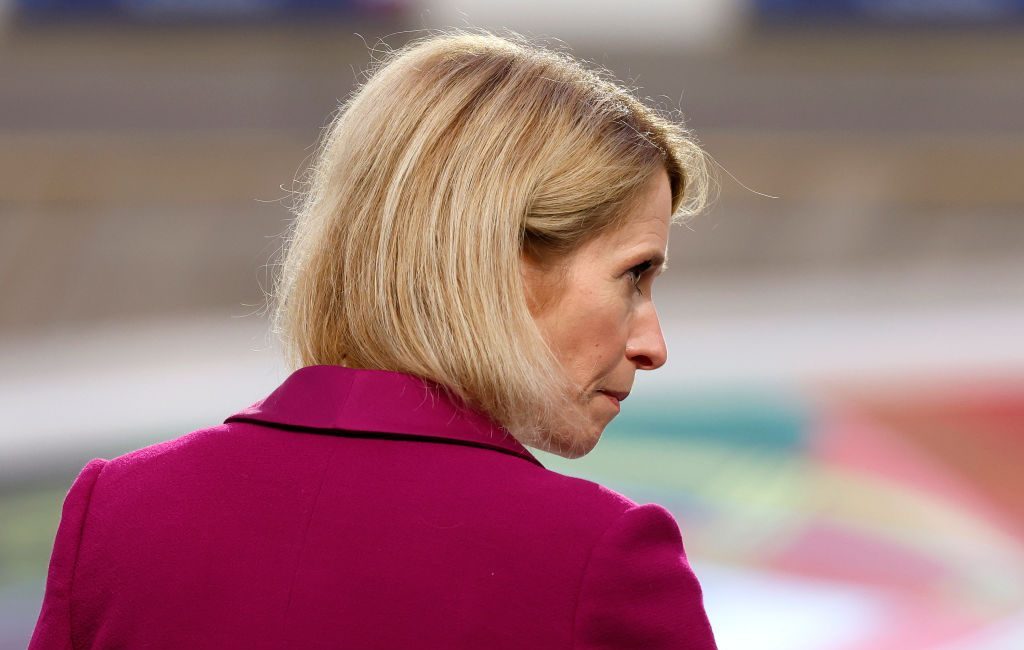
I find it personally painful to watch Kaja Kallas, the EU’s high representative for foreign and security policy, make a fool of herself with variably informed war-mongering discourse that lacks any strategic content. But she is not the only one. I have yet to identify a single official in any national capitals, including London, who has a strategy to end the Ukraine war. There is no one who has done the maths of the military capabilities Ukraine would need, on the logistics of how to produce or procure it. There is also no strategy whatsoever on how to finance it.
“I have yet to identify a single official in any national capitals, including London, who has a strategy to end the Ukraine war.”
Take the French contribution, or lack thereof. Emmanuel Macron is one of the loudest cheerleaders for Ukraine. And yet the French government is allocating a mere $120 million for Ukraine aid in its 2026 budget. Italy and Spain, another two large European countries, also spend little. The Germans and the UK are not in a position to bankroll this operation.
Do European leaders believe their meagre contributions can deliver a Ukrainian victory? A dead giveaway is the overuse of the passive tense. They don’t say: “We will do whatever it takes to defeat Putin.” They do say: “Putin must be defeated”. In other words: We want Ukrainian soldiers to die and American taxpayers to pay. In a rare moment of candour, Ursula von der Leyen, the president of the European Commission, admitted only last week that the European taxpayer is not going to pay for it. Indeed.
When Trump came to power, he demanded that the Europeans increase their defence spending from just under 2% of GDP to 5%. The Europeans agreed immediately. And they are raising the money through debt.
Faced with Trump’ demands, a strategic approach on the part of the Europeans would have been to identify the precise shortcomings of the continent’s defence, like staffing, technology, and military procurement, and compare them to existing capabilities. The second step would have been to devise a strategy to acquire what is needed and start with the development of new technologies. Then you calculate what it costs under different scenarios and make the corresponding budget allocations. At this point we have to remember that ammunition made in Germany costs five times as much as what the Russian army pays for.
Ultimately, defence spending is called spending for a reason. It is not investment. Trying to fund it through debt is self-defeating. Considering that we are talking about a defence strategy, this approach is monumentally stupid. A strategic thinker asks: What sacrifices do we make so we can match Russia’s military capability? A European military planner asks: how do much do we need to borrow to get ahead in the defence spending league tables? Defence spending targets are what you end up with when you have no strategy.
When people don’t have strategies, they often seek refuge in procedures — to a point where the procedures take on a life on their own. Since the war began, the EU has passed 18 packages of sanctions against Russia. The sanctions have been an abject failure, but Brussels refuses to acknowledge it. The officials did not think this through. They are shocked to see that China supported Russia, that sanctioned goods flow through Kazakhstan. Some EU countries still buy Russian oil and gas because they are dependent on it. Partly as a result, the Russian economy has massively outperformed that of Europe since the start of the war. Whereas Europeans are drowning in debt, Russia is an example of fiscal strength. Unwilling to make cuts to their bloated welfare spending, the Europeans have identified the frozen Russian assets as the only way to finance the war. Even with that money, they do not have a strategy to end the war, either through victory or peace. The simple goal is to keep the show on the road. That’s what non-strategic procedural thinking does to you.
It also makes you dependent. By outsourcing all strategic thinking, the Europeans have become dependent on the US for defence and trade. Now they get angry with Trump for excluding them from meetings.
Trump, like the Europeans, is not a strategic actor of the kind I describe, but this is for different reasons. Trump’s politics are transactional. He likes peace because war is bad for business. Trump could not care less about whether Putin broke international law. To the European diplomats who huddle in the antechambers of the peace process, Trump’s attitude is disturbing and alienating.
The Germans, with their special business relationships with Russia, used to be more like Trump. German politicians had their own private channels with Russian counterparts, just as Steve Witkoff, Trump’s envoy, does today. The Germans used to be the largest crowd in the St Petersburg International Economics Forum, Russia’s answer to Davos. Now I am hearing that the hotels in Moscow and St Petersburg are filled with Americans hoping to strike lucrative deals with Russia. It is an ironic twist of fate, for it was the US that tried to force Germany to abandon the Baltic Sea gas pipeline between Russia and Germany. Now there is talk of the Americans injecting themselves as the middleman to sell Russian gas to Germany. You could not make this up.
I expect the Germans will eventually rejoin the Russia-is-open-for-business club. They are distrustful of the French in military affairs, and they don’t have any ambitions for the EU to develop into a global strategic actor. They may want to reconnect with the only vaguely successful independent economic partnership they had this century — with Russia.
There is a lot of literature on the subject of why nations rise and decline. My own favourite is Mancur Olson’s The Rise and Decline of Nations, published in 1982. It explains that Japan and Germany succeeded in the post-war period because the war destroyed political and elite systems. For Olson, decline is preceded by a slowdown in innovation, a focus on redistribution of wealth, and the power of special interest groups. His method perfectly describes not only the rise of Japan and Germany, but also both countries’ subsequent decline. The socio-political factors that Olson describes as the cause of national decline happen to be exactly the same as those that discourage strategic thought and action. Europeans think they can safeguard their welfare and their influence through regulation, procedure, the rule of law, and international institutions. The Europeans dream of a world in which no one acts strategically. This is also a world in which innovation is rare, a world without disruption and creativity.
Like no US president before him, Trump exposes Europe’s delusions, its lack of a strategic thinking and action. This is why the Europeans hate him so much. And to no avail. It promises to be another bad week for Kallas et al.