Environmentalists used to warn that there are ‘too many people on the planet’. In The Population Bomb (1968), the late Paul Ehrlich warned that ‘overpopulation’ would lead to mass starvation by the 1970s, to US life expectancy plummeting to just 42 by the 1980s, and by the year 2000, England would cease to exist. We now know that the world faces the precise opposite challenge – of unprecedented demographic collapse in the face of falling birth rates.
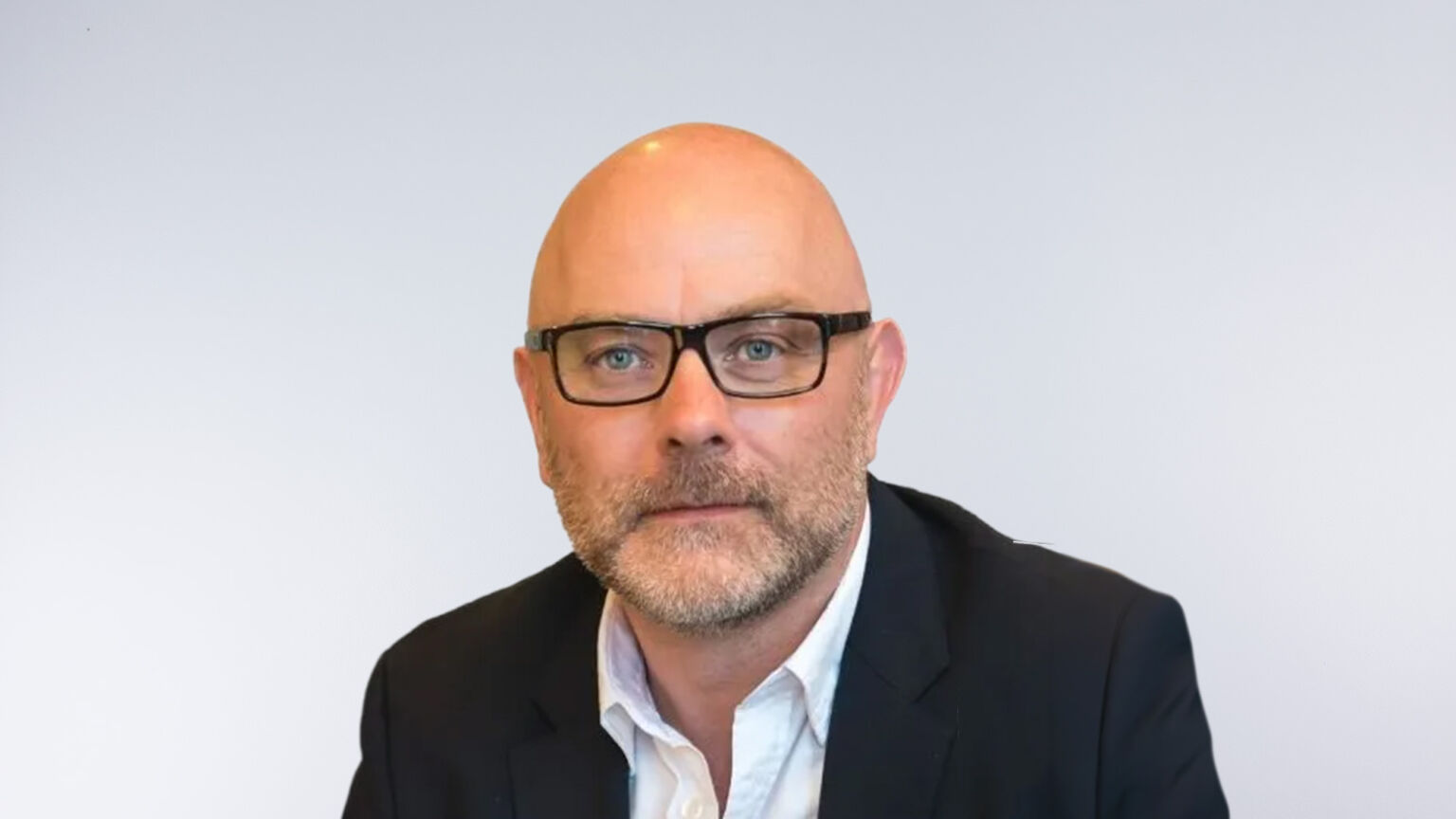
Stephen J Shaw – demographer and director of the documentary Birth Gap – warns that this is the crisis to end all crises, and that we are not nearly prepared for the social, economic and personal ramifications. He recently joined Brendan O’Neill on his podcast, The Brendan O’Neill Show, to discuss the fertility crisis and whether it can be reversed. What follows is an edited excerpt from that conversation. You can watch the full thing here.
Brendan O’Neill: How bad have things got when it comes to collapsing birth rates?
Stephen J Shaw: I couldn’t imagine it being any worse, frankly. I’ve been studying this day and night, almost literally, for 10 years. The sole reason I’ve devoted myself to this topic is that we’re only scratching the surface of why it’s happening. That, for me, puts it in a category of its own.
If you look at the world’s crises: overpopulation (which is really a misnomer today, given the actual population trajectory), nuclear proliferation, environmental issues, those are all things you can sit down and have a conversation about, and there are solutions that could ultimately work for many of those. But birth-rate decline has no known solution. Given that no nation in history has been known to recover from this, it is in a category of one in terms of how bad it is.
O’Neill: How many kids are British people having right now in comparison to the past?
Shaw: Around 50 years ago, mothers were having exactly the same number of children as mothers do today. That’s 50 years of huge cultural shifts, educational shifts, women entering the workforce, multiple governments – and yet mothers, throughout all of that, are still having 2.2, maybe 2.3 children. So mothers are remarkably resilient. We see the same thing in most nations. In the case of the US, we see the number of children mothers are having is actually increasing. So clearly, the issue lies elsewhere.
In 1970, nations like the UK and US had levels of childlessness of less than 10 per cent – five per cent in some cases – and almost everybody was having children. Of course, times changed. It should be said that autonomy is a great thing, and when it comes to those who choose not to have children, I support them without question. They make up about 10 per cent of women, and a similar number for men. But it’s the other 90 per cent I worry about.
In the UK today, based on current fertility rates, we’re heading towards a trajectory where over a third of people will be childless. So even though only 10 per cent actively don’t want children, over 30 per cent will end up without them. This trend has been underway for five decades – though we haven’t been paying attention until now. It takes about two generations before you notice that there aren’t enough children.
I call this phenomenon ‘unplanned childlessness’. It refers to those people who assume they will have children, delay parenthood and then find out, usually in their mid-30s, that various things didn’t align. Perhaps they’re not with the right person, or their partner’s not on the same page, or they split up. This trend is happening globally.
O’Neill: How do you balance recognising the value of autonomy with understanding the social consequences of declining birth rates?
Shaw: You can only be master of your own destiny if you’re fully informed of the realities behind the choices you’re making. That’s the heart of the problem. People don’t know the brevity of the fertility window. We are very good at teaching young people – rightly so – about how to avoid pregnancy at the wrong time. But we stop there. We don’t explain that there isn’t infinite time to make that call, and that this affects both men and women. Men seem to think they’ve got so much longer – which, technically, they do. But if they wait, they’ll still need to find a younger woman who they’re able to have children with.
When I ask British people at what age a childless woman might have a 50 per cent chance of ever becoming a mother, the answers I get are somewhere between 35 and 40. Actually, in the UK, it’s 28. In Japan it’s even lower, at just 26. I haven’t come across a nation where that age is more than 30. So people are really out of tune with biological reality. We simply haven’t given them the facts they need to make fully informed decisions.
When people hear this, I get all sorts of reactions. I hear horrendously sad stories from people who didn’t know and ended up childless for life. They often describe it as grieving the children they never had. So this is not a small topic. This is destroying personal lives, destroying communities, and now, on a national level, it’s having a tumultuous effect on all sorts of socio-economic realities.
O’Neill: You’ve spoken previously about how, if current trends continue, Britain will need half as many neonatal units, nurseries and primary schools in 2028 as it does today. What would that mean for society?
Shaw: In that sense, I look at today as ‘the good old days’. Right now, most of us are accustomed to having schools as part of our neighbourhoods – maybe even the same one we ourselves attended as children. If you take a school away from anywhere, the community around it collapses. Why? Because young parents, or potential parents, move to where there still is a school. And then they move again and again and again. What you’re left with are areas abundant in housing where nobody really wants to live, because there’s no community. The older people who remain there can’t afford to move, because the areas where the younger people are going – where the jobs are, where the schools are – are getting more and more expensive. So the idea that there will be some good things to come out of this, that you’ll be able to have ‘more space’, is wishful thinking. Parts of society will simply be left to decline. Buildings won’t be repaired, streets won’t be maintained and vermin will appear.
I know all this because while I was in the US, I spent seven years living in the suburbs of Detroit, Michigan. Detroit has wonderful people, but the city was built for two million people and it ended up with only 700,000. This was due to the auto industry moving out of the city rather than fertility decline, but it had the same effect – the city was decimated. Now there were areas that were unsafe to go into. The city didn’t even know how many functioning streetlights it had, because it was too dangerous to go out and count them at night. The lesson is that there’s nothing good about living in a shrinking society.
Stephen J Shaw was speaking to Brendan O’Neill. Watch the full episode of The Brendan O’Neill Show here: