Four years on from Russia’s full-scale invasion of Ukraine, and European nations are still struggling to come to terms with what has happened. Four Munich Security Conferences have come and gone in that time, and their only achievement so far has been Europe’s belated recognition that it can no longer rely on the protection of the US.
Yet, judging by their speeches in Munich earlier this month, many European leaders still cling to the remnants of the transatlantic relationship. Their hope is simple: that if Russia were to attack a NATO member, the US would ultimately come to Europe’s defence.
This is a sign of European leaders’ continued refusal to face reality. To deter would-be aggressors, European nations need to develop their own defence capacity. This will require at least a decade of sustained and substantially higher military spending. Even now, this level of investment has not been forthcoming.
Instead, Europe risks finding itself in a position not unlike Ukraine’s in early 2022 – watching as threats accumulate along its periphery. There are economic reasons for this. Most major European economies, including the UK, Italy and France, face fiscal constraints too severe to finance a meaningful surge in defence spending without large-scale borrowing – a step for which there is still no clear political consensus.
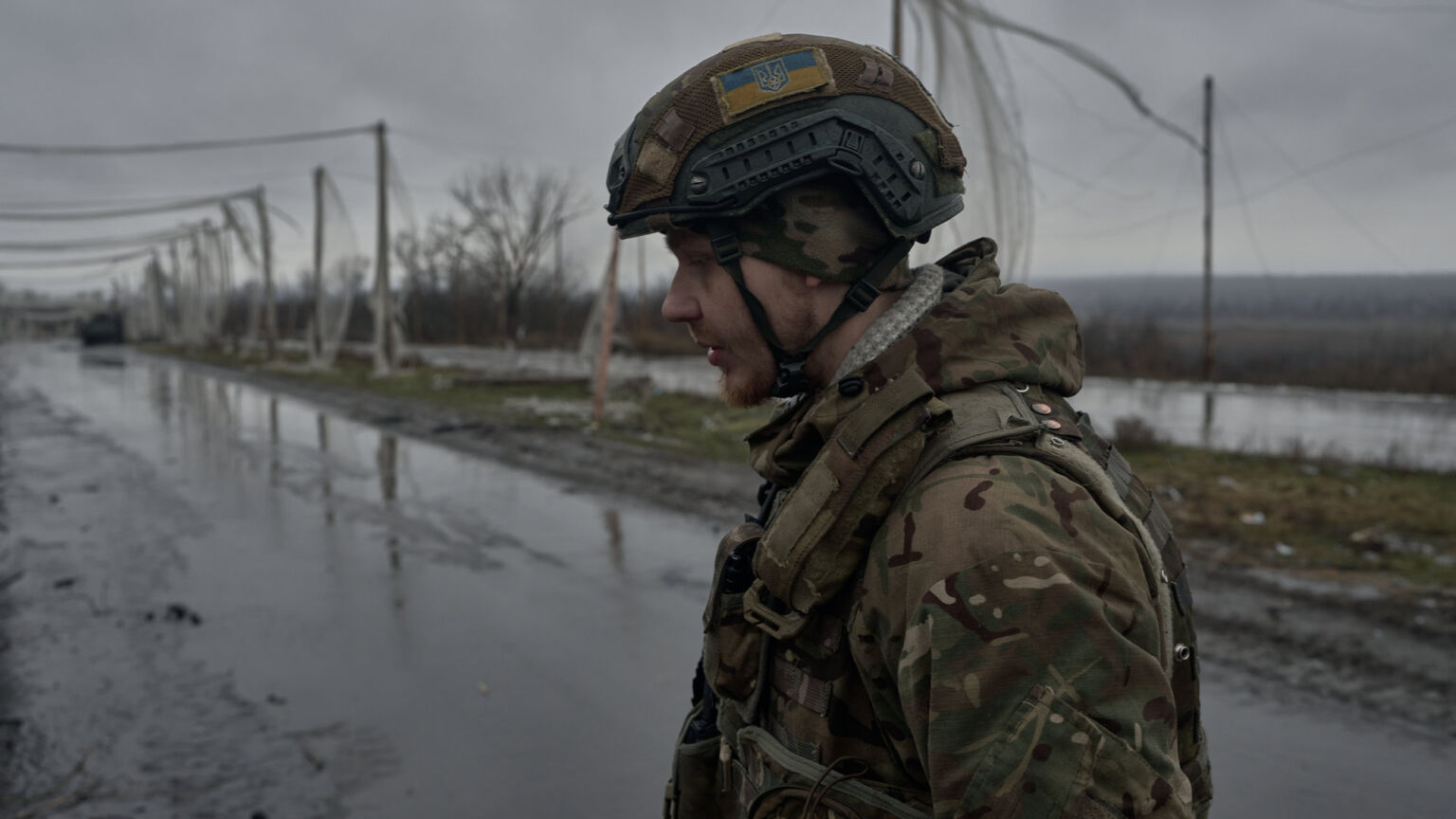
Nevertheless, Europe’s failure to take responsibility for its own defence could prove costly. Ukraine provides a lesson here. On this sombre anniversary, it is worth recalling that in the spring of 2022, it was the mass courage of ordinary citizens that preserved Ukraine’s sovereignty, not military strength. Having now been fighting one of Europe’s longest and most destructive wars since the Second World War, Ukraine has paid an enormous price for its lack of preparedness. It doesn’t just need European funding for its missiles, air-defence systems, fighter jets, tanks, ammunition and spare parts. It needs ever more soldiers to operate them.
The costs of war for Ukraine are huge. One day of war costs Ukraine roughly $175million. And this figure doesn’t include the decline in GDP, infrastructure destruction, loss of income, social benefits or postwar reconstruction.
There are signs that European leaders are finally waking up to their situation. US president Donald Trump’s recent statements have rammed home the message that Europe is on its own when it comes to defence. This is why, at the Munich Security Conference, European Commission president Ursula von der Leyen, and German chancellor Friedrich Merz both spoke of the need to revive the EU’s mutual defence pact instead of NATO’s equivalent, Article 5.
Quite what Europe would be able to call upon in terms of defence capability is unclear. Ukraine at least entered the war with Russia with a corps of generals shaped by nearly a decade of continuous conflict and operational command experience. Much of Europe’s senior military leadership, by contrast, has spent these same years outside high-intensity conventional conflict. One would struggle to identify a serving general with experience commanding formations larger than a brigade in sustained, large-scale combat operations. The wars in Iraq, Afghanistan, Bosnia and Kosovo were expeditionary missions of a very different nature.
As it stands, European nations’ financial support for Ukraine in the war against Russia looks like a way for them to buy time. A chance to put off having to make hard decisions about military capabilities. As EU foreign-policy chief Kaja Kallas diplomatically put it: ‘A very quick path to peace is not beneficial for Ukraine.’ Or for Europe, one might add.
It does look as if European nations are finally rethinking their collective defence mechanisms – there’s even talk of an arrangement along the lines of the 1955 Western European Union Treaty, a defence pact that would involve willing non-EU countries, such as the UK and Norway.
At the same time as Europe is struggling to get its act together, the third round of trilateral peace talks between Ukraine and Russia has just come to an end. Brokered by the US and concluded in Geneva on the 18 February, these talks proved no more promising than the first two rounds. Ukraine’s defence secretary, Rustem Umerov, who led Kyiv’s delegation, wrote on Facebook, ‘We thank our American partners for ensuring that the process continues and moves forward’. It sounded like a standard diplomatic courtesy rather than a sign of tangible progress.
The war in Ukraine is unlikely to end at the negotiating table alone. Whether it concludes on the battlefield, perhaps through exhaustion, or via an externally imposed political settlement, remains uncertain. What is clear, however, is that Europe needs to start standing on its own two feet. Developing the capacity and the will to deter future aggression is vital for Europe’s future security.
Sergey Maidukov is a Ukrainian writer. He is the author of Life on the Run: One Family’s Search for Peace in War-torn Ukraine.