Some years back, a clinical psychologist called Linda Blair claimed that premature and repeated exposure to Christmas music can create anxiety in those who hear it. Apparently, festive songs can, in the modern parlance, “trigger” us to think of all the ghastly things we have to do before the big day — such as shopping, travelling and party planning. Poor us!
For reasons of commerce, the punter is driven to disregard the fact that the shops will be closed for only one whole day, and is instead encouraged to feel that they are prepping for an imminent world war. This, combined with our current tendency to pathologise even the slightest mental pothole, means that magazines are running pieces with the headline “How to help your children manage their festive emotions”, while the rest of us hit the shops to the soundtrack of Mariah Carey in a wild panic. Kiddies have been eating too much chocolate, puking and crying at Christmas for as long as anyone can remember, but now it must be yet another bit of emotional housework on the part of harassed parents striving to make things “perfect”.
“The Christmas Number One spot has been won by her at the merciful closing of a bad year — a spark of sequinned light in the darkness.”
You’d think that with all this going on, listening to a cheery Christmas song might provide a moment of aural respite. After all, as far back as the fourth century, soothing early hymns such as “Jesus Refulsit Omnium” were associated with the celebration. But in Victorian times, secular festive songs which swerved the religious aspect in favour of the comfort and joy motif became more popular. And it was this idea of mindless scoffing and quaffing which has proved a devastatingly rich seam for Christmas popsters ever since; whenever I hear Slade’s 1973 “Merry Xmas Everybody”, I get a rush of gratitude that I was a teenager when such unifying proletarian jollity ruled. Noddy Holder, true to form, wrote the lyrics in one night at his mum’s house in Walsall after an evening out drinking in Wolverhampton; he has referred to the song as “a nice pension plan…it’s like having a hit record every year”, with the annual revenue coming in at around half a million pounds. He would later recall the lyrics as describing a distinctly “family-based”, “very working-class Christmas”, with the closing line “Look to the future now, it’s only just begun”, somewhat counterintuitively influenced by the power cuts which were a side-effect of the miners strike. This was the old optimistic way of thinking, the pull-up-your-socks, the there’ll-be-bluebirds-over-the-white-cliffs-of-Dover-tomorrow-just-you-wait-and-see mindset which we appear to have lost now that “Helping Your Children Manage Their Festive Emotions” is an actual thing.
For despite Slade’s flagrant vulgarity, and the ceaseless leering at some imaginary dolly-bird which was Holder’s resting lech face, Christmas songs were still innocent then — wholesome, even. “Merry Xmas Everybody”, with the granny who maintains initially that “the old songs are the best” before being “up and rock-and-rolling with the rest”, was an heir of “Rockin’ Around The Christmas Tree” and its line “Everyone dancing merrily in the new, old-fashioned way!” In both, the generations, though initially hostile to each others’ cultural choices, eventually come together.
But since then, a corrupting rot has set in. And The X-Factor must shoulder much of the blame, given that, from 2005 to 2010, it seemed as if one of the great Christian festivals was being co-opted for the empire-building purposes of Simon Cowell. One didn’t have to be a big fan of Rage Against the Machine to feel brattishly pleased that “Killing In The Name” was 2009’s Christmas Number One after a public campaign to get it there — thus preventing Joe McElderry’s “The Climb” from reaching the summit. RATM even gave the profits from the single to Shelter, which made their record far more Christmassy than the X-Factor offering which simply laid some Christmas bells over the schmaltzy “my struggle” lyrics.
Another wretched commercial castration of the power of pop music was on hand to take over from The X-Factor; the John Lewis Christmas ad, which specialised in either taking good songs and wringing all the juice out of them with desiccated cover versions or playing the originals of great songs (this year Alison Limerick’s “Where Love Lives”) and thereby mugging one’s memories in the name of turning a Yuletide buck.
It’s censoriousness, though, which has had the most enervating effect on the Christmas record. “Baby, It’s Cold Outside” was condemned as a date-rape duet several years ago, while in 2020 the BBC announced that the audience for “Fairytale Of New York” would be segregated; unexpurgated on Radio 2, for the sassy old, and censored on Radio 1, for the sensitive young, leading me to believe that if rock and roll were invented these days, old people would be out there dancing to it and young people would be burning the records. This year, a live version of the track — often named the nation’s favourite, but never to reach Number One — has been released, prompting the BBC, in best Scrooge mode, to announce a ban on it across all playlists.
Christmas makes us think of not just what we still have left (our loved ones, our sanity) but what we have lost (ditto). The best festive records inspire a wistful nostalgia, summoning our ghosts of Christmas — past and present. My most beloved Christmas music memory is of my mother, who would die in my arms a few years later, and my son Jack, now 10 years a suicide, cuddled up on the sofa at my parents’ home in Bristol, singing along to the Spice Girls “2 Become 1” on Top of the Pops. It should have been comical (the song is about sex, with a few lines dedicated to the importance of wearing a condom) but their voices blended so beautifully together, the old lady and the little boy, both of them so full of hope.
Now the Spice Girls are gone — the last pop group to unite the generations, and probably the only one apart from the Beatles — and so has the sainted George Michael, who died on Christmas Day 2016 of heart disease. His “Last Christmas” was last week’s Number One, and has been the Christmas chart-topper for the last two years, something it never achieved in his lifetime, and very likely prompted in some part by the public tenderness felt for him following posthumous revelations about his immense generosity.
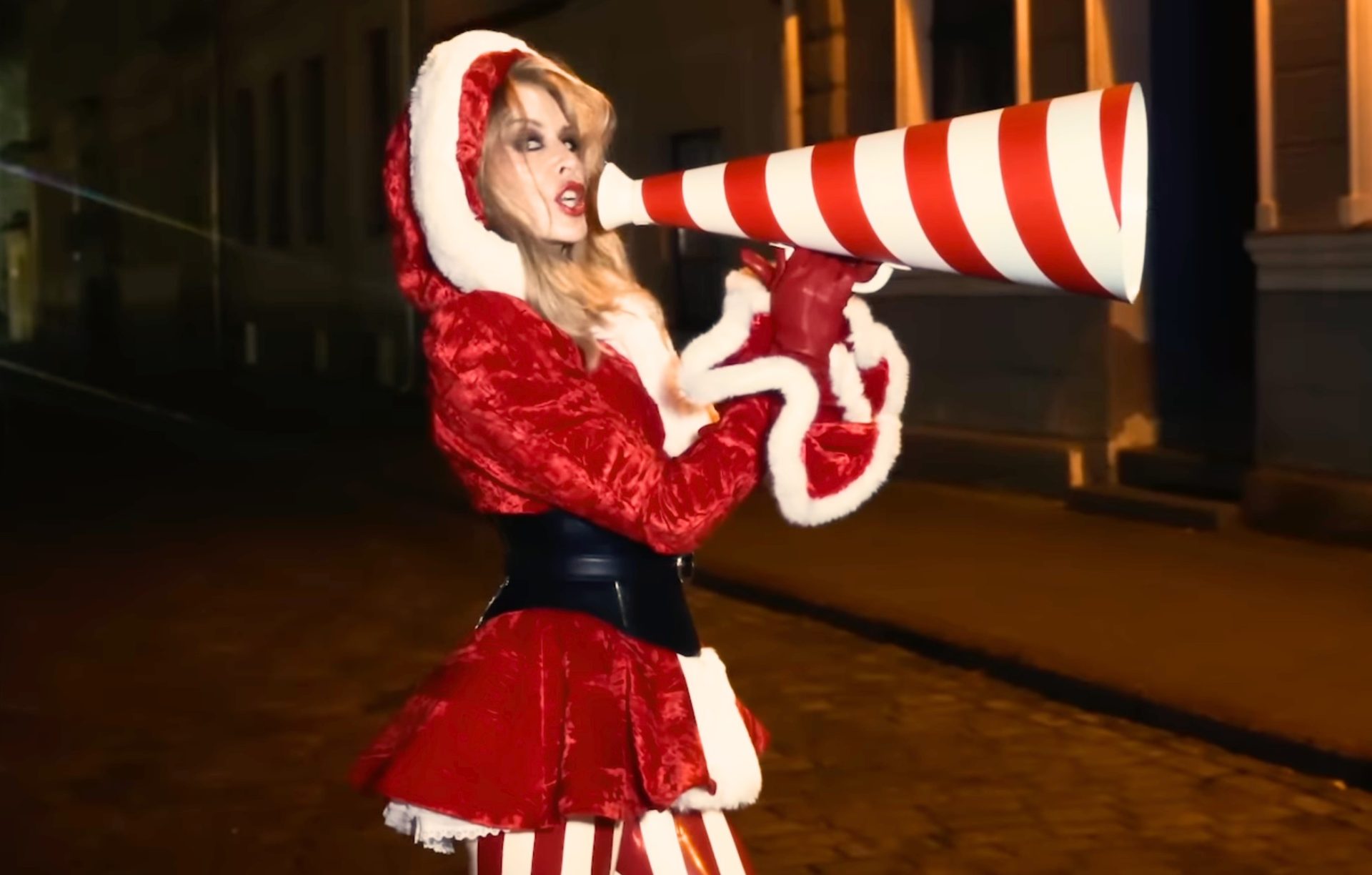
He would have been happy, I feel, to have been toppled by Kylie. Now that the Queen is dead and a weak and divisive monarch is on the throne, it’s possible that Kylie is the nearest thing we have to one who can unite the nation — in every degree of fondness from casual affection to wild adulation. Over the years (she’s 57 now), we have seen her go from ingénue to grande dame with grace and skill — Sex Kitten turned Mother Courage; Show Pony turned Stoic. The Christmas Number One spot has been won by her at the merciful closing of a bad year — a spark of sequinned light in the darkness. So with Kylie-shaped order restored, we may go about the allegedly dreadful slog of shopping, travelling and party planning with a spring in our step however briefly, before we once more resume our lives in a benighted nation where it is always winter and never Christmas.