A new study reveals another risk factor.
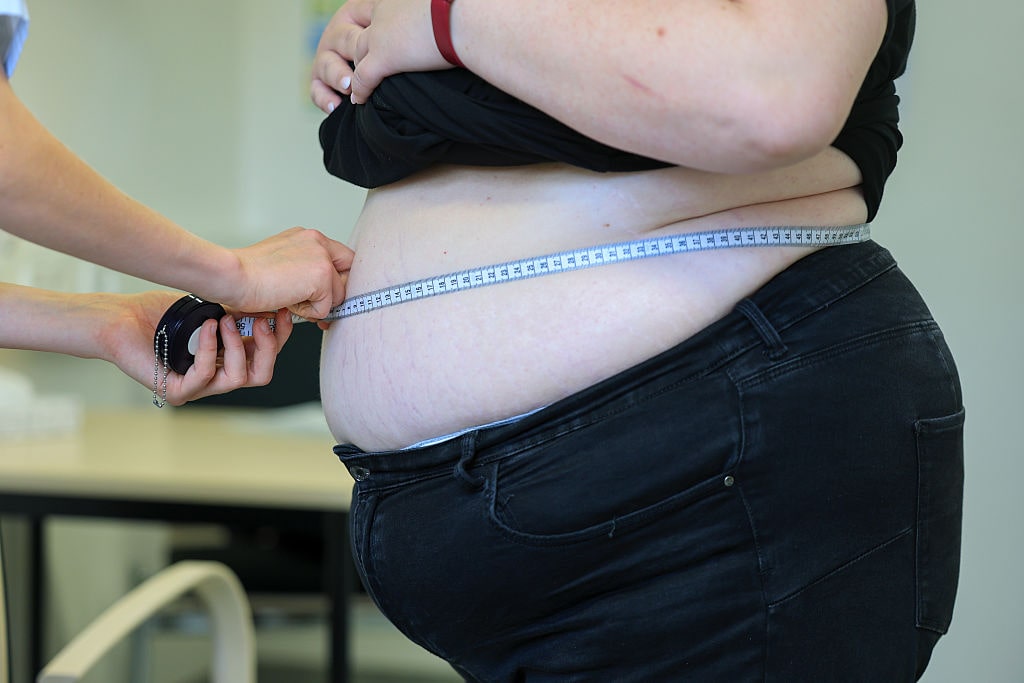
How much does the rest of the body influence what happens in the brain? Most people have heard that age, genetics, and vascular problems can raise the risk of Alzheimer’s, and some even know that conditions like diabetes play a role. But a new study highlights yet another factor that may speed up Alzheimer’s-related changes: obesity. Scientists at Washington University School of Medicine in St. Louis reported that adults with obesity showed Alzheimer’s-related blood markers rising almost twice as quickly as those without obesity, according to findings shared at the annual meeting of the Radiological Society of North America.
Obesity and Alzheimer’s
The study followed 407 adults over five years as part of the Alzheimer’s Disease Neuroimaging Initiative, a major research project that tracks brain scans, blood biomarkers, and cognitive function. Researchers measured changes in blood levels of proteins linked to Alzheimer’s disease, including amyloid and tau. According to the report, Alzheimer’s biomarkers rose about 95% faster in people with obesity compared with those without it.
 “This is the first time we’ve shown the relationship between obesity and Alzheimer’s disease as measured by blood biomarker tests,” said Cyrus Raji, M.D., Ph.D., senior author of the study and a principal investigator in the Neuroimaging Labs Research Center at Mallinckrodt Institute of Radiology at Washington University School of Medicine in St. Louis.
Study author Dr. Soheil Mohammadi told Fox News Digital that the results were clear and surprising. He said: “Our study shows that over a five-year period, obesity is associated with a steady increase in Alzheimer’s-related pathology.” He added: “What surprised me was how sensitive the blood biomarkers were in detecting this relationship. They captured subtle changes even better than brain imaging.”
Doctors who were not part of the study also weighed in on the findings. Dr. Marc Siegel, clinical professor of medicine at NYU Langone and medical analyst for Fox News, said the results fit what is already known about how the body responds to excess weight. “Obesity leads directly to inflammation and insulin resistance, which provoke neuro-inflammation — one of the pillars of Alzheimer’s development,” he explained.
Although the study revealed a strong association between obesity and faster Alzheimer’s biomarker progression, it does not prove that obesity causes Alzheimer’s disease. Observational studies can show patterns, but they don’t confirm cause and effect.
Alzheimer’s disease remains the most common cause of dementia, affecting millions of people in the United States and around the world. While aging is the strongest known risk factor, many studies show that lifestyle, vascular health, and chronic medical conditions also play important roles. Research from the National Institute on Aging outlines long-established risk factors such as hypertension, diabetes, smoking, and physical inactivity.
Obesity is already one of the most widespread health issues in the United States, affecting an estimated 40.3% of adults aged 20 and older, according to the CDC’s National Health and Nutrition Examination Survey for 2021–2023. The prevalence for the 20 to 39 age range is about 35.5%, but the rates climb even higher to about 46.4% 40- to 59-year-olds. These numbers highlight just how common excess weight has become across nearly every segment of the population.
Older Americans face similarly high rates. The CDC reports that about 38.9% of adults aged 60 and older are living with obesity, and roughly 6.6% fall into the severe obesity category. Additional CDC data shows the rates are nearly identical for older men and women.
This new study adds yet another factor to the list of what might influence how Alzheimer’s develops or progresses, but at least obesity is a modifiable condition. It also underscores how closely body health and brain health are connected, even long before symptoms appear.
Liberty Nation does not endorse candidates, campaigns, or legislation, and this presentation is no endorsement.