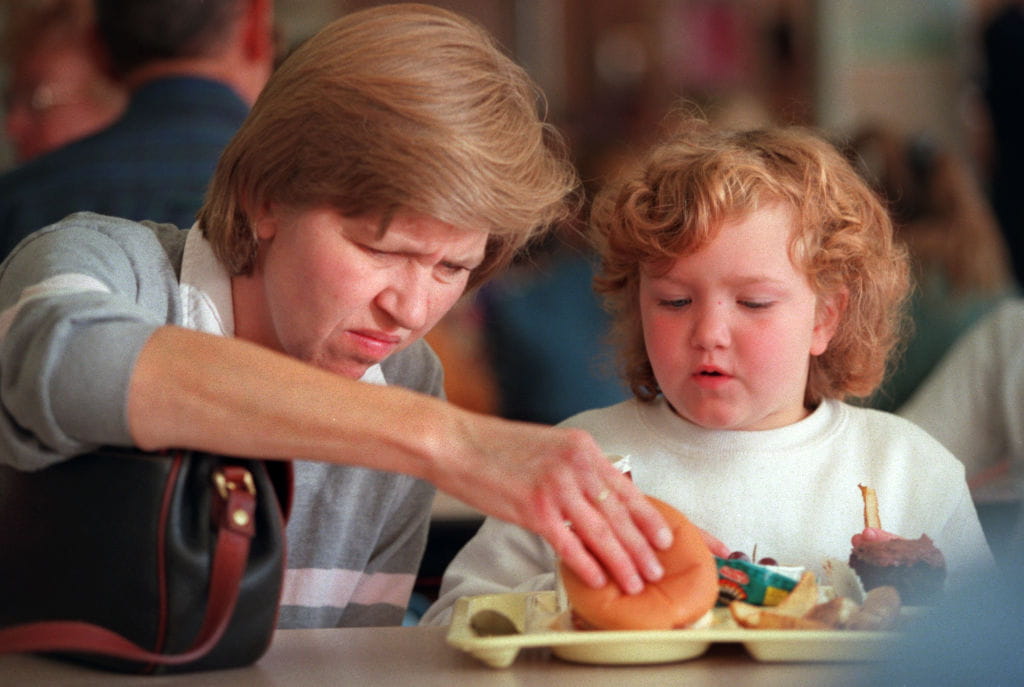
Childhood obesity is serious. Adults may ooh and ahh and pinch chubby cheeks, remarking how cute kids are, but the extra weight can lead to a lifetime of health problems. A recent study showed that obesity in children has reached record highs – but, somehow, it’s on the decline for adults.
Obesity by Age
Children
The Centers for Disease Control and Prevention (CDC) recently released new numbers that show an alarming growth of obesity in kids. During a 1971 to 1974 survey, just 5.2% of US kids and teens between 2 and 19 years old were overweight. Between August 2021 and August 2023, however, the latest survey showed 21.1% of US kids were obese. Adding to that, 7% of kids now live with severe obesity – an issue for just 1% of children 50 years ago.
 “This is exceptionally concerning,” Dr. David Ludwig, co-director of the New Balance Foundation Obesity Prevention Center at Boston Children’s Hospital and professor of nutrition at Harvard School of Public Health, told ABC News. He explained that, in the 1970s, “children were certainly recognized [as obese] but it was the rare child, one in 20. And now we’re looking at one in five children with obesity.”
Adults
From 1988 to 1994, just 22.9% of adults 20 and older were classified as obese. In a 2017-2018 survey, a record 42.4% of adults were obese. The recent CDC study from August 2021 to August 2023, however, found that the number had dipped to 40.3% of adults 20 years and older. It’s still a high percentage, nearly double from the earliest study, but at least the numbers have come down.
“So, we’re seeing, for the first time in decades, that there’s like a leveling off and even maybe a slight decrease and I think this is like challenging a major shift from the long-held expectation that obesity would just be climbing year after year,” said Dr. John Brownstein, an epidemiologist and chief innovation officer at Boston Children’s Hospital and an ABC News contributor.
What Is Causing This Shift?
Why are children getting heavier while adults seem to be getting lighter? Some suggest the availability of more healthy information and policies is the reason behind adults losing weight, but Brownstein told ABC News that some of this might be attributed to prescription drugs such as GLP-1 agonists. “I do think the advent of the GLP-1s are absolutely playing a role. At that point in 2023, they weren’t as widespread as they are today. So, we expect that these factors could play even more significant role in more recent times.”
But what about the children? Dr. Justin Ryder, an associate professor of surgery and pediatrics at Northwestern Feinberg School of Medicine, explained his thoughts to ABC News on how to help the childhood obesity problem. For kids 2-5 years old, a lifestyle change, such as healthier eating, is what he recommends. For the 6-to-11-year-old group, he adds that some medications might be helpful. And for children above 12, he not only recommends medications, but even suggests bariatric surgery as an option.
“I think the only way we’re going to see a downward trend in that number is if we take that adolescent group of 12-to 19-year-olds and actually start to apply the clinical practice guidelines and treat those kids seriously, offering them medications,” Ryder said.
Not everyone agrees that giving kids medications to lose weight is a good idea.
Dan M. Cooper, MD, is the lead author of “Unintended Consequences of Glucagon-like Peptide-1 Receptor Agonists Medication in Children and Adolescents – A Call to Action,” which was published in the Journal of Clinical and Translational Science. He said: “Our major concern is the unbalance and inappropriate reductions in calorie or energy intake associated with these weight-loss drugs. Unlike in adults, children and adolescents need energy and sufficient calories — not only for physical activity, but for growth and development.”
Some experts have warned that giving adolescents GLP-1s can stunt their growth and have other effects that may not show up for years down the road.
The Declining State of Children’s Health
A study published in the Journal of the American Medical Association (JAMA) demonstrated the severity of the decline in children’s health. Dr. Christopher Forrest, one of the study’s authors, said: “The surprising part of the study wasn’t with any statistic; it was that there’s 170 indicators, eight data sources, all showing the same thing: a generalized decline in kids’ health.”
Here are just a couple of highlights of the study:
- An American child in 2023 was 15% to 20% more likely than an American child in 2011 to have a chronic condition such as anxiety, depression, or sleep apnea, according to data reported by parents and doctors.
- Kids in the US were around 1.8 times more likely to die than kids in other high-income countries from 2007 to 2022. Premature birth and sudden unexpected death were much higher among US infants, and firearm-related incidents and motor vehicle crashes were much more common among 1 to 19-year-old American kids than those of the same age in other countries.
“Kids are the canaries in the coal mine,” Forrest said. “When kids’ health changes, it’s because they’re at increased vulnerability, and it reflects what’s happening in society at large.”
Children’s health has always been a priority, but somehow their well-being keeps slipping. Obesity is a growing concern that no one seems to be able to get a handle on. Steven Gortmaker, emeritus professor at the Harvard T.H. Chan School of Public Health, said of America, “We’re one of the world leaders, watching obesity grow.”

The Harvard Gazette explained: “All along, the broad outlines of the problem have been apparent: America’s kids eat more and move less than earlier generations. It has also been apparent, however, that basic formulation is misleadingly simple. The issues are complex and thorny and touch on lifestyle, culture, genetics, economy, and more.”
There are a lot of potential contributors to childhood obesity, including diets rich in sugars and ultra-processed foods, low activity levels, and medications. Obesity can even begin before birth. A Kaiser Permanente study, published in Pediatric Obesity, “found that pre-pregnancy obesity and excessive weight gain during pregnancy were associated with an increased risk of the child becoming overweight at age 2.”
The rise of childhood obesity revealed in the CDC’s new data is troubling – it represents a trend that today’s record-high childhood obesity rates may become tomorrow’s record-high adult health problems. Still, the fact that adult obesity seems to be on the decline, at least for now, offers a glimmer of hope.