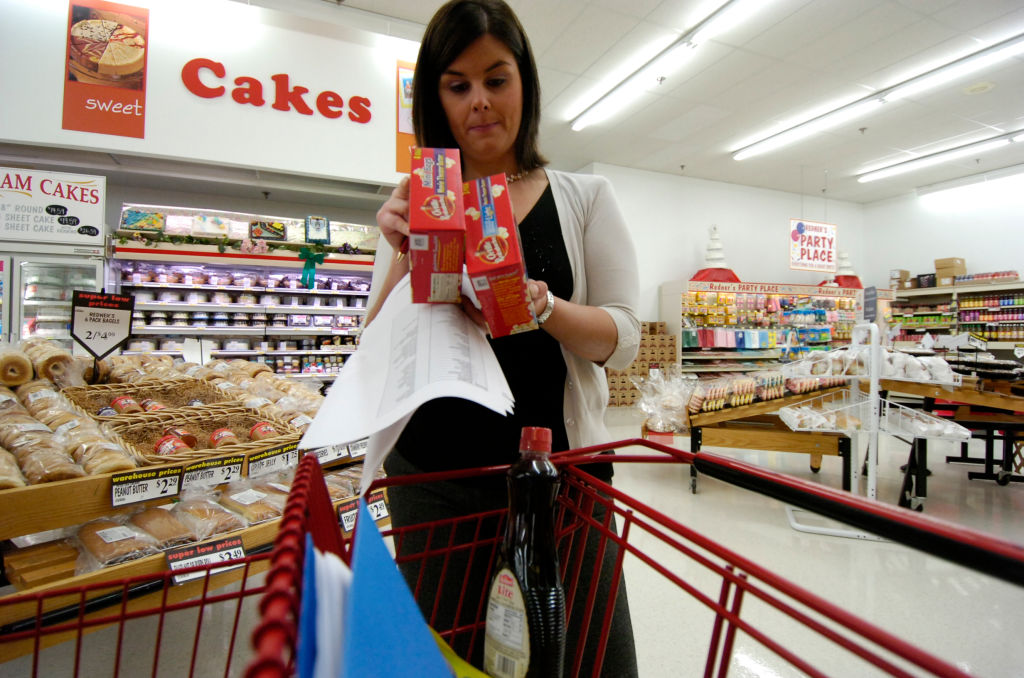
For most dieters and health-conscious individuals, knowing a food’s nutritional values is numero uno when it comes to choosing meals. Grocery shopping isn’t just about picking out the cheapest items to meet budgetary needs; it’s about standing in the aisles, reading the labels on foods to find the healthiest choices. But what if those food labels are wrong or underestimated? That box of healthy cereal may say it contains less than 100 calories per serving, but that might be very misleading.
Nutrition Labels May Be Misleading
In 1990, the Food and Drug Administration (FDA) began requiring a standardized nutrition label that included the number of calories on most packaged food. However, by 2016, obesity skyrocketed in the US, so a change required that the list of calorie counts be printed in large, bold font on nutrition labels. That’s all well and good – as long as the information is correct.
In January, a class-action lawsuit was filed against David Protein, claiming the company misrepresented the calorie and fat contents in its protein bars. Three individuals filed the complaint, saying the bars contained “way more” calories and fat than the label stated. Testing, using what’s known as the Atwater factors, found that the number of calories was more than what was noted on the labels by as much as 83%, according to the lawsuit.
Linus Technologies operates under the brand name David Protein and denies that its products grossly misrepresent nutritional values. In an Instagram post, the company wrote: “No one is getting Regina Georged,” referring to the 2004 movie Mean Girls, where character Cady Heron (Lindsay Lohan) dupes Regina George (Rachel McAdams) into eating protein bars, which causes her to gain weight instead of losing it.
Counting Calories Is a Lot Trickier Than It May Seem
Nutrition labels can be off by 20%, according to FDA guidelines. Which, as Business Insider demonstrated, “means, for example, that a serving of Greek yogurt labeled to contain 100 calories could actually weigh in at 80 to 120 calories.” Those numbers are acceptable to the guidelines, but not everyone is aware of this allowance.
Lindsay Moyer, a registered dietitian at the Center for Science in the Public Interest, explained to NBC News that if a frozen meal is labeled as having 500 calories, it could have as many as 600 calories and still be compliant.

Dr. Zhaoping Li, chief of the clinical nutrition division at UCLA, told the outlet that the amount of energy we get from food is affected by many factors, such as “how well your stomach digests it, how much is absorbed in your small intestine, and what energy can be harvested after the microbiome works on it in the large intestine.” Li added, “It’s guesswork.”
However, that’s not the only way nutritional values can be misleading. There’s also a matter of how food is eaten. Processed foods – for the purpose of this article, processed foods refer to how they are prepared, such as cooked, mashed, or eaten raw – have a large impact on nutritional values. A calorie is a measure of usable energy, but food labels only provide part of the picture. How many calories you actually get depends on the way the food is processed.
If you eat food raw, you tend to lose weight, explains The Conversation. However, if you eat the same food cooked, even though it has the same amount of calories, you tend to gain weight. Back in the day, humans learned to cook their food, which gave them more energy. “The extra energy allowed them to develop big brains, have babies faster, and travel more efficiently. Without cooking, we would not be human,” the outlet said. The more the food is processed, the more energy we get. But that isn’t always a good thing.
The Conversation explained it like this:
“Even among cooked foods, digestibility varies. Starch becomes more resistant to digestion when it is allowed to cool and sit after being cooked, because it crystallizes into structures that digestive enzymes cannot easily break down. So stale foods like day-old cooked spaghetti, or cold toast, will give you fewer calories than the same foods eaten piping hot, even though technically they contain the same amount of stored energy.”
Sage Journals published a piece titled “Food Texture Differences affect Energy Metabolism in Rats” where a study was conducted on food and weight gain in rats. Half were given a regular diet of pellets, while the others were given “puffed” versions of the pellets, where the tidbits contained more air, making them puffed. The rats that ate the puffed versions ended up with 30% more body fat than the other half. Why? Their bodies didn’t have to work as hard to digest and break down the food. The same is true for humans, who don’t have to exert as much energy to break down the nutrients in foods that have been softened by processing.
So, when it comes to counting calories and checking nutritional labels, it’s not necessarily that they are misleading, but trying to predict how a person will consume and digest the foods can skew the values. Keep that in mind the next time you go grocery shopping and be vigilant when reading label contents.