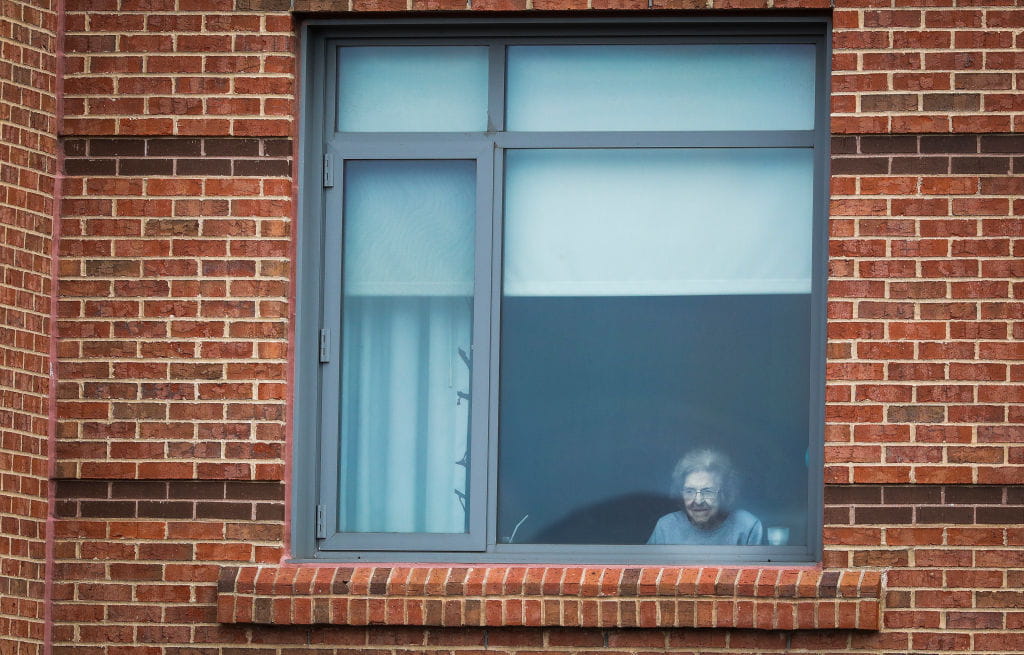
When shopping for a home and neighborhood to live in, we usually look for specific things. What is the crime rate? Is it close to shopping, schools, and hospitals? Is the area neat and clean, free of the homeless? What we probably don’t consider is whether the neighborhood will give us zombie cells. According to research, where you live can not only affect your pocketbook, but can also age you faster.
Quality of Life
The New York School of Global Public Health published a study this month in Social Science and Medicine titled “Your Neighborhood May be Aging You.” Research suggests that where you live could have an impact on your life expectancy.
“Our health is shaped not only by individual behaviors, but also by the environments we live in,” Mariana Rodrigues, a PhD student at NYU School of Global Public Health and the study’s first author, said in a statement. “This study suggests that structural conditions may become biologically embedded and influence aging processes over time.”
Liberty Nation News covered this topic last year and how your neighborhood could affect your lifespan. That study was based on quality of life, access to healthcare, employment, and social life. This new study, however, suggests that where we live could also contribute to creating more zombie cells, which can lead to Alzheimer’s and Dementia as well as shortening the number of years we have on this Earth.
Zombie Cells in the Neighborhood
No, having zombie cells doesn’t mean you’re going to turn into the walking dead. As we age, we all develop these cells, also known as senescent cells. These are damaged cells that stop dividing, but don’t die. As the University of Minnesota Medical School explained:
“As people age, they accumulate damaged cells. When the cells get to a certain level of damage, they go through an aging process of their own called cellular senescence. When cells become damaged or if they replicate too many times, they undergo a process of irreversible removal from the cell cycle and start releasing inflammatory factors that stimulate the immune response to clear the damaged cells. A younger person’s immune system is healthy and is able to clear the damaged cells, but as people age, they aren’t cleared as effectively and they accumulate causing potential problems.”
The team of researchers studied data from 1,215 US adults who had, as part of a larger study, provided blood samples. Their neighborhoods were then assessed for factors such as education, health insurance coverage, air and water quality, homeownership, and income. They found that residents of “low-opportunity neighborhoods” had considerably higher CDKN2A RNA, a biomarker of biological aging and cellular sequence, as the New York Post explained. These act as an “off switch for cell division and reflects accumulated cellular stress and DNA damage.”
The study authors said this was mainly driven by employment, homeownership, and income, instead of education, health, or environmental factors. “Stressors related to income, jobs and housing are not occasional, but persistent conditions that shape daily life,” Adolfo Cuevas, an associate professor of social and behavior sciences at NYU, and the study’s senior author, said. “Our findings suggest that chronic stress caused by economic deprivation and limited mobility may be the primary driver of cellular aging.”
 Neighborhoods that lack green spaces, good income opportunities, and well-resourced schools are already at risk of lifestyle and lifespan challenges. “These findings provide molecular evidence that low neighborhood opportunity may be biologically embedded at the cellular level,” the study suggested.
It turns out picking a neighborhood isn’t just about curb appeal or commute times anymore. While you can’t always pack up and move to a picture-perfect zip code, the findings are a reminder that environment matters in ways we can’t always see, right down to the cellular level. Chronic stress, financial strain, and limited opportunity don’t just weigh on the mind; they can take a toll on the body in very real ways.