Celebrities love to throw their two cents in, but do their opinions change minds?
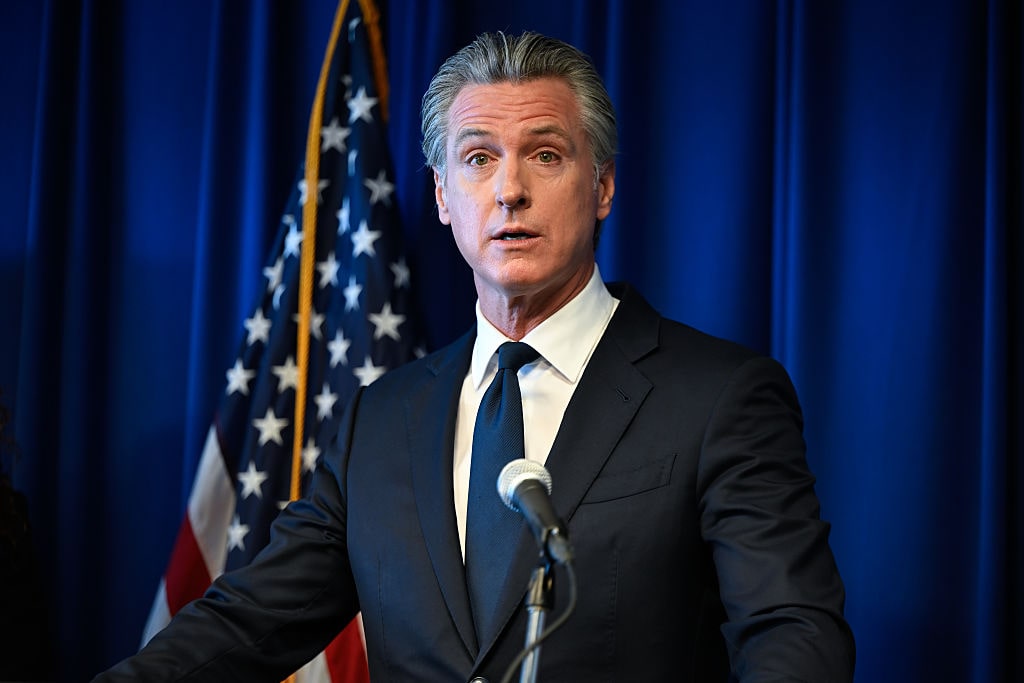
Every few election cycles, Hollywood tries to swoop into politics like a blockbuster sequel nobody remembers greenlighting. The studio executives hold fundraisers, the actors record earnest videos, and the town convinces itself that star power still functions like a box-office opening weekend. But national politics isn’t a Marvel premiere anymore. It’s more like a fragmented streaming landscape where no one is watching the same thing, and half the country doesn’t even trust Rotten Tomatoes, let alone celebrity endorsements. So when Deadline reported that California Governor Gavin Newsom is already attracting interest from Hollywood donors as he eyes a 2028 presidential run, the question isn’t whether Hollywood will show up. It’s whether America is still buying tickets.
Tinseltown Backing Gavin Newsom?
Deadline’s report paints a familiar picture: entertainment-industry insiders leaning forward in their seats, intrigued by Newsom’s polish, his comfort on camera, and his long-standing rapport with the donor class that keeps Hollywood humming. None of this is exactly a plot twist. Hollywood has gravitated toward Democrats for decades, and Democrats have never been shy about returning the embrace. But with early talk of 2028 bubbling up around town, the industry seems especially attuned to a candidate who understands how the business thinks and what it fears losing.
One reason Newsom is getting another round of Hollywood attention is California’s expanded film and television tax-credit program. In 2024, state officials proposed boosting annual production incentives from $330 million to $750 million to keep films from fleeing to states offering richer subsidies. The California Governor’s Office of Business and Economic Development stated the goal plainly: strengthening California’s role as “the nation’s media production capital.” For an industry that feels like it’s always one deadline away from uprooting itself to Atlanta or Albuquerque, proposals like this land as reassurance.
But here’s where the script pauses. Even if Hollywood likes Gavin Newsom, how much does Tinseltown still matter in national politics? The historical record offers a montage of successes, failures, and moments that aged like forgotten pilot shows.
Hollywood’s Influence
Take 2008, the gold-standard example of celebrity impact. Oprah Winfrey’s endorsement of Barack Obama during the Democratic Party primary was not just newsworthy – it was measurably influential. Economists Craig Garthwaite and Tim Moore found in a peer-reviewed academic journal article in the Journal of Law, Economics, and Organization that her support added a little over one million votes to Obama’s totals, enough to have been decisive in several states. It remains the clearest modern case of star power converting into ballots.
But it’s also the exception. Most of the time, celebrity endorsements behave more like flashy trailers – they build awareness but don’t guarantee ticket sales. A 2010 North Carolina State University study concluded that celebrity backing tends to be neutral at best and counterproductive at worst, especially for young voters.
Political scientist Michael Cobb put it flatly: “Celebrity endorsements do not help political candidates — but they can hurt them.” His team even found cases where a celebrity’s involvement made voters like a candidate less. “In one of the studies, for example, we found that by exposing young people to a celebrity endorsement, they liked the candidate less and were less likely to vote for him,” Cobb said.
And then there’s the emotional boomerang effect. Celebrity support doesn’t land evenly across the electorate. It can thrill one cohort while irritating another. Hillary Clinton’s 2016 campaign had an entire constellation of superstars attached, from Beyoncé to Bruce Springsteen. But Anthony J. Nownes, a professor of political science at the University of Tennessee, found that this kind of celebrity backing didn’t persuade skeptical voters or meaningfully change their candidate preferences. As he explained in his article in Sage Journals, instead, it mostly shifted tone rather than behavior. Endorsements reduced negative emotions such as anger or anxiety toward Clinton, but didn’t translate into increased support or a greater likelihood of voting for her.
Donald Trump complicates the picture even further. But even in his case, researchers argue that his electoral strength came from populist sentiment and partisanship, not fame alone. Studies of the 2016 electorate consistently show that support for Trump was driven heavily by partisan loyalty, economic pessimism, and attitudes toward immigration and cultural change. A 2016 analysis from the Pew Research Center found that Trump voters were overwhelmingly motivated by issues such as the Supreme Court, terrorism, and immigration rather than by his celebrity background.
Social media complicates everything, as well. Celebrities were once singular megaphones; now they’re one voice among millions, competing with influencers, podcasters, livestreamers, and anonymous accounts.
This leaves Gavin Newsom in an unusual cinematic frame. Hollywood can help him raise money, draw crowds, and engineer viral moments – all useful in a competitive primary. He moves comfortably on camera, and the entertainment industry is naturally drawn to candidates who look like they belong on a soundstage. But decades of research suggest that enthusiasm inside Beverly Hills zip codes doesn’t automatically translate into persuasion in the rest of the country.
So can Hollywood move the needle for Gavin Newsom in 2028? Maybe a notch. It can dress the stage, pump up the soundtrack, and get people talking. But the days when a celebrity endorsement could redirect the national political storyline seem firmly in the rearview. Hollywood might still help sell the trailer – but it’s unlikely to determine how the movie ends.
Liberty Nation does not endorse candidates, campaigns, or legislation, and this presentation is no endorsement.