OAN Staff Katherine Mosack and Brooke Mallory
12:00 PM – Tuesday, March 3, 2026
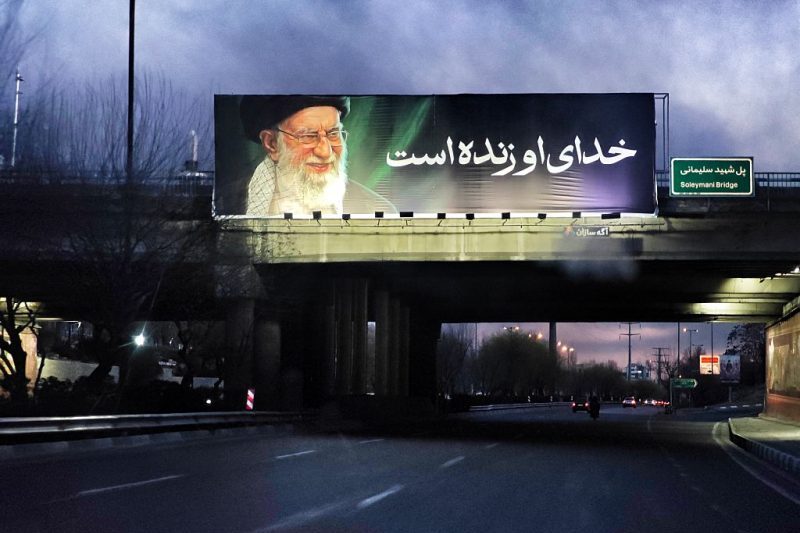
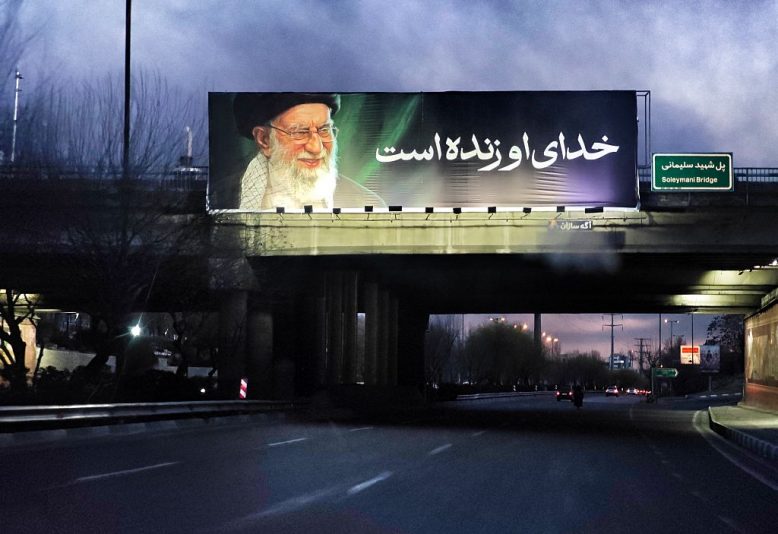
Intelligence agencies from the United States and Israel, spearheaded by the CIA, reportedly monitored the now-deceased Iranian Ayatollah Ali Khamenei for months to identify the optimal window for a decisive strike on his Tehran compound.
Khamenei’s tenure as supreme leader, spanning over 36 years, made him the longest-serving head of state in the Middle East at the time of his death.
The operation culminated on Saturday morning when Israeli fighter jets first bombed the complex, killing the 86-year-old Iranian supreme leader along with several family members and dozens of senior Iranian officials — 48 Iranian leaders to be exact.
Although it was a synchronized joint operation, the specific strike that killed Ayatollah Khamenei was carried out by Israeli fighter jets using intelligence provided by the United States.
Nonetheless, the U.S. launched the first wave of the broader campaign, firing over 100 Tomahawk missiles from warships and launching B-2 stealth bombers from the continental U.S. to neutralize Iranian air defenses and missile sites.
The attack was a masterclass in inter-agency cooperation. While the CIA provided the high-fidelity tracking that pinpointed the “daylight window,” the operational success on the ground and in the air relied on three primary Israeli intelligence branches:
- Mossad: The Mossad was the “boots on the ground” for this mission. Reports from the Financial Times and Times of Israel indicate that the Mossad had successfully embedded assets within Tehran. These operatives provided the final visual verification that Khamenei had entered the compound just minutes before the strike. The agency reportedly leveraged “gray market” routes to smuggle in specialized hardware — including encrypted “software bridges” — to maintain communication with local assets despite the regime’s digital blackouts.
- Aman (IDF): Aman provided the technical and tactical “jigsaw puzzle” pieces that made the strike possible. Israel’s elite signals intelligence (SIGINT) unit was instrumental in hacking almost all traffic cameras in Tehran to monitor the movements of Khamenei’s security detail in real-time. Aman’s Intelligence Directorate built the “pattern of life” files for the other 48 senior officials killed in the strike, ensuring that the 30 precision-guided bombs dropped by the IAF hit multiple buildings within a 60-second window.
- The IAF Intelligence Wing: While the Mossad and Aman found the target, the Air Force’s internal intelligence coordinated the flight paths. They worked alongside the U.S. to “blind the blinder,” using electronic warfare platforms to suppress Iranian air defenses so that Israeli F-35s could operate directly over Tehran with “impunity.” IAF intelligence was responsible for the last-minute shift from a “dark-of-night” assault to the 9:40 AM daylight strike, betting correctly that the surprise of a morning attack would catch the leadership before they could retreat to deeper bunkers.
U.S. Agencies Involved
- The Central Intelligence Agency (CIA): The CIA acted as the primary architect for the “decapitation” phase of the operation. The agency spent over eight months mapping Ayatollah Khamenei’s “pattern of life,” utilizing human assets and advanced behavioral analytics. It was a CIA “high-fidelity” intelligence report that confirmed the Saturday morning meeting, prompting the pivot from a night mission to a daylight strike to catch the leadership above ground.
- The National Security Agency (NSA): The NSA provided the “digital backbone” for the strike by intercepting the regime’s most secure communications. The NSA successfully cracked the encrypted mobile and radio networks used by the IRGC leadership. This allowed the U.S. and Israel to listen in as the meeting was being scheduled, confirming that Khamenei, the Defense Minister, and the IRGC Chief would all be in the same room. Working with U.S. Cyber Command, the NSA deployed non-kinetic effects to disable Iranian communication towers in the Pasteur Street district just before the missiles hit, ensuring the guards couldn’t call for reinforcements or warn the target.
- The Defense Intelligence Agency (DIA): While the CIA watched the leader, the DIA focused on the regime’s weapons. The DIA provided the “target packages” for the broader operation, identifying over 1,000 strategic sites, including hidden missile silos and naval bases in the Persian Gulf. Following the strike, the DIA has been responsible for confirming the deaths of the 48 regime officials and assessing the degradation of Iran’s nuclear and missile capabilities.
- U.S. Space Command & National Reconnaissance Office: The National Reconnaissance Office (NRO) provided 24/7 high-resolution satellite surveillance. This allowed pilots and commanders to see “real-time” movements at the Tehran compound, ensuring the strike hit the specific buildings where the meeting was taking place. Before physical bombs or missiles hit their targets, USSPACECOM, in coordination with U.S. Cyber Command, also launched non-kinetic effects to “blind” the Iranian military.
Dubbed Operation Epic Fury by the U.S. and “Operation Roaring Lion” by Israel, the mission was designed to dismantle the clerical regime’s nuclear ambitions and provide an opportunity for Iranian citizens to reclaim their government.
According to The New York Times, the CIA and Mossad had meticulously mapped Khamenei’s “pattern of life” for months, finally pinpointing a rare high-level meeting of the regime’s top security brass in central Tehran this past Saturday. This information accelerated the timeline to strike Iran’s capital city, an unnamed source also told CBS News.
The Israeli source noted that the typically cautious supreme leader felt less vulnerable during the morning hours, leading him to let down his guard. This behavioral shift provided a “golden window” for the U.S. and Israel to scrap their original plans for a midnight raid in favor of a precision daylight strike at approximately 9:40 a.m. local time.
“On Saturday at dawn, Operation Roaring Lion begins,” Israeli military Chief of Staff Eyal Zamir wrote in a note to Israeli air force pilots. “You are cleared to strike your targets. We’re making history. I trust you. Good luck to us all.”
On Saturday afternoon, President Donald Trump confirmed reports from senior Israeli officials that Khamenei had been killed in the attack, praising the efforts of U.S. forces in a post published to his Truth Social platform.
“He was unable to avoid our Intelligence and Highly Sophisticated Tracking Systems and, working closely with Israel, there was not a thing he, or the other leaders that have been killed along with him, could do,” Trump wrote at the time.
Israeli intelligence identified the high-level gathering of the regime’s “inner circle” at the Tehran compound, including Defense Minister Aziz Nasirzadeh, military office head Mohammad Shirazi, and Admiral Ali Shamkhani. Also present were Deputy Intelligence Minister Mohammad Pakpour and IRGC Aerospace Force Commander Seyyed Majid Mousavi.
While the specific agenda for the emergency session remains officially unconfirmed, intelligence suggests the meeting was called to finalize a response to escalating regional tensions.
Though the strike ended Khamenei’s longtime reign, President Trump emphasized that military action would persist until Iran’s strategic capabilities are neutralized. As the joint operation enters its fourth day on Tuesday, U.S. and Israeli forces continue to systematically dismantle the Islamic Republic’s missile stockpiles and naval assets to ensure long-term regional stability.
Meanwhile, a sharp divide has emerged in the wake of the strikes: while many Western progressives, leftists, and liberals have denounced the escalation, Iranian-Americans and Iranians abroad have widely praised the operation.
To those who have endured decades of the regime’s brutal crackdowns on innocent citizens, protesters, the destruction of the IRGC’s infrastructure is viewed as a necessary step toward ending a cycle of state-sponsored domestic terror. For these supporters, the action taken by U.S. and Israeli forces is a historic blow against a brutal regime that has long wreaked havoc on its own people.
Stay informed! Receive breaking news alerts directly to your inbox for free. Subscribe here. https://www.oann.com/alerts
What do YOU think? Click here to jump to the comments!
Sponsored Content Below