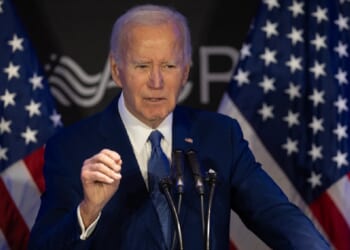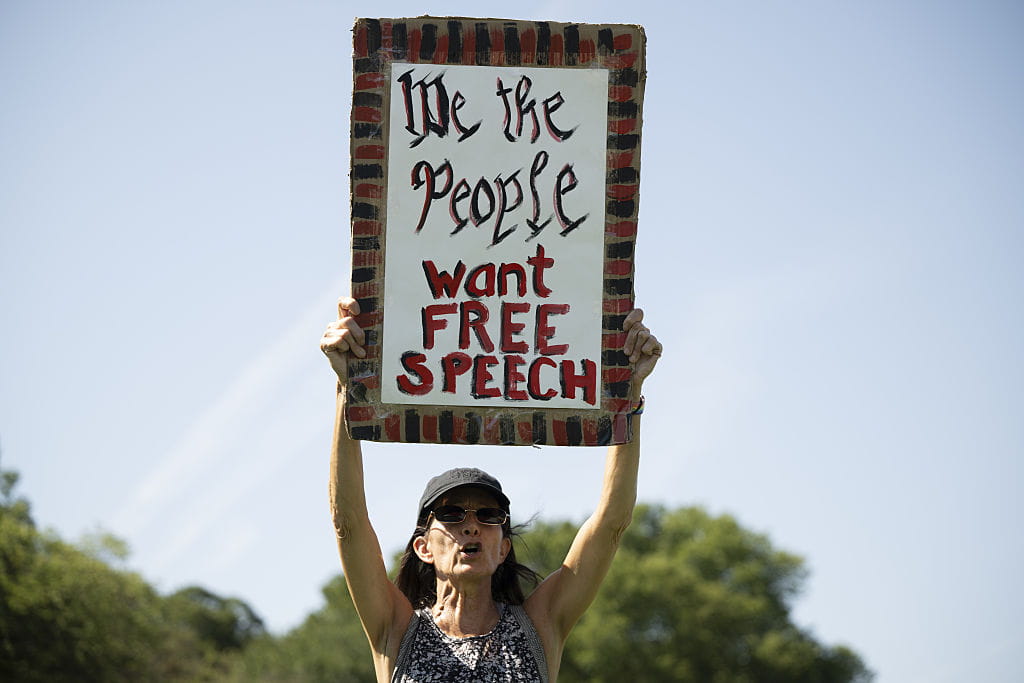
Thanks to the Constitution and dozens of Supreme Court cases, we live in a country where you can say almost anything you want – within reason. American free speech means you can tell a crowd of globalists that only stupid people buy windmills or protest peacefully against government actions while shouting four-letter words at federal agents. But, like many things in life, circumstances matter. “The question in every case,” said Justice Oliver Wendell Holmes Jr. when delivering the court’s opinion in Schenck v. United States (1919), “is whether the words used are used in such circumstances and are of such a nature as to create a clear and present danger that they will bring about the substantiative evils that congress has a right to prevent.” Other cases would follow and challenge this theory.
As the nation approaches its 250th year of independence, it seems fitting to reflect on some of the defining moments that contributed to America becoming the gold standard for freedom of expression around the world.
Free Speech and the Gravity of Evil
Free speech in America began with a very simple idea: “Congress shall make no law respecting an establishment of religion, or prohibiting the free exercise thereof; or abridging the freedom of speech, or of the press; or the right of the people peaceably to assemble, and to petition the Government for a redress of grievances.” Yet it’s more complicated than it sounds, as Americans have discovered over the years. The Constitution didn’t come with a troubleshooting guide or a helpline to call, but the Founders did create a judiciary system to establish boundaries and interpret laws.
 Let’s return to Schenck, in which justices had to decide whether distributing fliers urging young men to dodge the draft violated the Espionage Act of 1917, which prohibited interference in military operations and recruitment. Though Justice Holmes upheld Schenck’s conviction, he established the “clear and present danger” test, a rationale for the limitation of free speech. When writing for the court, he famously noted: “The most stringent protection of free speech would not protect a man in falsely shouting fire in a theater and causing a panic.” Again, circumstances matter.
In Whitney v. California (1927), a founder of the Communist Labor Party was charged with violating the California Criminal Syndicalism Act by helping to “organize a group that sought to effect economic and political change through the unlawful use of violence.” The court ruled unanimously to sustain the conviction. Justices Holmes and Louis Brandeis concurred rather than dissented because evidence revealed a criminal conspiracy.
Brandeis memorably wrote that danger from speech cannot be “deemed clear and present unless the incidence of the evil apprehended is so imminent that it may befall before there is opportunity for full discussion. If there be time to expose through discussion the falsehood and fallacies, to avert the evil by the processes of education, the remedy to be applied is more speech, not enforced silence.”
In Dennis v. United States (1951), the Supreme Court again applied the “clear and present danger” test to uphold the convictions of 11 communists under the Smith Act for their political teachings. On an appeal, the convictions were upheld. Writing for the 2nd US Circuit Court of Appeals, Judge Learned Hand revised Holme’s theory and directed courts to ask “whether the gravity of the ‘evil,’ discounted by its improbability, justifies such invasion of free speech as is necessary to avoid the danger.”
In Brandenburg v. Ohio (1969), the Supreme Court issued a per curiam opinion, overruling Whitney v. California in a decision that established the “imminent lawless action” test, which held that the government couldn’t punish inflammatory speech unless it is intended to, and likely to, incite immediate illegal activity. This distinguished between the advocacy of violence – which is protected – and an incitement to imminent lawless action, which is not.
Free Speech Takes a Global Hit
Many legal proceedings led to free speech as we know it today, but, for brevity’s sake, we have to stop somewhere. To this day, the Supreme Court continues to face new issues in upholding the First Amendment with reasonable limitations. What qualifies as freedom of expression remains disputed; perhaps it always will. Yet the United States has become “the most speech protective of any nation on Earth, now or throughout history,” said former Columbia University President Lee C. Bollinger in The Free Speech Century (2018). “Our most memorable and consequential decisions under the First Amendment have emerged in times of national crises, when passions are at their peak and when human behavior is on full display at its worst and at its best.” Between today’s political climate and the ubiquitous struggles the internet presents, America is no doubt headed for more challenges.
Freedom of expression is in a recession worldwide, according to the Future of Free Speech Project, a collaboration that includes Vanderbilt University and Justitia, a global judicial think tank. Online speech is being curtailed by laws like the European Union’s Digital Services Act and the UK’s Online Safety Act. Some countries have reprimanded or penalized journalists for criticizing leaders and public officials. Denmark reintroduced a blasphemy ban. Hate speech laws are popping up all over the world. The British government has arrested thousands of people over social media posts deemed “indecent, obscene or menacing character.”
Perhaps now more than ever, it’s imperative we maintain the gold standard. As Justice Holmes said in Abrams v. United States, “We should be eternally vigilant against attempts to check the expression of opinions that we loath and believe to be fraught with death, unless they so imminently threaten immediate interference with the lawful and pressing purposes of the law that at an immediate check is required to save the country.”
Dig Deeper Into the Themes Discussed in This Article!
Liberty Vault: The Most Significant Supreme Court Cases
Liberty Vault: The Constitution of the United States
Liberty Vault: The Declaration of Independence
Liberty Vault: The Bill of Rights
Liberty Nation does not endorse candidates, campaigns, or legislation, and this presentation is no endorsement.