Afghanistan and Pakistan are continuing trade cross-border blows, fuelling instability in a region reeling from the US-Israeli war with Iran.
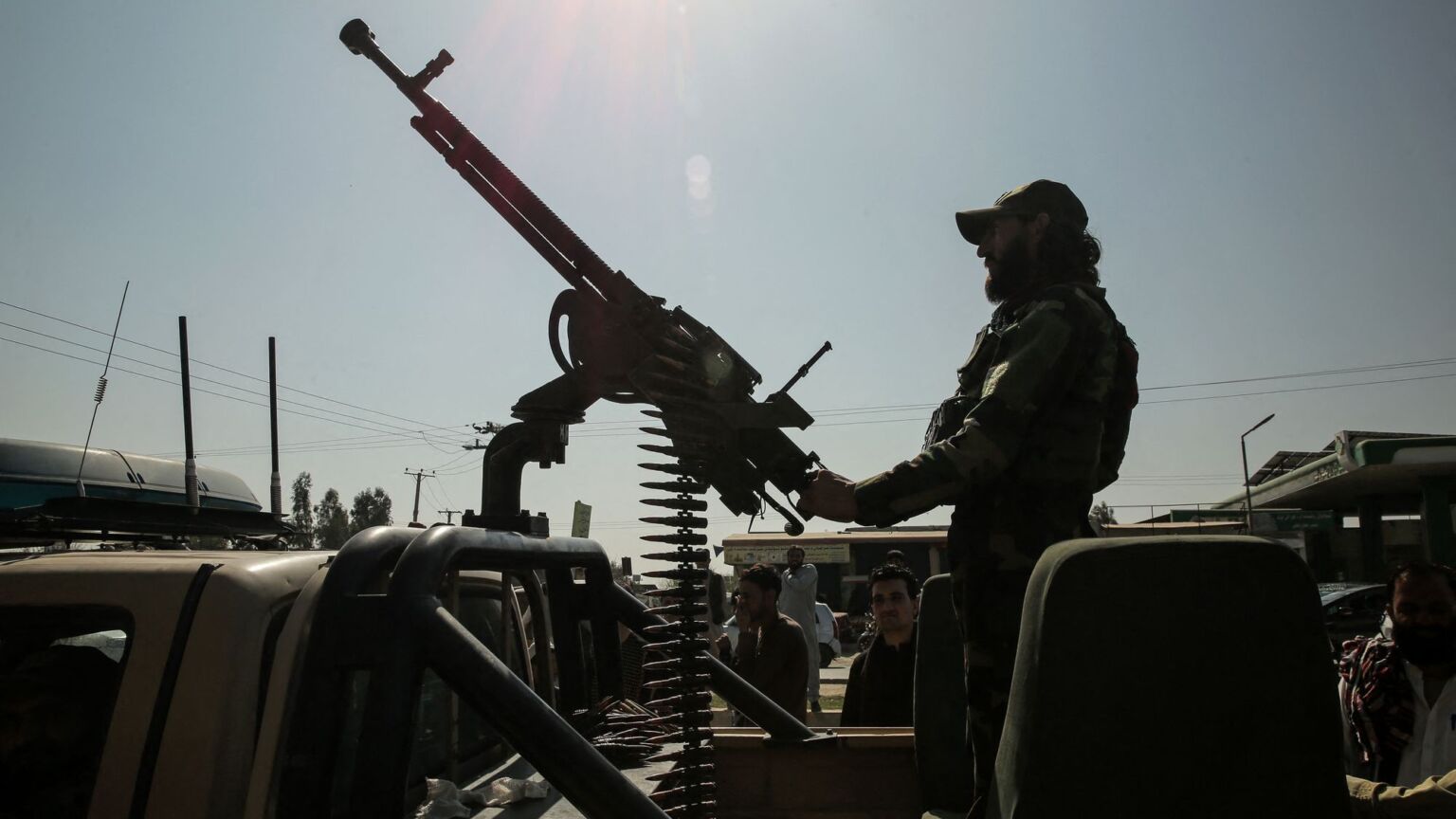
The latest escalation in a long-running conflict erupted last month, when Pakistan hit what it described as the Afghan hideouts of Islamist militia, Tehrik-e-Taliban Pakistan (TTP). This came after a recent uptick in cross-border terror attacks in Pakistan. Afghanistan’s Taliban rulers retaliated last Thursday with strikes on Pakistani military positions. This prompted Pakistan to bomb Taliban ministries and military headquarters in major Afghan cities, including the Afghan capital, Kabul. The attacks and counter-attacks have continued into this week, in what Islamabad is calling ‘open war’.
Tensions have frequently boiled over between the two neighbours over the past few years. In October, dozens of soldiers from both sides were killed during cross-border skirmishes after they both accused each other of harbouring militants. But this current confrontation, which seems to have become a full-blown war, is potentially much more serious. The Afghan Taliban, in particular, seems intent on taking advantage of the conflict now engulfing the Middle East to advance its own interests.
Since its return to power in Kabul in 2021, the Afghan Taliban has desperately sought legitimacy and global recognition. The group has maintained its control over critical parts of the Afghan territory, effectively warding off the jihadist challenge from ISIS’s regional affiliate, the Islamic State Khorasan Province. Even as the two groups continue to battle one another for land and resources, the biggest threat to the Taliban’s claims to authority comes from Pakistan.
Pakistan’s military had originally helped the Taliban regain power during the 2010s, seeing it as a long-term vehicle to advance its own regional ambitions. But ruptures emerged between the erstwhile allies after the Taliban reasserted its control over Afghanistan in 2021. The Taliban unleashed its ideological ally, the TTP, in order to expand Taliban-controlled territory into the western provinces of Pakistan. The resulting surge in terrorism on Pakistan’s western front over the past few years means that Islamabad is increasingly preoccupied with safeguarding its own territory, rather than expanding its influence abroad.
In addition to keeping Pakistan militarily engaged, the Afghan Taliban has also sought to align itself with the region’s major players, especially China. It has successfully lured in hundreds of millions of dollars in Chinese investments, especially in oil and mining sectors. This is not a surprise – since Beijing’s investments in Pakistan have been jeopardised by the cross-border militancy, Afghanistan presents an appealing alternative.
The Taliban has also capitalised on the clashes between India and Pakistan last May. It sent Afghan foreign minister Amir Khan Muttaqi to visit New Delhi before launching its own assaults on Pakistan in October. In July, Russia became the first country to formally recognise the Taliban government in Afghanistan.
What the Afghan Taliban now seeks is global legitimacy, starting with the Muslim world. One way is by mimicking Hamas’s jihadist campaigns against Israel, presenting its own terrorist proxies’ attacks on Pakistan as part of a radical Islamist fight against ‘colonialism’. And like Hamas, the Taliban has also grown close to Qatar. Indeed, the Taliban hopes to capture some of the overwhelming global Muslim support that Hamas enjoys, despite its persecution of Palestinians. However, the Taliban is fully aware that, for all its denunciation of Pakistan as an infidel state that is not sufficiently Islamic, it lacks a Jewish opponent to galvanise Islamic support.
The Taliban is also looking to Ahmed al-Sharaa as a potential role model. Despite being a former al-Qaeda affiliate, the Syrian leader has managed to pose as a statesman and a force for stability. If the Afghan Taliban does not secure the desired support from China or Russia, it could offer something similar to the United States.
Even so, all of this would require the Afghan Taliban to fend off the challenge from Pakistan and establish itself as the sole power broker in Afghanistan. That is why it is just as ready to go to war with Pakistan as it is to sit at the negotiation table.
Either way, one thing remains certain. The Taliban remains an Islamist menace. It is ready to brutally enforce its vision of radical Islam wherever it holds power.
Kunwar Khuldune Shahid is a writer based in Pakistan.