We are witnessing its painful rebirth.
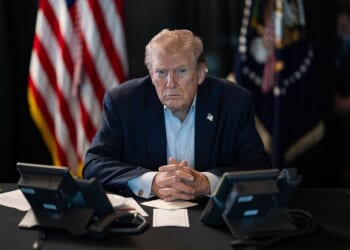
Donald Trump has saved the liberal international order—and with it the promise of American global leadership. The bombing of Iran’s regime is the latest sign that a revived order will reassert the fundamental principles of muscular liberalism that defined the post-World War II era. Critics have spent the last decade bewailing Trumpism as a threat to the post-war order. By now, however, it should be plain that they were wrong. The Trump Administration has rebuilt a system of effective deterrence against threats to international peace and security, and a grateful world will someday recognize his achievement.
Unlike Britain, our imperial tradition was born before, not after, our rise to national greatness. That means we never suffered the sclerosis of bureaucratic management in foreign affairs that eventually defeated the British Empire. George Washington helped himself to war-torn Indian lands after the Seven Years’ War. Andrew Jackson violated Spanish sovereignty to march on Florida during the War of 1812 because of Spain’s inability to control Indian and British abuses. John C. Frémont was a key actor when Mexican rule collapsed in California.
Our imperial tradition culminated in the construction of the liberal international order (LIO) after World War II, which was a substantive order, not a procedural one. The aim was to ensure peace and security, and to advance free and democratic societies. Whatever rules and procedures accrued from that order were subordinate to its substantive aims.
This understanding of the LIO, borne of the war on Nazism, Communism, and fascism, persisted through the Cold War, when the stakes were even higher. The U.S. and its European allies moved against Communist subversion from Korea to Nicaragua, the votes at the United Nations be damned.
The end of the Cold War ushered in a new idea: a “rules-based” rather than “liberal” international order. Everything was to be “multipolar,” “fair,” and “legal,” like some middle school student government, or a world run by law professors. The substantive idea of the LIO gave way to a procedural one. Deterrence, muscular diplomacy, and leadership were out. International laws, organizations, and summits were in. Trade would hereafter be handled by the committees and procedures of the World Trade Organization (WTO). The U.N. Human Rights Council would pursue rights violations. The International Criminal Court would police war crimes.
The difference is clearest when comparing the first and second Iraq wars. The U.N. system robustly supported the eviction of Saddam Hussein from Kuwait in 1991. But its pledge to disarm Saddam went wobbly. For the next decade, he made a mockery of the U.N. containment regime while the U.S. was left bearing the costs. European countries were trying to cash in their peace dividends and had no appetite for conflict.
When Saddam celebrated 9/11 and then snubbed U.N. weapons inspectors a final time, the U.S. acted. A coalition was forged that included our only reliable major allies, Britain and Japan, as well as other Western nations like Denmark, Australia, Italy, and Poland. The post-liberal countries like Canada, a bellwether for the abandonment of the LIO, sat on the sidelines and carped about “American imperialism.”
The Left widely criticized the second Iraq war of 2003 as an “illegal war.” But in fact, it was a return to the substantive notion of the LIO. The war signaled that the United States still viewed noxious and rogue states as legitimate enemies, regardless of what the procedural international system decreed. It was “part of an attempt of the United States to design a new deterrence mechanism that would be able to protect the existing order now that the old mechanism had become less relevant,” wrote Hebrew University’s Galia Press-Barnathan at the time.
While there was a legal case for the war, which British Prime Minister Tony Blair made, the justification was substantive, not procedural: Saddam had bombed his people and his region once too often, and toleration was at an end. The electoral regime in Iraq today is far better for both as the country climbs out of the long nightmare that was Ba’ath Party rule.
President Barack Obama and his “third term” under Joe Biden represented a frightening abandonment of the U.S. commitment to a liberal world order. Smitten with international bureaucrats, we joined an international tax treaty, the Iran nuclear agreement, and a U.N. climate change panel. Furthermore, we poured money into every madhouse U.N. agency we could find, such as the World Health Organization, just as China was manufacturing the biggest global plague since Spanish influenza.
Problems quickly appeared. Russia’s first invasion of Ukraine came under Obama, and the second under Biden. Iran’s nuclear advances proceeded, Hamas terrorists who had trained in Malaysia attacked Israel, and China increased its menacing behavior in the South China Sea, initiating a series of soft military actions against Taiwan. Venezuela entered its second decade of spewing drugs, crime, and migrants into the Americas. Bad actors used this new procedural order as cover for ugly behavior. Institutions like the U.N. High Commission for Human Rights began pushing an illiberal, anti-Western agenda under the rubric of “colonial reparations.”
Third World governments (as well as Russia) perverted the LIO for their own ends, attacking the institutions as tools of Western greed and duplicity. It was nothing more than “the dollar-centric finance system, Western-led security alliances, transnational corporate value chains, and Anglophone knowledge networks,” in the words of three South African scholars. One would think they would be thrilled by Trump’s destruction of the procedural LIO if this were true. Instead, such voices are suddenly its most vocal defenders. Russia, of all places, is convening discussions on how to uphold it.
Institutional capture of the procedural LIO by its enemies turned it into a manifest threat to peace and security. The use of the U.N.’s relief facilities and staff in Gaza by Hamas is the most recent vivid example. China rendered the WTO a toothless tiger in dealing with its state-directed economy by claiming “developing country” status. NATO allies used proceduralism to constantly shirk their 2% of GDP defense spending commitments, while the U.S. and the U.K. were the only countries to uphold them by 2014.
It was inevitable that the U.S. would respond. “Trump himself is not the author of big events, he’s being carried by big events,” former Singapore foreign minister George Yeo said last year. “I describe him as fast-forwarding the future.”
In both his first and second terms, Trump has reacted to the procedural LIO’s failure by making moves to reconstruct a substantive LIO based on securing interests and taking action when warranted.
The Trump Administration started by calling out Western allies for their suicidal tendencies with mass migration, censorship, national loathing, over-protected and regulated markets, demilitarization, “green” energy, and degrowth. The good cop, bad cop versions of this critique, lodged by JD Vance and Marco Rubio respectively at the Munich Security Conference, shared the same pressing concern with upholding Western civilization—“centuries of shared history, Christian faith, culture, heritage, language, [and] ancestry,” as Rubio called it. After all, there would be no point in a substantive LIO if there were nothing of substance behind it. U.S. support for the besieged democracies in Israel, Taiwan, and Ukraine is of a piece with this. So is Trump’s seething criticism of Canada, a country barreling toward irrelevance under the weepy grandmother who heads its military and the Davos technocrat who heads its government.
Another critical plank to restoring the substantive LIO is the Trump Administration’s curtailment of asylum claims and re-vetting of over 200,000 refugee resettlement cases. International systems for asylum and refugees were developed after World War II to protect individuals facing substantive life and death threats. They then became procedural loopholes for mass migration. That’s why so many countries in Asia and elsewhere simply reject them outright. If they bring sanity back, Trump’s actions will restore, not destroy, those once-noble policies.
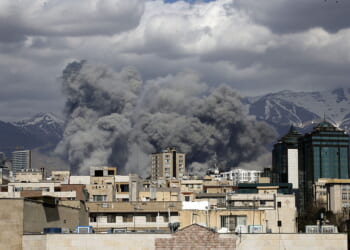
Trump has taken a multitude of other actions in the foreign policy realm. Maduro is currently in a Brooklyn jail cell, and Venezuelan drug boats are on the run, if not at the bottom of the sea. Iran has been bombed multiple times and airstrikes will continue, “regardless of what so-called international institutions say,” noted Secretary of War Pete Hegseth on March 2. Israel, a key forward base for global peace and security in the Middle East, is safe and getting safer through the Abraham Accords and the Board of Peace. And the U.S. has put NATO into storage until it can prove itself a worthy ally.
The International Criminal Court is sanctioned, the Intergovernmental Panel on Climate Change debunked, and the WHO penniless. These organizations were threats to the substantive LIO, not its emissaries. For proof, just look at how they treated the three most besieged democracies in the world: the ICC seeks to punish Israel for defending itself against Hamas; the U.N. climate mavens want Ukraine, whose war damages are now equivalent to three times its annual GDP, to achieve carbon neutrality; and the WHO denies Taiwan participation in public health discussions.
Fortunately, Marco Rubio has rightly reorganized the State Department’s human rights work around the idea that rights are a substantive result of free societies that embrace the Western model, not a procedural gift of lawyers and advocates (most of whom, like Harvard’s human rights center head Mathias Risse, insist that the West is an egregious human rights abuser).
All of which make Trump’s bold reassertions of substantive interests more than sensible. It is the U.S.—not Europe—that is convening critical conversations on the Arctic and strategic minerals. Trump’s tariffs, though curtailed somewhat by the U.S. Supreme Court, are rebuilding the liberal trading order. World trade must be free and mutually beneficial, not a cover for China’s state incubus nor for Europe’s jealous attacks on U.S. tech companies.
While these policies are sold to American voters as “America First” or “in the national interest,” they are major U.S. contributions to a substantially freer and safer world.
The rebuilt substantive LIO may exclude Canada and other traditional members like France and Germany. So be it. They have been complicit in the procedural order that allows threats to liberty to fester. German Chancellor Friedrich Merz admitted as much in a remarkable March 1 press briefing when he dismissed legal concerns about the Iran war as having “relatively little effect” when such questions “remain largely inconsequential.” He continued: “Over the years and decades, appeals from Europe, including Germany, condemning Iran’s violations of international law, and even extensive packages of sanctions have had little effect. This is also due to the fact we were not prepared to enforce fundamental interests with military force if necessary.”
France meanwhile, from what we learned from Saddam’s generals after his overthrow, was singularly responsible for the failure of coercive diplomacy in the second Iraq crisis by promising in advance that it would not support a U.N. war resolution. These are nuisance countries at this point, smothered in cosmopolitanism and national decay. The U.S. has instead invested in tried-and-true allies like Britain, Japan, South Korea, Australia, and Poland, and new ones like Argentina, Indonesia, and India. Others are free to seek their “new world order,” as Canadian Prime Minister Mark Carney called his plans.
The world, Singapore’s Yeo added in a separate interview last year, “should want MAGA to succeed,” because a strong America is good for everyone. Often forgotten, Singapore joined the second Iraq war, an important indicator for those who trust the strategic vision of the city-state’s leaders.
Davos internationalists who bewail the end of the liberal international order should think again. As Yeo suggests, we are witnessing its painful rebirth under Trump.