Most of the coverage and discussion of the controversial SAVE America Act (Safeguard American Voter Eligibility) being fiercely debated in Congress has been political, focusing on President Donald Trump’s willingness to go to the mat for election integrity and the Democrats’ vehement opposition. But as both sides harden their positions, the political theatrics are masking the magnitude of the legislation in play and its future policy implications.
Elections Would Never Be the Same
Put bluntly, this bill would go as far as the Constitution might allow in nationalizing elections that have been administered by individual states for nearly two-and-a-half centuries. And while establishing a nationwide standard for elections may please Republican and some independent voters as this year’s midterms approach, what happens when Democrats eventually win the trifecta and use their enhanced federal power to control elections?
No one will forget the last time the federal government controlled by Democrats put its thumb, or perhaps its whole hand, on the scale in the 2020 pandemic election. States were coerced to change their election laws, allow unguarded ballot drop boxes, and distribute untold millions of unsolicited mail-in ballots. When they control the big three again, would one expect them to abide by the letter of this Trump-era law, or use their newfound legislative power to either trash the legislation or, more likely, amend the SAVE America Act provisions to work to their benefit?
It comes down to the same overriding issue surrounding the Senate filibuster, which will have to be broken for the SAVE Act to become law. Will the short-term gain turn to long-term pain? Lest we forget, when the Democrats last held the trifecta from 2021-23, they came within one or two votes of trashing the filibuster and making truly radical reforms – expanding the Supreme Court, turning two left-leaning territories into states, even trying to abolish the electoral college. These were all designed to allow Democrats to dominate the presidency and Senate for as far as the eye can see. As has often been said, regarding a person or a political party, past behavior is the best predictor of future performance.
Voting: A Privilege or Burden?
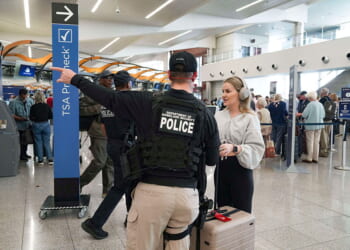
Over the past decade in particular, we have attempted to eliminate every possible obstacle for voters. We have normalized early voting and mail-in balloting, as if voting were a burden rather than a privilege. Is it really too much to ask that a person devote an hour or two every year or two to show up at a local polling station to participate in the most fundamental democratic process? Every American citizen has been gifted the right to participate in the selection of their next local official, congressman, senator, or president. Without a state-issued ID, you can’t get on an airplane, open a bank account, start a new job, or pick up a prescription. Is it really so onerous a burden to prove you are a citizen and confirm your identity in order to exercise a hard-earned franchise constitutionally limited to those who are American citizens?
This all comes down to a matter of jurisdiction, so to speak. Should the federal government increase its power to intervene in elections? They are, as written in the US Constitution, to be conducted by each individual state, while allowing for federal intervention: “The Times, Places and Manner of holding Elections for Senators and Representatives, shall be prescribed in each State by the Legislature thereof; but the Congress may at any time by Law make or alter such Regulations …”
Some will call the SAVE Act another iteration of oversized government, with Big Brother watching over the process to make sure not too many of the wrong people get to vote. On the other hand, ever since the heavily disputed election of 2020, Republicans in particular, and the citizenry in general, have become wary at best of election integrity. Does this stand as the only realistic way to restore public confidence in the election process?
Dems With an Opposite Agenda
Meanwhile, congressional Democrats have long been in a single-minded pursuit of the opposite outcome: the removal of any possible obstacle to, shall we say, casting as wide a net as possible in search of votes. They embrace bundling votes, ballot harvesting, unguarded ballot boxes, and universal mail-in ballots. Their ferocity in refusing to endorse what 80% of Americans support, according to multiple polls, leads to inevitable questions: Who are the Democrats protecting and what are they hiding?

“Democrats support voter ID,” Senate Minority Leader Chuck Schumer (D-NY) said earlier this month. “In fact, we included it, and it is included, in our Freedom to Vote legislation several years ago.” And yet, Schumer refuses to support the SAVE Act because he claims election fraud is a myth, illegal aliens rarely, if ever, try to vote, and the legislation would disenfranchise millions of voters. Translation: We need to remove any rigid standards and inconveniences associated with casting a ballot.
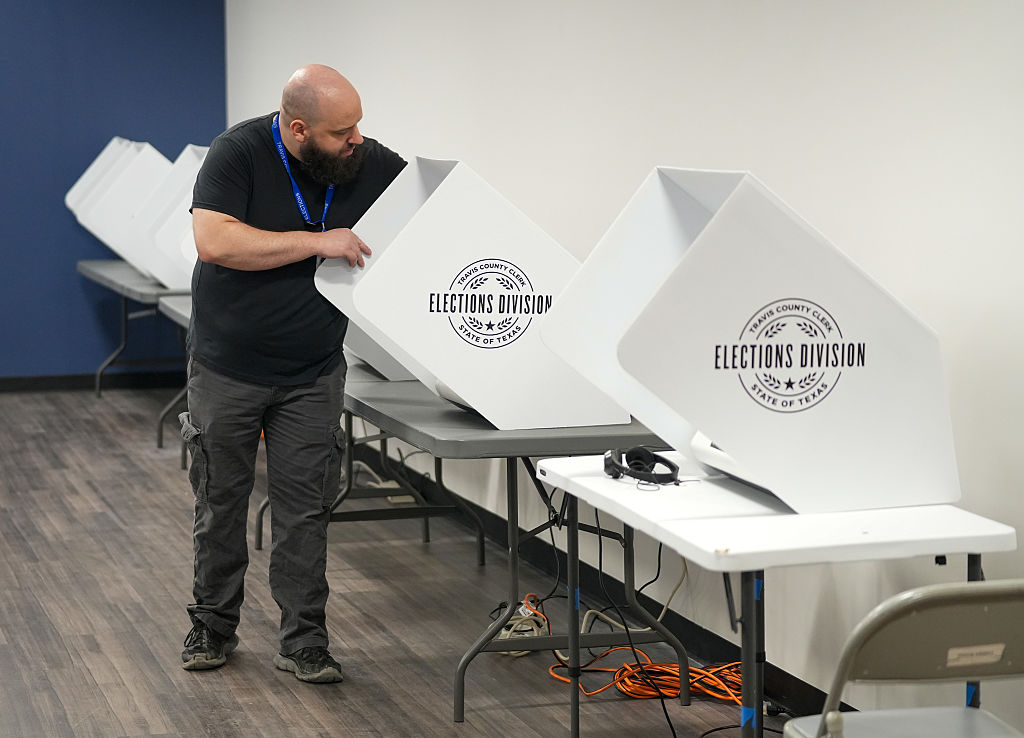
Pursuant to the power of state legislatures to set the time and manner of voting in their individual states, the US has approximately 10,500 separate election systems across the land, with a patchwork of rules for registration, identification, and ballot counting. Should there be a single national standard of proof that you are eligible to vote and can confirm your identity – or will the SAVE Act be one step down a slippery slope that will further enhance federal power and erode states’ rights? There are arguments to be made on both sides, but one thing is certain: If the SAVE Act becomes law, it will have a seismic impact on how Americans vote.
Dig Deeper Into the Themes Discussed in This Article!
Liberty Vault: The Declaration of Independence
Liberty Vault: The Constitution of the United States