What is the legal standing of Puerto Rico?
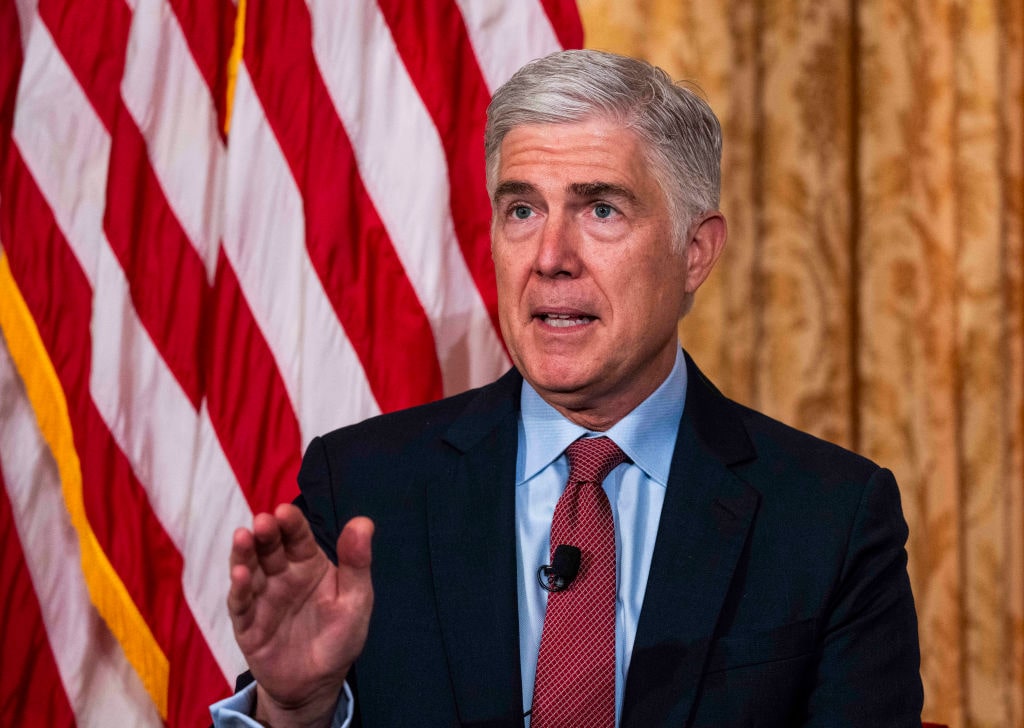
Historically, the courts have deferred to Congress concerning laws regulating many activities within US territories and Native American tribal lands. In a November 10 dissenting opinion, however, conservative Supreme Court Justices Clarence Thomas and Neil Gorsuch asserted that this has resulted in unconstitutional anomalies, indefensibly rooted in ancient racial prejudices, that must be corrected.
An Outspoken Dissent
Even the context of this evolving constitutional dispute is unusual – a dissent written by Thomas and Gorsuch in response to the full court refusing to hear a Petition for Writ of Certiorari filed by a Native American claiming the federal government has no constitutional jurisdiction to convict him of a crime against another Native American committed on tribal lands. Thomas and Gorsuch did not dissent from a written majority opinion; they dissented from the court’s decision to decline to hear the case.
Even more unusual is the sharp language employed by the opinion’s author, Neil Gorsuch, against the so-called “plenary power” doctrine. The longstanding doctrine permits the US Congress to pass laws concerning residents of Puerto Rico, Guam, the Virgin Islands, the Northern Mariana Islands, and American Samoa. Gorsuch’s denunciation of the doctrine arose in connection with the underlying tribal dispute.
Quentin Veneno, Jr. was convicted of a crime under federal laws that occurred between Native Americans on US tribal lands. His Petition to the Supreme Court asked the justices to reconsider an 1886 decision in US v. Kagama, which upheld the Major Crimes Act of 1885, in which Congress essentially drafted a criminal code for crimes occurring on tribal lands. Kagama created the “plenary power” doctrine, also used to govern US territories.
Gorsuch Condemns Past Decisions
Justice Gorsuch did not mince words in his derision of the Kagama ruling, in which he opined that the plenary power doctrine “should make this Court blush” because it lacks any foundation in the Constitution and “its roots lie instead only in archaic prejudices.” He argued that the Kagama Court insisted the Major Crimes Act should stand because Indian tribes were weak and helpless, making them wards of the nation and imposing on Congress both a responsibility and the power to “protect” them.
Flouting the cacophony of far-left claims that Donald Trump and Republicans are racist, the Trump-appointed Justice Gorsuch has criticized this unfair imbalance of constitutional law previously as applied to citizens of Puerto Rico. In US v. Vaello Madero (2022), Gorsuch denounced a series of decisions called the Insular Cases that arose from the dubious Kagama ruling :
“A century ago in the Insular Cases, this Court held that the federal government could rule Puerto Rico and other Territories largely without regard to the Constitution. It is past time to acknowledge the gravity of this error and admit what we know to be true: The Insular Cases have no foundation in the Constitution and rest instead on racial stereotypes. They deserve no place in our law.
Future Political and Legal Implications
This is how a dissenting opinion relating to a criminal case on tribal lands has become a flashpoint of addressing the in-limbo rights of the 3.6 million residents of US territories (of which Puerto Ricans comprise some 3.2 million). Puerto Ricans were granted US citizenship by birth by the Jones-Shafroth Act of 1917, yet they cannot vote in US national elections. This awkward result arises because the US Constitution grants congressional representation and electoral votes to states, but not to territories. When Puerto Ricans move to the mainland and take residency in US states, they are automatically eligible to vote.
The disparate rights, then, stem not from race but from residency and the unclear legal status of US territories. The original understanding was that US territories would not be held indefinitely as colony-like possessions of the nation that rejected colonization, but that their status would be transitional – either toward statehood or toward eventual autonomous self-rule. Instead, they have been kept in legal limbo, where they are not afforded all the rights of the US Constitution because, under Kagama, Congress held “plenary powers” over them.
The Gorsuch-Thomas dissent implies that there is growing tension within the SCOTUS over this unseemly jurisprudential elephant in the constitutional living room. Future challenges to Congressional plenary powers over US territories and tribal lands may find a more receptive audience. The Supreme Court may decide that it is time to revisit Kagama and the Insular Cases and take up the cause of residents of US territories and their legalistic purgatory. The Court’s erstwhile deference to Congress may no longer be assured on the plenary powers issue. The political implications of the November 10 Gorsuch dissent are obvious. The United States must either absorb these quasi-colonies into the nation as full citizens or grant them autonomy. Perhaps they will want a vote in the matter, too.
Liberty Nation does not endorse candidates, campaigns, or legislation, and this presentation is no endorsement.