OAN Staff Katherine Mosack and Brooke Mallory
11:50 AM – Thursday, March 26, 2026
Hawaii is currently in the middle of a major crisis caused by back-to-back “Kona Low” storms that first hit the island on March 10th, prompting ongoing evacuations, significant damage and concerns over potential dam failures.
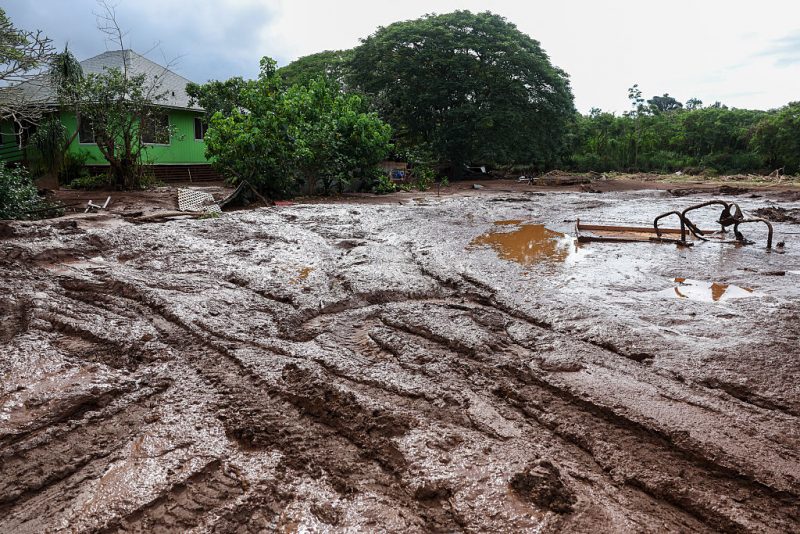
The Two Kona low winter storms hit the North Shore of Oahu a little over a week apart from each other, causing extensive flooding over already saturated soil, damaging farmers’ crops, homes, schools, and a hospital.
The first was from March 10th to March 16th, while the second was from March 19th to March 23rd.
With damage estimates surging past the $1 billion mark, Governor Josh Green (D-Hawaii) has officially moved to secure federal aid by requesting a Major Disaster Declaration from the White House. This move is critical, as it would unlock a massive influx of recovery funding to help the state rebuild its crippled infrastructure.
The scope of the destruction is truly staggering; Governor Green reported that every single county across the island chain sustained significant impact, ranging from catastrophic mudslides on the Big Island to the near-failure of critical dams on Oahu.
“These storms have impacted every county in our state and stretched our emergency response capabilities,” Green said in a statement. “This request is about getting our communities the support they need to recover quickly and safely.”
“This is going to have a very serious consequence for us as a state,” he declared.
Green confirmed that his chief of staff has been in direct contact with White House officials, receiving firm assurances of federal support for the islands. Green underscored the gravity of the situation, noting that this flooding is the most catastrophic the state has faced since 2004 — a year marked by several home losses and the high-profile flooding of a University of Hawaii library.
“Kona Low” Timeline
- October 2004: The previous record-holder. A massive flash flood caused $85 million in damage, largely centered on the Manoa Valley and the University of Hawaii campus.
- May 2024: A major storm, but it did not reach the $1 billion damage threshold or the statewide severity of the current crisis.
- March 2026: Two back-to-back Kona Lows that have surpassed all recent records, with damage estimates now exceeding $1 billion.
While the state awaits formal federal aid, the “spirit of Ohana” has taken the lead, local officials say. Aid organizations and neighbors are working tirelessly to provide displaced families with essential food, medical care, and temporary housing.
“So many families have been displaced, homes have been damaged, and communities are facing immediate needs,” Hawaiian Council CEO Kuhio Lewis said. “The path to recovery begins now — it cannot wait.”
On Oʻahu’s North Shore, a community world-renowned for its big-wave surfing, catastrophic flooding lifted homes from their foundations and swept cars from driveways.
Around 5,500 residents in the Waialua and Haleʻiwa areas were ordered to evacuate last Friday as authorities warned that the aging, 120-year-old Wahiawa Dam was at risk of imminent failure. While those evacuation orders have since been lifted and water levels have stabilized, the threat remains a major concern for the “high hazard” structure.
To support the agricultural recovery, the Hawaii Farmers Union Foundation, in partnership with the Hawaii Farm Bureau, launched the Hawaii Flood Response Fund. The initiative aims to help local producers rebuild as statewide agricultural damages are already estimated to exceed $15 million, with over 1,000 acres of crops and infrastructure destroyed by back-to-back “Kona Low” storms.
On the front lines of the health crisis, the Healthy Mothers Healthy Babies Coalition of Hawaii and the University of Hawaii’s H.O.M.E. Project have deployed mobile clinics to the North Shore. These units are providing essential care, including wound treatment, tetanus shots, and the distribution of water purification supplies and antibiotics to prevent the spread of pathogens in the flood-saturated communities.
Stay informed! Receive breaking news alerts directly to your inbox for free. Subscribe here. https://www.oann.com/alerts
What do YOU think? Click here to jump to the comments!
Sponsored Content Below