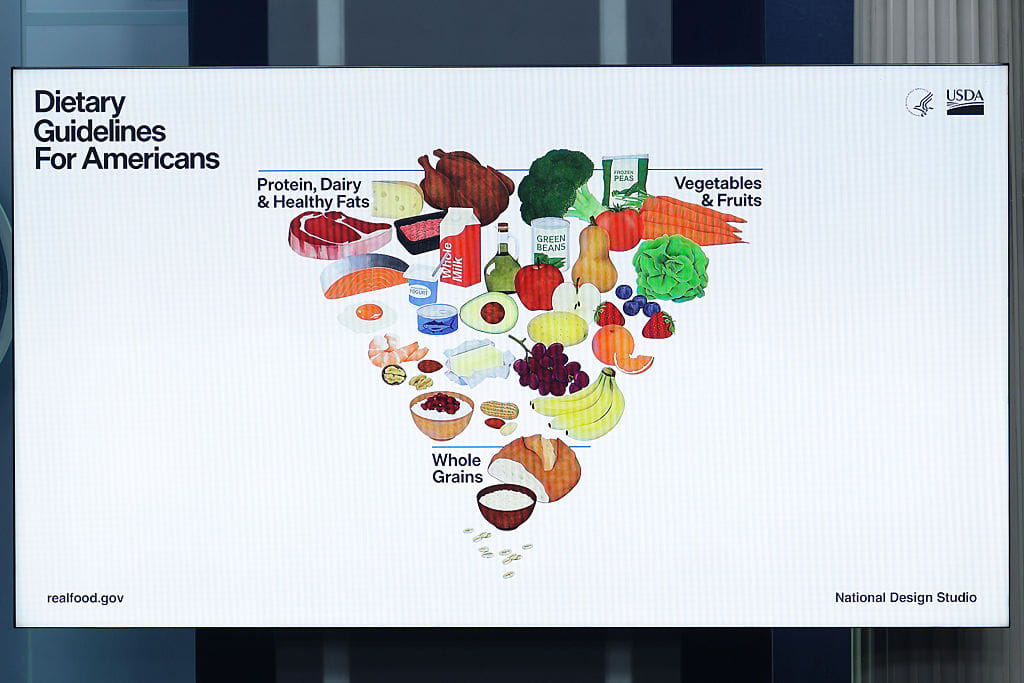
The upside-down revamped food guidelines.
The long-awaited revisions to the iconic US food pyramid, now called the Dietary Guidelines for Americans (DGA), were announced yesterday (Jan. 7) by Health and Human Services Secretary Robert F. Kennedy Jr. US Department of Agriculture Secretary Brooke Rollins was also on hand to showcase her agency’s support for the new recommendations, which many have labeled an “upside-down” food pyramid.
An Inverted Pyramid
While on the campaign trail, presidential candidate Kennedy repeatedly charged that US regulatory agencies have long been captured by industrial interests that undermine citizens’ health in pursuit of corporate profits. Some denigrated the previous food pyramid because its drafters allegedly suffered from conflicts of interest. Americans are the most obese society on planet Earth, fueled by a promotion of high-carbohydrate meals. It is not only food priorities but also government motivations that were called into question by Kennedy’s quip: “It’s upside down, a lot of people say. It was actually upside down before.”
The new recommendations emphasize protein from lean meats, fish, legumes, and dairy products; healthy fats from olive oil, butter, and beef tallow; fruits and vegetables; full-fat dairy; and whole grains. Importantly, the new pyramid guidelines discourage added sugars, highly processed foods, artificial sweeteners, refined grains, and foods containing artificial preservatives and dyes.
MAHA detractors claimed Kennedy did not go far enough, especially by not increasing saturated fat intake or emphasizing the avoidance of GMO-cropped produce and the meats, dairy, and eggs fed GMO grains in concentrated animal feeding operations. On the other side of the political aisle, anti-Kennedy voices claimed saturated fats, dairy, and red meats inflict heart disease.
A Middle (Dining) Road
This is likely an indication that the new food pyramid hits the sweet (middle) spot. Advisories on how to avoid highly processed foods (the term “ultra-processed foods” remains to be officially defined) are a crucial first step to improve health outcomes. Past advisories have insufficiently warned people about artificial additives. And while organic purists are correct that many commercial foods contain pesticide residues, the Environmental Working Group explained that Americans are much better off eating fresh, whole industrial foods, even if they are tainted: The benefits outweigh the risks. Moreover, it is unrealistic to expect an organic food pyramid – the nation does not produce enough organic foods to meet such a demand.
On the whole, the new guidelines could be a leap forward in educating Americans about the importance of a healthier diet. It also delivers on President Donald Trump’s promises. As reported by Newsweek:
“The guidelines’ focus on ‘real food’ and their departure from decades of government guidance reflect the Trump administration’s stated intention to combat what it described as both a health crisis — driven by processed foods and sugar — and a costly chronic disease epidemic.
“The guidelines’ emphasis on real, whole foods and reduced sugar intake arrives amid soaring U.S. rates of obesity and chronic disease, with 90 percent of healthcare spending attributed to treating chronic illnesses, much of it diet-related.”
Delivering on MAHA Promises
No matter how salutary a Trump-Kennedy policy may be, the ubiquitous chants of oppositional critics are predictable. Democrats who called for a sugar tax that would disproportionately burden low-income citizens howled in derision when Secretary Rollins announced SNAP waivers that denied sodas and candy to recipients. The legacy media has scoffed at Kennedy’s elimination of petroleum-based food dyes as insignificant.
Americans remain divided over vaccine safety and efficacy, but the Make America Healthy Again movement seems determined to unite people around healthier, more affordable food supplies. The Trump administration has also pledged to phase in the new guidelines to federal nutrition assistance programs, school lunches, and medical nutrition programs. Maybe changing the foods recommended to adults and schoolchildren will begin to reverse the chronic disease epidemic that neither side of the food pyramid debate denies is very real.
Liberty Nation does not endorse candidates, campaigns, or legislation, and this presentation is no endorsement.