One can better understand the phrase “two Jews, three opinions” by looking at Israeli elections, where there is rarely much strength in numbers and where splitting a party can provide more Knesset seats than unifying parties together.
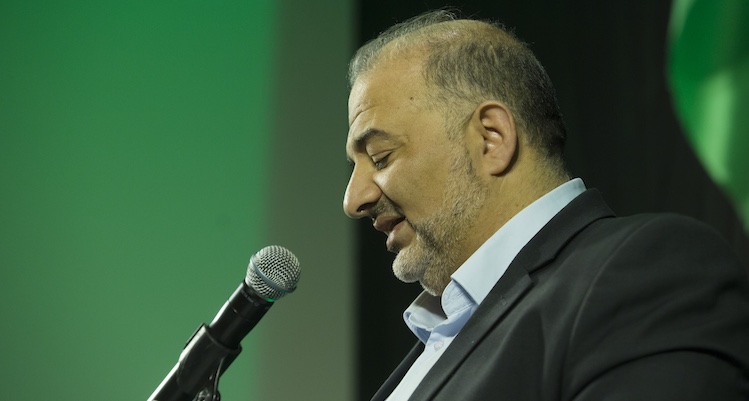
And like everything else in Israel, it doesn’t just apply to Jews. In 2021, the Ra’am party, led by Mansour Abbas, made history by becoming the first Arab party to establish itself as a formal member of a governing coalition. Though Ra’am had won only four seats in the election, those four seats made the difference by giving the “change government,” led by Naftali Bennett and Yair Lapid, a Knesset majority. For first time in a dozen years, Benjamin Netanyahu would not be prime minister.
This time around, Ra’am has agreed to be part of a joint Arab slate, in which the Arab parties all run together. Some polls suggest this Joint List could garner as many as 13 seats. Abbas, however, isn’t thrilled.
Wouldn’t 13 seats—theoretically—be better than four? Not exactly. A joint Arab slate means Ra’am is tying its fortunes to parties that wouldn’t sit in a government. Abbas is pragmatic, the rest of the Arab party leaders much less so. Which means those 13 seats wouldn’t be added to a coalition of Zionist parties that might replace the Likud-led government.
Abbas would rather have four seats and be part of the government than have 13 seats in opposition. Joining a coalition means winning concessions for Abbas’s Arab constituents. Remaining in opposition with more seats would make the Arab coalition louder but mostly irrelevant.
Ra’am has been working to improve its image as a pragmatic party that wants to give Arab voters a stake in the Israeli governing majority, not just its opposition. Abbas has reportedly been seeking a Jewish candidate to join its slate, and a few weeks ago Ra’am announced it was separating from the Shura Council, the religious body of the wider Islamist movement of which Ra’am is part. A technically secular Arab party, perhaps even one with a Jewish candidate, would be another major step toward the normalization of Arab politics on a national level.
But running with the other Arab parties on one giant slate essentially erases all that distinguishes Ra’am ideologically from the other parties. So why would Mansour Abbas agree to the Joint List?
The answer is that he was cornered by events. Last week, protests erupted in Arab communities over what they say is a lack of law-enforcement protection from rising crime. The result was a display of unity and political activism that Arab voters wanted to turn into electoral momentum. It was virtually impossible for Abbas to keep saying no.
Is there a way around this for Abbas? The Times of Israel notes the Ra’am leader “has conditioned joining on the alliance being a technical union that limits cooperation to forming a unified Knesset slate for the electoral campaign, with each party expected to split off as its own faction once in parliament.”
So Ra’am could, theoretically, join a government without the other Arab parties. But would that still be on the table if Ra’am dropped its moderating tone and blended its campaign messaging with the oppositional Arab party heads?
There’s another challenge here. Abbas has publicly indicated that he would like the Jewish candidate on Ra’am’s slate to be someone like Yoav Segalovitz of Yair Lapid’s Yesh Atid party. Segalovitz says he isn’t interested. But there is a reason Abbas put Segalovitz’s name out there anyway: He is a former police official who earned the respect of the Arab public for his approach to fighting crime. Abbas wants to broaden his party’s appeal to be able to lure Arab voters who clearly care about public safety from the mainstream-centrist parties they might be considering voting for.
Such a move would be unlikely now that the Arab parties are running together. Which means Ra’am’s ability to gain votes as an individual party could be hurt by its participation in the Joint List. Even if it wanted to join a governing coalition, then, would it have enough seats to bring to the table?
All this is characteristic of the complexity of Israeli electoral politics, where it’s often the case that less really is more and political fortunes change overnight.