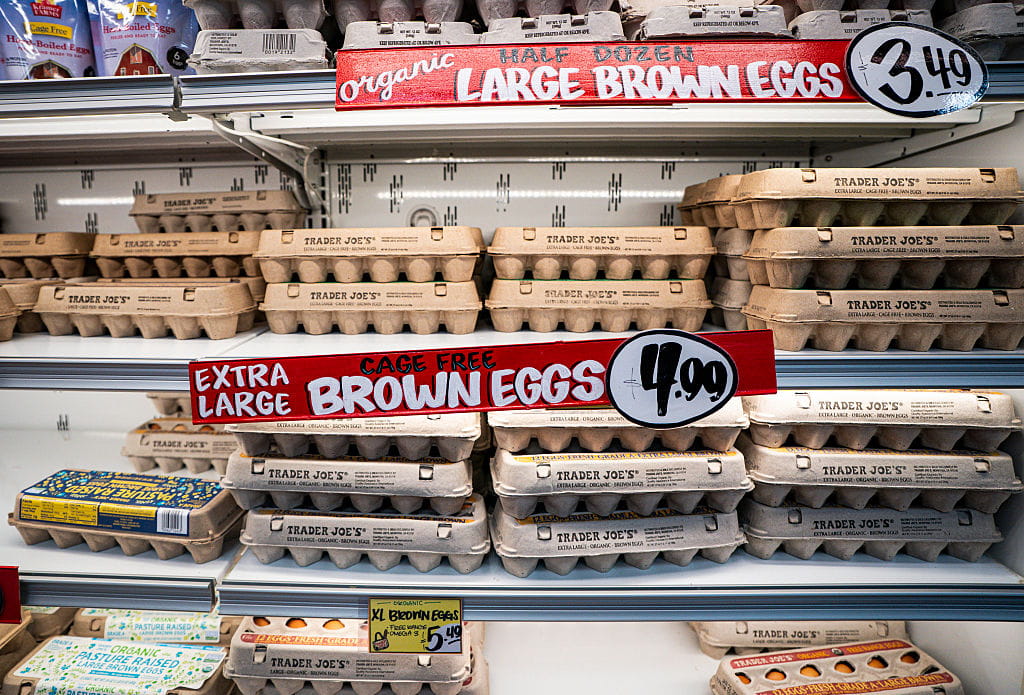
One year later, the left is no longer complaining about egg prices.
Remember a year ago when progressive lawmakers and the mainstream media lost their collective minds over egg prices? Well, a year later, the hysteria over eggflation is gone. No yolk! It took less than a year for the cost of eggs to collapse after rocketing to an all-time high last spring. So, would you like your breakfast eggs scrambled or sunny-side up?
Eggflation Is Done
The US Department of Agriculture got it wrong. In February, the federal agency predicted that egg prices would soar 41% in 2025 due to the avian outbreak. Instead, they collapsed due to a mix of market changes and administration interventions.
At the wholesale level, US egg prices are trading about 45 cents per dozen, their lowest levels since 2019. This means that after topping $8 in March, they have collapsed 95%. At the retail level, consumers are no longer afraid to crack a few shells. In December, the average price for a dozen Grade A large eggs was $2.71, representing a 56% decline from the March peak, according to the Bureau of Labor Statistics.
In response to the worst bird flu outbreak in a decade, the White House acted through a series of measures to stop the bleeding.
Agriculture Secretary Brooke Rollins unveiled a $1 billion, five-step plan that included helping US poultry producers adopt biosecurity measures, providing $400 million in support to affected farmers, using vaccines and therapeutics for egg-laying hens, and dismantling regulatory burdens. The United States also imported eggs from South Korea and Turkey to mitigate the egg shortage.222
Despite the hand-wringing, pearl-clutching, and moon-howling from left-leaning lawmakers, the eggflation problem has been resolved. It also shattered progressives’ claims that supermarkets and egg producers were engaged in greedflation. Using their logic, they are no longer greedy.
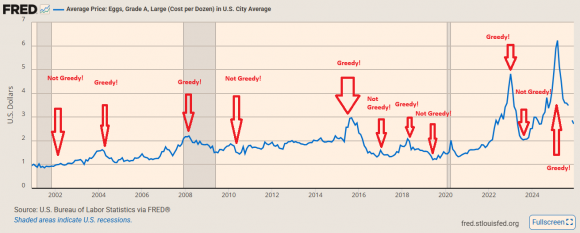
Ultimately, the affordability crisis parroted by Trump’s critics and the media is being crushed day by day in all crevices of the US marketplace.
From Gas to Mortgage Rates
The national average for a gallon of gasoline is $2.83, according to the American Automobile Association. Of course, this number is skewed by the $4.20-a-gallon cost in California. About two dozen states are enjoying gas prices below $2.80.
Motorists are experiencing lower pump prices due to record US crude oil output, which is close to 14 million barrels per day. Loosening regulatory constraints, stable global demand, and regime change in Venezuela have helped stabilize the oil and gas market after the post-pandemic spike that wreaked havoc on drivers.
Last winter, Treasury Secretary Scott Bessent announced that the White House would no longer rely on the Federal Reserve to lower interest rates. Instead, the administration, according to Bessent, would focus on the US ten-year Treasury yield and do the work itself. Today, the yield is hovering below 4.20%, about 60 to 70 basis points lower than a year ago, and the trend had been in place before the Fed restarted its easing cycle in September.
Because multiple lending instruments, particularly mortgages, track the ten-year yield, borrowers are enjoying lower rates. The 30-year fixed-rate mortgage recently fell below 6% for the first time in three years, saving homeowners a few hundred dollars per month on their payments.
A quick glance at the December consumer price index (CPI) report would show that scores for goods and services are lower than a year ago: televisions (negative 7.2%), information technology commodities (negative 4.1%), health insurance (negative 0.5%), airfare (negative 3.4%), and men’s suits (negative 1.8%).
Feeling Bearish
Despite the administration’s gains on affordability, almost two in three Americans say President Trump has not done enough to lower prices on everyday goods, according to a CNN-SSRS poll. The survey found that 64% of respondents think that Trump has “not gone far enough,” and 42% note that the cost of living and the broader economy are the biggest issues they face today. Interestingly, they have little hope for the future, with 58% expecting the US economy to be in “poor” shape next year.
Is this a Bidenomics hangover? Even Federal Reserve Chair Jerome Powell acknowledged that the frustration Americans are feeling about inflation stems from 2021 to 2024, rather than recent developments. This number may surprise many shoppers: cumulative inflation rose just 2.2% last year.
Liberty Nation does not endorse candidates, campaigns, or legislation, and this presentation is no endorsement.