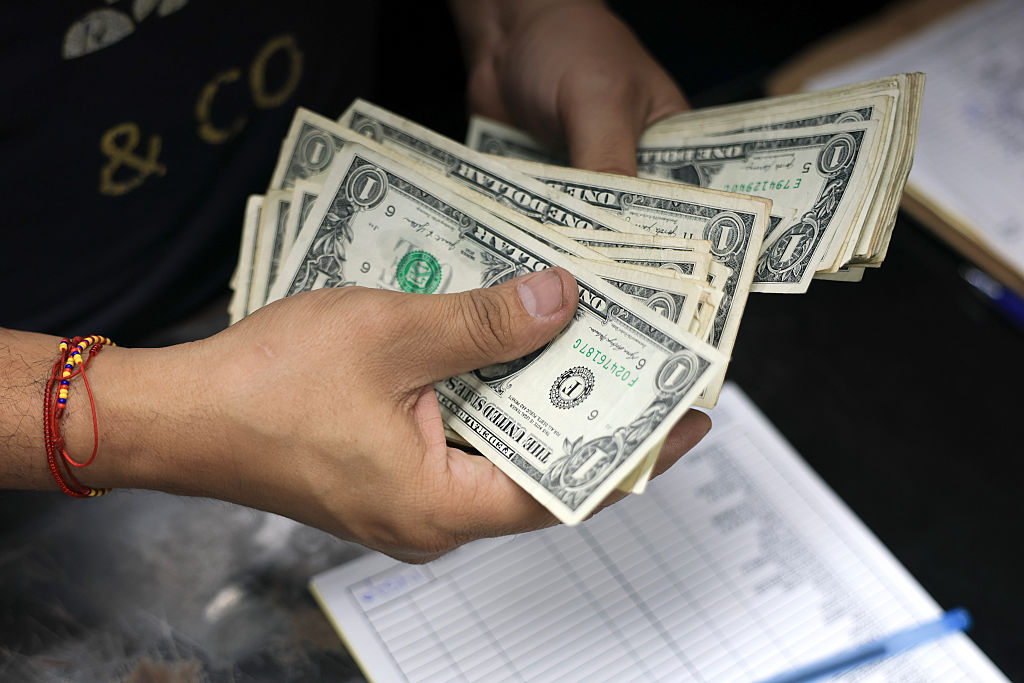
Cash is still king in the Buckeye State.
It is true that many US consumers still use cash to pay for their goods and services. It is also true that most shoppers avoid cashiers and head straight to the self-checkout regularly when checking out their items. What happens when Billy and Suzy want to operate a self-serve kiosk, but with cash, not credit cards or smartphone apps? This has been a challenge for Ohioans.
Ohio Halts the War on Cash
Last month, Ohio state Rep. David Thomas, a Republican, introduced House Bill 554, also known as the Currency Access to Spend Here (CASH) Act. It would serve as another line of defense against the war on cash.
The legislation would require businesses and government offices to accept cash for payments up to $500 and mandate that they offer at least one point-of-sale location that takes physical money. Lawmakers in the Buckeye State also want to restrict retailers from charging cash customers a higher price than those using digital methods.
“It’s simple, cash is the basis for business in America. Our taxpayers should always have the ability to use cash in their daily lives,” Thomas said in a statement. “I hear from residents who may not trust virtual payment options or just prefer to use physical cash. This bill balances the needs of government and business to be efficient with the ability to still rely on physical currency.”
The proposal is still awaiting its first hearing before the House General Government Committee.
The state measure is similar to an initiative in the US Senate. Sens. John Fetterman (D-PA) and Kevin Cramer (R-ND) recently introduced the Payment Choice Act of 2025, a bill that would require businesses to accept cash and prohibit them from raising prices for cash transactions.
While it might seem like the United States has moved on from cash, the data show that Americans still enjoy keeping portraits of Thomas Jefferson, Abraham Lincoln, and, if you’re fortunate enough, Benjamin Franklin in their wallets.
Paper Money
In the age of do-it-yourself automation, scores of retailers, including Costco, Target, and Walmart, have installed self-serve checkout machines that typically do not accept cash. As a result, if passed at either the federal or state level, it could prompt these companies to make minor adjustments to their strategies.
But why would they even impose such hurdles anyway? Remember, cash is … second in command.
This past spring, the Federal Reserve Financial Services published its 2025 Diary of Consumer Payment Choice, a study of US consumers’ payment habits. Economists found that cash accounted for 14% of all domestic transactions last year, trailing credit cards (35%) and debit cards (30%). Here is a breakdown of how payments are made on average every month:
- Credit Cards: 17
- Debit Cards: 14
- Cash: 7
- Digital Transfers: 6
- Check: 1
Meanwhile, a recent Capital One Shopping Research Report determined that 79% of US consumers use self-checkout lanes regularly. It might seem counterintuitive based on personal experiences, but 70% of the respondents said they prefer express kiosks because they are faster than human-staffed lanes.
Ultimately, for retailers, it could be a balancing act: ensuring shoppers have every means available to pay for their toothpaste, chicken breasts, and underwear, and keeping the machines available for those who do not enjoy talking about the weather with cashiers. When Big Retail is chasing every dollar, it only makes sense to be as accommodative as possible.
Cash Is King
The election of President Donald Trump may have put a nail in the coffin of central bank digital currencies (CBDCs). The war on cash appears to have slowed, but this does not mean the battle has reached its demise in the international marketplace. It might not seem like much, but ensuring physical money stays alive in the economic landscape delays the inevitable introduction or acceleration of mandates, tracking, and censorship.
Liberty Nation does not endorse candidates, campaigns, or legislation, and this presentation is no endorsement.