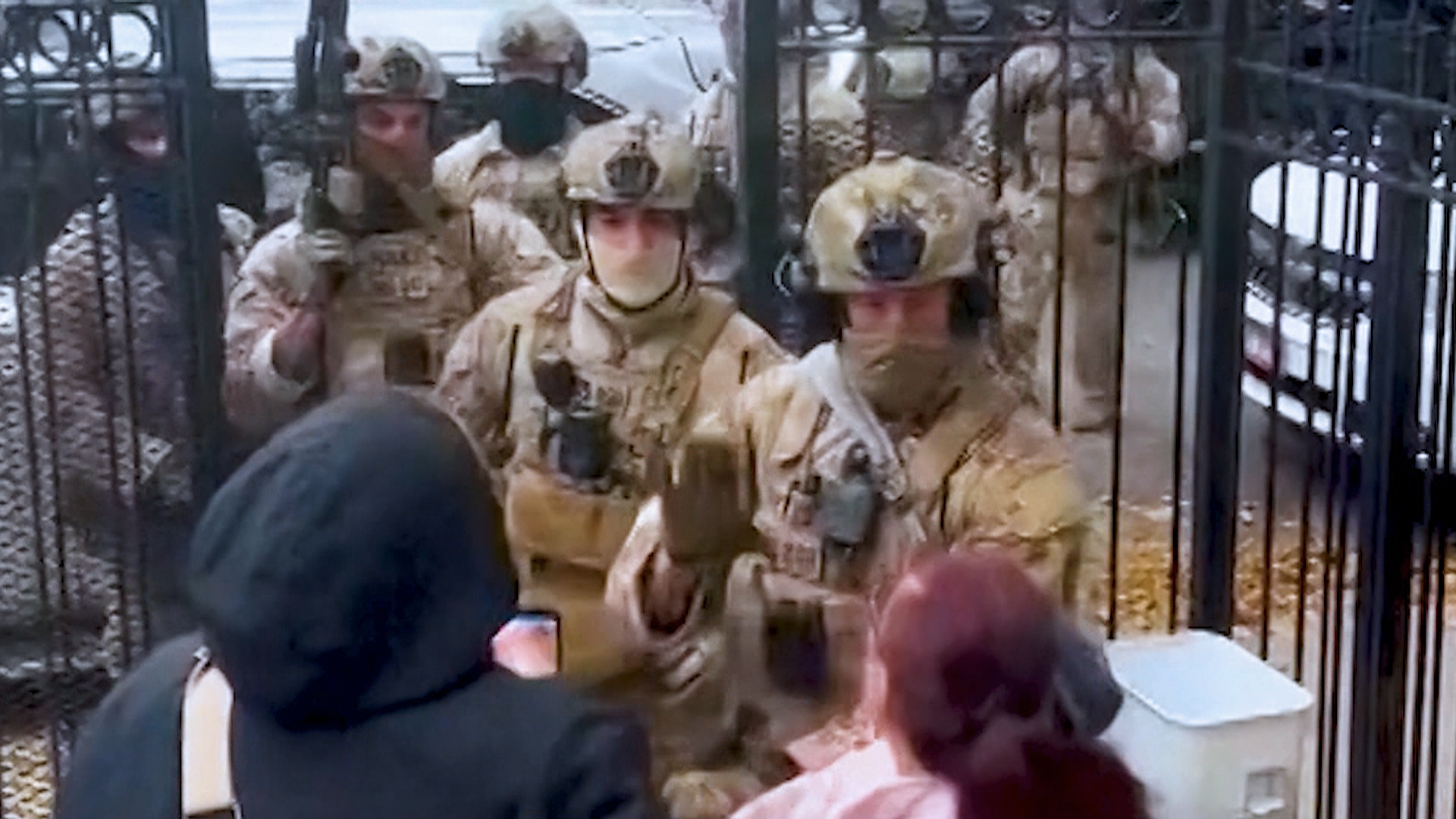
CHARLOTTE, N.C. – During a Saturday service project at Casa de Dios church, a normal day of cooking, clearing the woods, and children playing soccer was shattered when Immigration and Customs Enforcement (ICE) agents moved in unexpectedly. As terrified congregants fled into the trees or hid inside, agents detained an El Salvadoran church member, deporting him ten days later and leaving behind his wife and adult children.
“It was a normal day,” recalled Pastor Victor Ramirez. “We heard the news about ICE, but we said, ‘this is a safe place.’ We were not doing anything; we are not criminals.”
The November incident was part of a broader enforcement sweep dubbed “Operation Charlotte’s Web,” which has ignited a firestorm in Charlotte’s vibrant immigrant community and raised a profound crisis for faith leaders: Can the government freely pursue immigration enforcement within the walls of a church?
The operation unfolded after a significant policy change. In January, the White House rescinded longstanding “sensitive locations” guidelines that had traditionally directed ICE to avoid enforcement at places like churches, schools, and hospitals.
This policy shift has empowered a wave of intensified enforcement actions in cities with large immigrant populations. While operations like Charlotte’s are locally named, they reflect a concerted national strategy. ICE arrests in the interior of the U.S. have risen, and arrests at or near sensitive locations, once rare, have become a contentious focal point of fear and legal challenges from advocacy groups.
Federal agents launched Operation Charlotte’s Web in November, aiming to target possible criminals in a metro area home to over 300,000 foreign-born residents. Officials reported apprehending upwards of 370 people.
“If we have known murderers and drug dealers, and really bad people – we want to get them out,” said President Donald Trump during a recent press conference.
However, local pastors and attorneys describe the results as a “shock and awe” campaign that has spread fear far beyond its intended targets.
For Pastor Ramirez, the arrest at his church felt like a violation. It happened after a during a service project after a Saturday service, and the man detained and deported shared the message that day.
“I understand that ICE has to find criminals, I understand and agree with that,” the pastor said, standing outside Casa de Dios. “He’s not a criminal. This is church.”
The impact has rippled far beyond a single arrest. Faith leaders report aggressive tactics that have frightened entire congregations. Many immigrant churches stopped holding services for weeks. According to local reports, some 30,000 children stayed home from school in the wake of the operations.
The dilemma is acutely felt by pastors like Dan Titan of Casa Viva Church on Charlotte’s east side, who leads a congregation of about a thousand, mostly Latino immigrants.
“Yeah, I can’t lie. There are people without some papers, of course,” Pastor Titan acknowledged. “We are the church. We are the body of Christ. We are Christian, and we need to obey the law. We are not against the law. But within there’s different ways to do the law, you know.”
He went on to confirm the pervasive fear: “They were scared. That’s for sure… There’s still people just in their homes.”
Confrontations like these are shifting from sanctuaries and public spaces into the courtroom. Attorney Anna Cushman of Tedesco Legal, who works with detainees, argues that in church-site detentions, the operations threaten a fundamental right.
“I first think about the Constitution, protecting the free exercise of religion,” Cushman said. “There’s not an exception there that says you get to exercise your religion, so long as you don’t get in the way of immigration enforcement. There is no exception there.”
For Cushman, a Christian, the issue is also a matter of faith. “What’s going on is that we are not welcoming the stranger. We are not treating the least of these as if they are Jesus,” she said. “We are called to this kind of radical hospitality.”
As the operation took root, a coordinated network of citizens sprang up in opposition. Non-profits, local churches, and neighbors organized protests, blew whistles to warn of approaching agents, and handed out “Know Your Rights” flyers. Volunteers delivered food to families too afraid to leave their homes.
“We don’t need ICE coming into Charlotte disrupting our city, creating fear in our city and work space,” said Niecy Brown of the North Carolina AFL-CIO at a press briefing.
Charlotte City Council Member-elect JD Mazuera Arias held a similar disposition: “This is not about public safety. It is not about finding criminals. It’s about fear, quotas, and it’s about control.”
The rallying cry has been organized around a central message: that loving your neighbor isn’t just the right thing to do—it’s holy.
ICE declined CBN News’ request for an interview. In a statement, the agency said its actions in Charlotte were “lawful and targeted threats to public safety.”
As the legal and political battles continue, the human and spiritual cost remains forefront for leaders like Pastor Ramirez. In a final plea to Washington, he asked for compassion.
“We pray for {President Trump},” Ramirez said. “All we ask for is some mercy because people who attend our church… they’re not criminals. We serve a purpose – a purpose of the Lord. That’s why we are here.”
The nation is left to navigate the intersection of faith, law, and community, where the principle of sanctuary now hinges on judicial interpretation and political will.