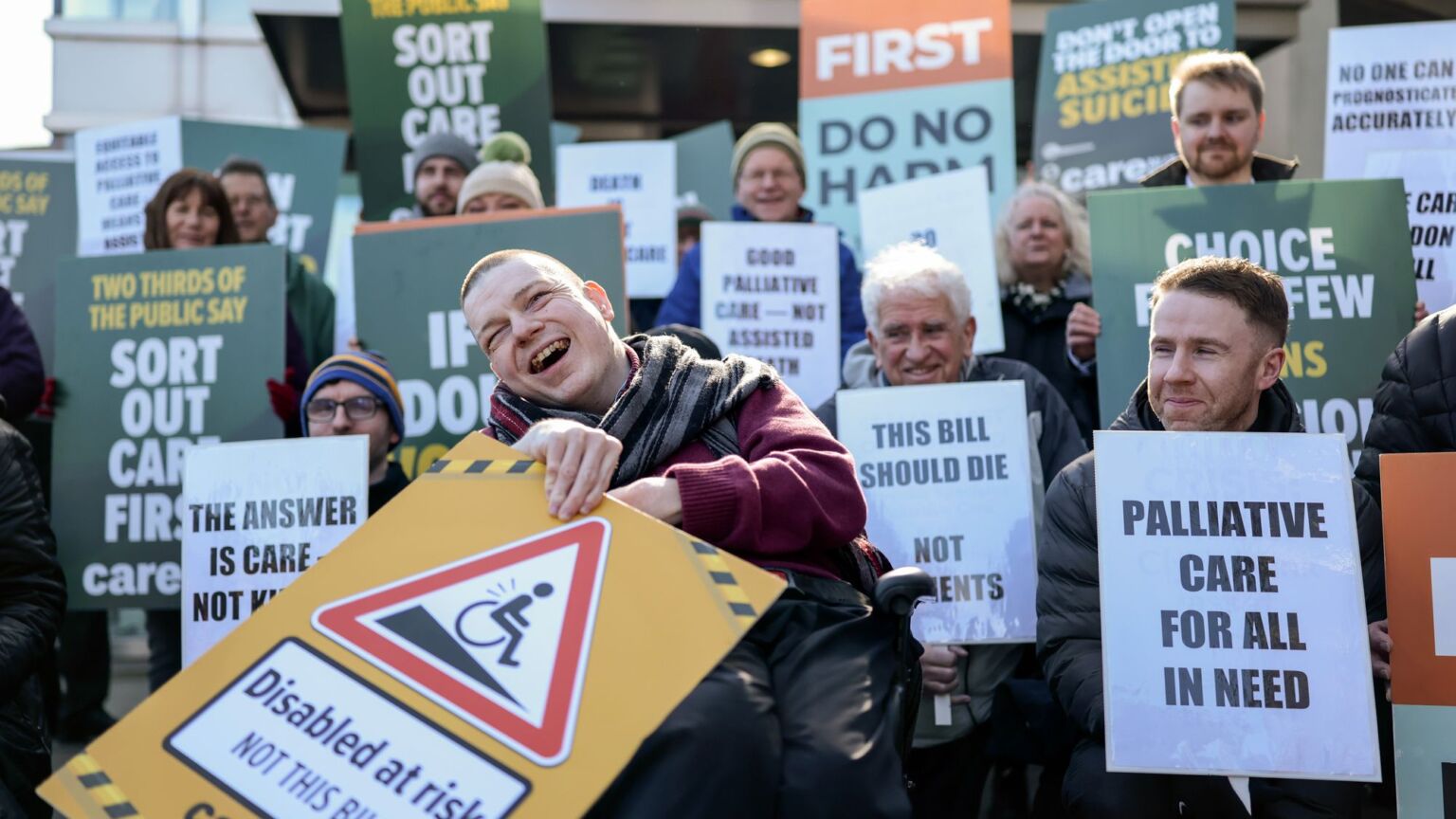
On Tuesday evening, the Scottish parliament voted 69 to 57 to reject the Assisted Dying for Terminally Ill Adults (Scotland) Bill. There was respect in Holyrood for the enormity of the question – and firm resolve when it came to answering it. The message sent by MSPs is one that every MP in Westminster needs to hear.
Scotland’s rejection of assisted dying is particularly significant considering the political makeup of its parliament. More than 70 per cent of seats in Holyrood are held by centre-left or left-wing parties, which tend to be more supportive of assisted suicide. Yet the bill was defeated across party lines, by MSPs who examined the evidence and concluded that no amendment had made it ‘safe’. It was a vote for our common humanity, for hope over despair.
What killed the bill was scrutiny. When it passed the committee stage last year, the margin was 70 to 56 in favour. Over the months that followed, as MSPs confronted the detail, support faded. By the final debate, the leaders of all three of Scotland’s largest parties opposed it. The pattern is clear: the closer you look at assisted-suicide laws, the harder they are to support.
Jeremy Balfour, an independent MSP who was born with no left arm and a right arm that ends at the elbow, gave one of the standout speeches of the evening:
‘Imagine being told by many people, including a number of politicians, that you are a burden on society, and the benefits that you rely on to survive could be better spent elsewhere. I want you to imagine that you’ve heard on numerous occasions the words, “I’d rather die than live like you”. How do you think you would feel watching this debate? I think you would rightly feel terrified.’
Balfour’s fear is not hypothetical. Supporters of Kim Leadbeater’s assisted-dying bill, which is currently being debated in the UK parliament, like to cite Oregon’s Death with Dignity Act as a model for Britain. This has now been in place for over 25 years. In its early years, around a third of assisted-suicide patients cited being a burden as a concern. By 2019, that figure had risen to nearly 60 per cent. In 2022, one third of Canadians who ended their lives under the country’s Medical Assistance in Dying law cited ‘being a burden’ as among their reasons. This is hardly evidence of autonomous choice. Vulnerability is driving these decisions.
The Scottish result reflects a trajectory we are seeing internationally. In Slovenia last November, voters who had backed assisted suicide in a 2024 referendum rejected the actual legislation once they saw what it contained. In Westminster, the Leadbeater bill passed the Commons, but it is now stalling in the Lords under growing opposition. The longest-serving MPs have tended to be the most consistently opposed to assisted dying. The more legislators learn, the clearer their opposition becomes to these laws.
The public polling that proponents of assisted dying lean on so heavily deserves the same scrutiny. Dignity in Dying has made much of polling that suggests a majority of Brits support assisted dying. But a different picture emerges when you dig into the data. More in Common found that, while only 13 per cent oppose assisted suicide in principle, 58 per cent are concerned that elderly people may seek it out because they feel like a burden, or because they are pressured into it. This reflects sympathy for an abstract idea that erodes when real consequences are exposed.
The Leadbeater bill now seems certain to run out of parliamentary time – there remain more than 850 amendments to be debated in only five allocated sitting days. Its supporters will no doubt blame the clock for its failure. But bills that command real confidence get moved through – indeed, it is telling that the Labour government has refused to allocate it anymore time. The Leadbeater bill is stalling because parliament is doing exactly what Holyrood did: examining the detail and finding it unsafe.
Scrutiny is what will kill assisted dying: the case against these laws only gets stronger the longer you look.
Robert Clarke is director of advocacy for ADF International. Follow him on X: @Rob_ADFIntl.