The pros and cons of new tests that claim to detect cancer in its early stages.
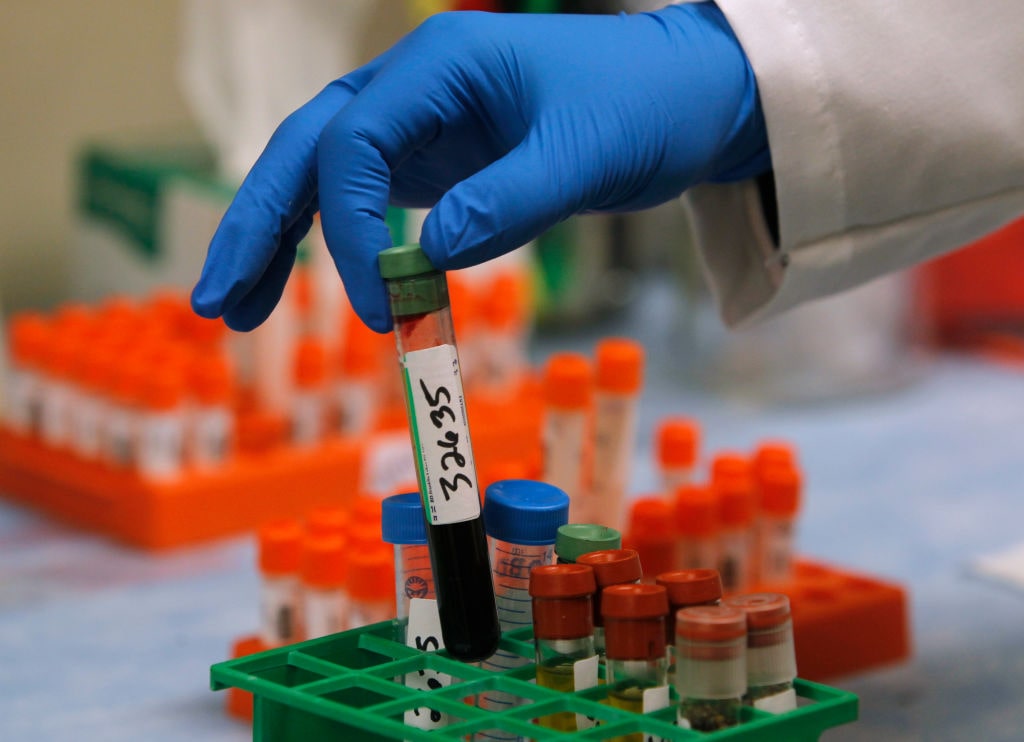
In the ever-changing health care landscape, early-detection blood tests for cancer are gaining traction. Although the tests are not yet approved by the Food and Drug Administration (FDA), manufacturers are heavily lobbying legislators, spending half a million dollars at a clip to get the agency’s crucial blessing. Once the FDA gives the go-ahead, and Medicare picks up the tab, it will be a never-ending gravy train. Nevertheless, the jury is still out concerning the efficacy of such a medical procedure.
There is no shortage of developers eager to get in on what could be a lucrative product, but as manufacturers try to elbow each other out of the way, new data suggest the test’s effectiveness is mixed.
Cancer — the Key Is Early Detection
The move to find cancer cells early is a noble endeavor, but thus far, the blood tests appear fraught with landmines. The New York Times recently published an article about the case of William Hill, a Brockton, MA, firefighter in his mid-fifties. He took Galleri, an early-detection blood test developed by GRAIL. Hill had already been treated for testicular cancer, yet Galleri detected metastatic testicular cancer. Hill began treatment right away and believes that the test helped him skirt another bout of the disease.
But that’s just one case, and the aggregate numbers are where the problems lie for the blood test:
“In GRAIL’s most recent study, 99 percent of roughly 23,000 people screened with Galleri got a negative result. Four in 10 of the positive results were later deemed false. The test missed 60 percent of cancers that went on to be detected within a year, picking up cancer 40 percent of the time.”
When you’re talking life and death, 40% does not seem like a reassuring number, not to mention the mental health stressors for the four in ten who were given a false positive diagnosis. And what about negative results that are inaccurate?
In a 2022 trial, 500 firefighters in Mesa, AZ, were tested. All save one came out negative. Those who received negative test results were less likely to undergo regular testing. Fire Capt. Matt Kobylinski was given the all-clear and didn’t have his colonoscopy for over a year. As The Times noted: “When he finally went in for his colonoscopy, doctors found Stage 4 colon cancer.”
Worse still, over the next two years, “doctors found 14 cancers among the 500 firefighters who had received a negative Galleri test. They were dumbfounded.” The GRAIL test costs $949, and because it is still in development, insurance does not cover the cost.
Touch Oncology, a project designed to advance global medical education, reviewed early-cancer-detection blood tests and observed that a study of their efficacy “is neither practical nor feasible to execute within an optimal timeframe, and could significantly delay clinical implementation.” Moreover, it declared, “Detecting statistically significant reductions in mortality for the majority of cancers could require more than a million participants to be enrolled and followed for a decade or more …”
In the end, purchasing and undergoing a blood test to detect cancer largely depend on the individual taking the test. Will they panic if a looming cancer is found? Others, given the all-clear, might delay standardized testing out of a false sense of security. At this point, some may believe that such a new frontier in cancer diagnostics is not worth the risk.
Liberty Nation does not endorse candidates, campaigns, or legislation, and this presentation is no endorsement.