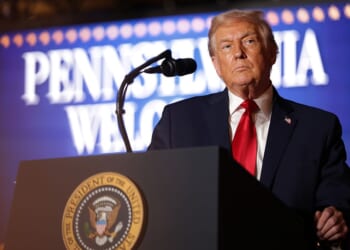
A few weeks ago, Egyptian President Abdel Fattah El-Sisi — reportedly with the blessing of the US State Department — extended an invitation to Iranian President Masoud Pezeshkian and Foreign Minister Abbas Araghchi to attend the Sharm el-Sheikh Summit on Gaza’s future, which was to be co-chaired by President Trump. Domestic and international observers saw this as a historic opportunity for dialogue between Tehran and Washington.
Yet the Islamic Republic declined to participate, with the Iranian foreign ministry justifying its rejection by citing America’s “criminal acts” during the 12-Day War: namely, joining Israel’s bombing raid and thus violating Iran’s sovereignty in contravention of international law. Soon after, Iran’s foreign minister condemned Trump’s decision to resume American nuclear testing as a “blatant violation of international law” and Washington’s obligations under the Nuclear Non-Proliferation Treaty.
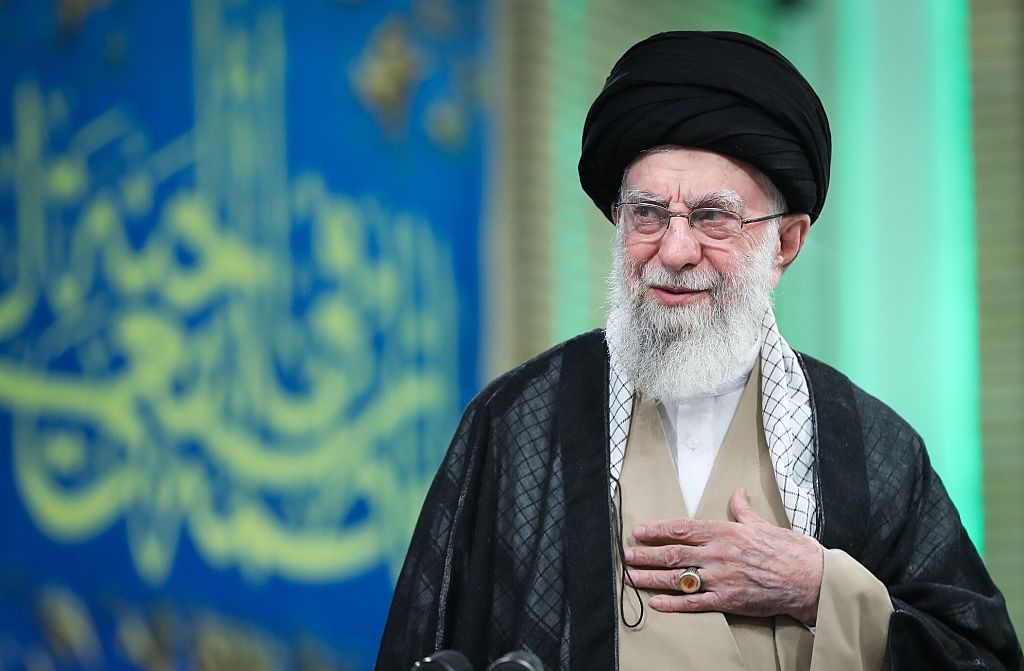
On the surface, these gestures appear merely rhetorical — symbolic denunciations intended for foreign media. Yet they reveal a consistent pattern in Iranian discourse: an almost obsessive appeal to international law and the alleged double standards of the Western powers in applying it. Iranian leaders, including Supreme Leader Ali Khamenei, routinely invoke the sanctity of international legal norms to indict Washington and its allies for hypocrisy. This language of legality, justice, and sovereignty has become central to Tehran’s moral posture as a self-declared righteous challenger of what it calls the “hegemonic order.”
We have, then, a curious paradox: a state that defines itself as revolutionary, revisionist, and “anti-Western” is apparently one of the last true believers in a rules-based international order that the Western powers are increasingly abandoning. Leaders in Tehran and other “outlaw” states often believe, with apparent vehemence and sincerity, that if they can just get the United Nations or some other transnational body to view their situation objectively, the world will know, once and for all, that they aren’t outlaws.
In other words, the Islamic Republic (and China and others) still have faith in the institutional and legal architecture of the liberal international order — an order designed to enshrine Western priorities. The invocation of international law by a regime that claims to reject Western liberal modernity isn’t merely incoherent; it is a symptom of an internalized Westernization, a sign that the ideological liturgy of liberal modernity has colonized even its most strident critics.
Iran is not alone in this contradiction. Russia, too, has cloaked its actions in Ukraine in the language of international law. Moscow’s justifications for its “special military operation” have drawn heavily on the doctrines and precedents pioneered by NATO itself — particularly the “responsibility to protect” invoked during the 1999 bombing of Yugoslavia. In this case, Moscow claims to be protecting ethnic Russians in eastern Ukraine trapped under an ethno-chauvinist Kyiv regime. China, meanwhile, regularly extols the principles of state sovereignty, non-interference, and equality enshrined in the United Nations Charter. In each case, powers positioned as adversaries of the West strive to articulate their worldviews within the normative and legal frameworks that the West itself created.
On one level, this may indicate a certain pragmatism: none of these states seeks to dismantle the liberal international order outright. Their declared objective isn’t revolution, but reform — an ostensibly fairer and more balanced application of existing rules. Yet such demands betray a fundamental naiveté. To call for the impartial enforcement of international law presupposes that such a law exists independently of power — that international norms can restrain states, and that international institutions can tame the will to power. But this is fiction. From a realist standpoint, international law isn’t an autonomous realm of justice; it is an expression of power, a moral architecture used to clothe domination in legitimacy.
As Carl Schmitt observed, every legal order is ultimately grounded in a concrete spatial and political order: the result is a “pluriverse,” which he identified as the nomos: the concrete, culturally-rooted structural reality of the Earth. The artificial, legalistic world that emerged after 1945 and that deeply entrenched itself after 1991 thus merely reflects the geopolitical ascendancy of the West and the universalization of its parochial values under Pax Americana. To demand that the international legal system be applied fairly and equitably is thus to demand the impossible: the false dream of a neutral, global law, detached from the particular political and material conditions that produced it and that overcomes the biases of those self-charged with enforcing it.
In their appeals to legality, these “anti-Western” powers expose not only their idealism, but also their dependence on the very metaphysical assumptions of liberalism that they purport to oppose.
The paradox runs deeper still. The faith of Iran, Russia, China, and others in legalism, proceduralism, and egalitarianism in international politics points to their thorough entrapment within the globalist paradigm of modernity. Each of these states proclaims its civilizational distinctiveness — Persian, Russian, or Sinic — but all are, in essence, products of the modern state system. Their bureaucratic rationality, meliorism, and moral universalism are hallmarks of the same Enlightenment project that gave rise to liberalism. They are haplessly embedded in the very worldview they claim to want to overthrow.
Modernity’s essence lies in its universalizing impulse — the conviction that history has a direction, that reason can order the world, and that moral progress can be codified into human institutions and norms. Even those regimes that reject the West’s liberal ideology have internalized this mental structure.
The Islamic Republic’s doctrine of “resistance” against America and Zion, for instance, is a sort of liberation theology, premised on a universal moral dichotomy between the oppressed and the oppressors, possessed and dispossessed, echoing the moral Manichaeism of liberal humanitarianism. Despite its broad support for multipolarity, China remains a defender of economic globalization and inclusive global governance based on what it calls the “common values of humanity.” Likewise, Russia’s self-conception as a Katechon — an Orthodox Christian bulwark against terminal liberal decline and a defender of “traditional values” and “civilizational diversity” — echoes the same universal and moralistic tone it attributes to the Global West.
In their current form, the so-called “pariah states” are not civilizational alternatives to the liberal order, but its dialectical mirrors. They contest its dominance not by exiting its sacred moral canopy, but by claiming to embody its true meaning. Just as Marxism arose within and against liberal capitalism, these contemporary challengers articulate their opposition within the same fundamental framework. Their rhetoric of justice, equality, and international legalism reproduces the liberal myth of moral progress, even as it is turned against liberal (political) hegemony.
“To call for the impartial enforcement of international law presupposes that such a law exists independently of power.”
Realism teaches that in the anarchic realm of international politics, power, not morality, is the final arbiter. Norms, laws, and institutions are mere superstructures built upon the scaffolding of material power: the ability to transport whole infantry divisions across the globe, to parachute special forces behind enemy lines, to deliver strategic weapons that can turn nations and continents into radioactive glass. When Iran denounces US actions as “illegal,” it is not appealing to some transcendent order of justice (even if it professes to do so); it is engaging in the moral theater of power politics. But by doing so, it inadvertently legitimizes the very discourse it seeks to undermine.
Indeed, the liberal international order survives not because of its moral superiority, but because even its critics play by its discursive rules. Every invocation of international law, every appeal to the United Nations, every citation of the NPT or other postwar treaties reinforces the moral authority of the very institutions that entrench Western dominance in the first place. The unwitting tragedy for states like Iran and Russia is that their defiance is conducted in a language that ensures their subordination.
The recent turn toward civilizational discourse — what might be called the “pluralist turn” in global politics — appears at first glance to signal a break from liberal universalism. When leaders from Beijing to Moscow to Tehran speak of cultural particularity, historical continuity, or their unique civilizational spirit, they seem to reject the homogenizing cosmopolitanism of liberal modernity. Yet this, too, may conceal a moral universalism in new garb.
This is because, at present, even civilizational states (like nation-states) are first and foremost modern states, which are systemically prone to totalizing their non-political and sociological basis of power for more central control. As modern Leviathans, they politicize every aspect of human life to become the sole sovereigns of human society, obliterating the traditional guardrails that historically separated and thereby protected the different domains of human societies (familial, cultural, religious, economic, political, and others) from overreach and tyranny.
By concentrating all authority within itself, the totalistic modern state cannibalizes its own body politic to feed its incessant hunger for power — eating away at the very social fabric that sustains it and that it is supposed to protect, and leaving a hollow shell organized by a draconian bureaucracy and ruled by a professional managerial class whose values and ideals refract those in London or New York.
Given the Manichaean backdrop of the postwar order — good versus evil, democracy versus autocracy, human rights versus atrocity — civilizational states could be even more tempted to assert their own exceptionalism or mission, inevitably claiming a universal significance for themselves. They claim for themselves a world-historical role in redeeming mankind from decadence and barbarism, and elevate liberal universalism as the alternative. They could subvert their own historical cultures by reducing them to an ideology, tout their inherent superiority, and claim for themselves a world-historical role in redeeming mankind from decadence and barbarism.
Civilizational politics thus risks becoming yet another moral crusade, a dialectic substituting one universalism (the liberal kind) for a new one elevated as its other. In the process, the rhetoric of cultural authenticity may paradoxically deepen, rather than overcome, the moralization of international relations. But its ultimate result remains tragically unchanged: more global convergence, the proliferation and hardening of modern statism, and the cancerous growth of modernity and its metaphysics.
Significantly, the return of “civilization” does not necessarily herald the return of realpolitik; it may instead inaugurate new forms of moral imperialism, with each civilization seeking to universalize its own particularity as the Civilization fighting global barbarism — in a clash of abstracted civilizations, a Huntingtonian world where civilizations merely mask the global domination of the modern state and all harbor the same force behind their religio-civilizational “veil” (Confucian, Orthodox, Shiite): namely, modernity.
The tragic insight here is that the moralistic impulse seems inescapable within the framework of the modern state. Every modern regime — whether liberal, communist, Islamist, or nationalist — claims to possess the formula for human flourishing. Modernity itself is a theological project, animated by the belief that politics can and must redeem humanity. As long as this metaphysical conviction endures, the moralization of international politics will persist and, with it, the illusion that law and justice can transcend power.
In the end, the ideological opposition between the “liberal” West and the collection of renegade, revisionist, non-Western powers is an illusion. The contest between them is not a clash between different worlds, but an internal struggle for primacy within the same modernist paradigm.
Iran, Russia, and their allies self-project as the moral conscience of an unjust world order, yet their very moralism reveals their complicity in the postwar world’s ideological foundations. Their invocation of international law is a testament to its total victory — the triumph of a moralized conception of politics that even its enemies cannot escape, at least until such a time when modernity itself, as a zeitgeist and worldview, disintegrates under the weight of its discontents and contradictions.
The true alternative to liberal hegemony would require the deliberate renunciation of the political and normative universalism associated with the modern project, rather than multiplying “universalisms” under different national or civilizational disguises and claiming one’s own moral superiority. Meanwhile, practically speaking, the insistence on vindicating sovereign “rights” under international law leads these powers to miss actual opportunities to engage with the West and win real concessions — such as by showing up to meet Trump in Egypt.
Ironically, Trump, the leader of the power that presides over the liberal imperium, has moved on from rules-based-order cant. It’s time the self-proclaimed enemies of that order did the same.