Back in the 1980s, I still lived at home with my parents as I finished college. The way we kept up with national events was to watch the NBC Nightly News. Back then, it was one of your few options for keeping up, besides reading the morning paper.
Miss one half-hour report, and most of the time you didn’t miss much. Then came the night of Dec. 19-20, 1989 – when our country’s soldiers jumped into Panama for Operation Just Cause, the invasion to depose General Manuel Noriega.
My family had been out to supper to celebrate my graduation, so we skipped the news that night. The next day, we caught the nightly news and were shocked. My dad and I looked at each other: “Wait a minute – we’re at war in Panama? When did that happen?”
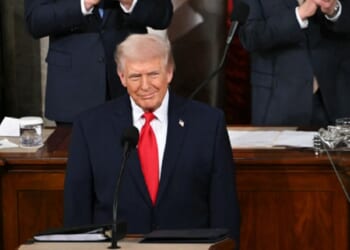
Fast forward 37 years: today, missing one hour on Twitter/X is the equivalent of missing a day’s worth of news in the Eighties. The past 14 hours have offered an overflow of news, ever since President Donald Trump offered his early-morning video update on the attack on Iran’s leadership.
I woke up in the middle of the night to find Twitter/X notifications blowing up, and that our own Stephen Kruiser had posted an early-morning article confirming the attack. Throughout the day, the news kept getting better for this child of the Seventies and Eighties, who lived through the 444-day hostage crisis:
Then, the best news of all:
Iranian Supreme Leader Ayatollah Ali Khamenei is Dead
A Note for Younger Readers
Lest you think I am inappropriately bloodthirsty, let me give our younger readers a history lesson. Back in the Seventies, before a large segment of today’s voters were even born (the millennial cohort starts in 1981), the United States had diplomatic relations with Iran. It’s hard to believe now, but there was a U.S. embassy in the capital city, Tehran. Then, in Nov. 1979, the Iranian Revolution broke out, and radical students seized the embassy — and 66 hostages. Some were let go, but 52 Americans were held captive for 444 days.
Our nightly news media never let us forget we had captive hostages. Just four days after the storming of the embassy, ABC ran a special program, “The Iran Crisis: America Held Hostage.” That turned into “America Held Hostage: Day XX,” where the x’s were a counter for the number of days. Newscaster Ted Koppel took over the program in March 1989 and turned it into Nightline.
Growing Up in the Shadow of US Restraint
Even as an eighth grader, I found our leaders’ lack of resolve, and our lack of initiative in doing something to get our hostages back, humiliating and infuriating. I remember writing an essay for my English class when we were close to day 150 of the crisis, bemoaning our lack of action. Then-President Jimmy Carter didn’t choose action over negotiation until April 1980, five months later. Operation Eagle Claw had to be aborted due to mechanical failures and a dust storm. During the retreat, eight of our servicemen were killed in an air collision. Despite the efforts of our military, our national pride had never been so low.
The hostage crisis dragged on miserably through the rest of the year. Coupled with the rampant inflation of the time (you thought 6% interest rates were rough?) and the “malaise” of the Carter years, there wasn’t any good news until Ronald Reagan was sworn in as president on Jan. 20, 1981. The minute he was sworn in, the hostages were released. I remember that Reagan announced it at the beginning of his inaugural address.
So forgive us old-timers for being happy at the removal of an evil leader, a man who held his people in bondage, who would not let them be free. Khamenei, the successor to the evil leader who presided over the Iranian hostage crisis, denied his people rights that we in the West take for granted.
No longer will the Ayatollah Khamenei be able to suppress his people. President Trump has given the people of Iran an opening. As our president said in his video message, what they do with it, after the U.S. and Israel finish dismantling the regime, is up to them.
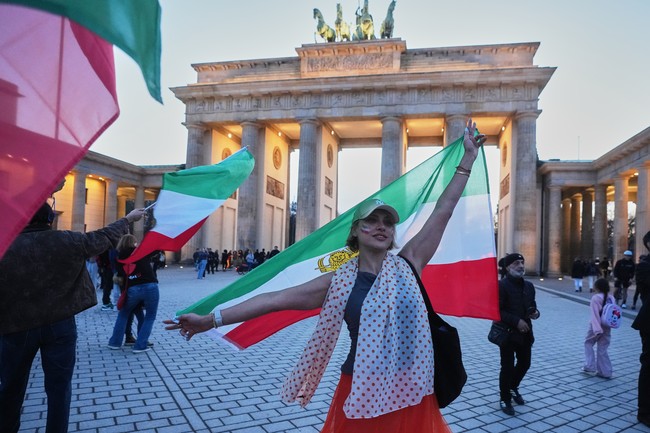
I watched the fall of Iran to the mullahs as an eighth-grader in South Carolina. But there were millions of Iranians who lost their country. Read the words of this doctor who immigrated from Iran, and his hopes for the future.
🇮🇷 47 years ago, I stood at a window in Tehran as a 3-year-old boy, smelling burning tires and hearing the chants that would steal my country. I didn’t have words for what was happening. Today, I am watching smoke rise over the same city — but this time the smoke is not the end… pic.twitter.com/RGFXMOaykb
— Houman David Hemmati, MD, PhD (@houmanhemmati) February 28, 2026
Editor’s Note: Support PJ Media’s coverage of international events and other key news in this 250th year of America’s existence. Join PJ Media VIP and use promo code FIGHT to get 60% off your membership.