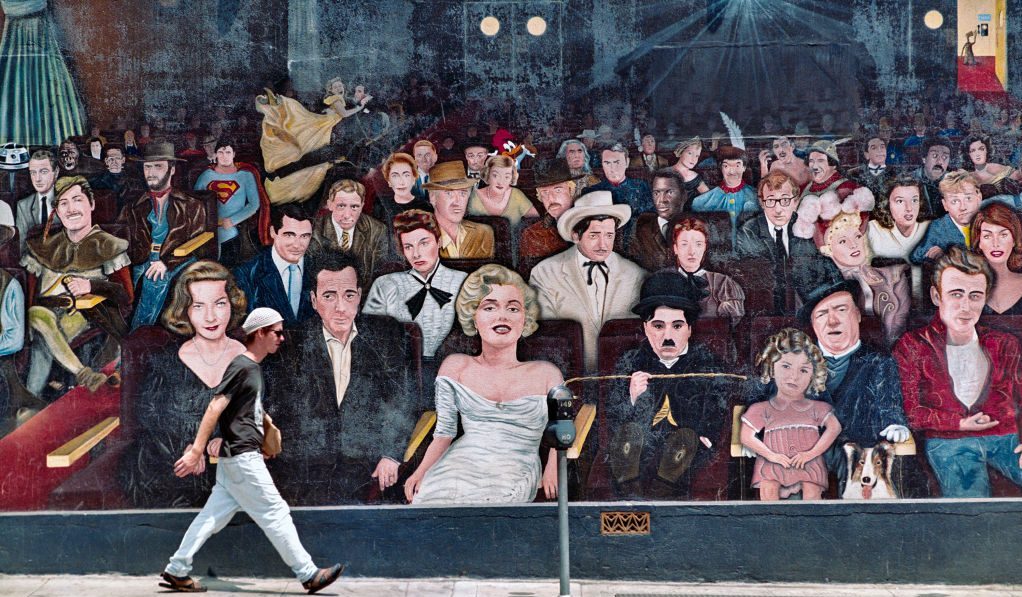
There is a cloud of lousiness that hangs over many products and services these days, as though the people responsible for making it, or doing it, weren’t too concerned about the result. Sometimes this can shade over from insouciance to real perversity. As my friend Matt Feeney put it to me: “Capitalism seems to have moved into an actively misanthropic stage. Corporations don’t just hate their workers. They hate their customers.”
When it was announced last week that Netflix made an offer to buy Warner Brothers film studios and associated properties, many people in Hollywood expressed dismay. The deal has since been contested by Paramount, with a “hostile takeover” bid of their own. However the ownership of Warner Brothers shakes out, it is worth thinking about the intuitions that caused people in the film and television business to freak out about the prospect of Netflix taking over a major studio. Last Thursday, a group of top film producers and other industry players sent a joint letter to congressional representatives, urging them to block the deal. It was published anonymously for fear of retaliation by Netflix, and expressed scepticism that films produced under Netflix would continue to be released in theatres, despite Netflix’s assurances. The film industry group pointed out that Netflix’s incentives are such that they do not want people sitting in theatres, as this represents time not spent on the platform. The industry letter suggests the whole ecosystem of Hollywood would be put at risk with this deal, and the survival of an art form put in doubt.
The fear rests on the sense that Netflix is not interested in movies or television — you know, characters, stories and all that. Their business model comes out of Silicon Valley rather than Hollywood. The deal, if it were to go through, could be understood as a case of alien ownership, in which an enterprise is controlled by parties who have no history with, and no particular sympathy for, the product or service that the firm exists to provide — no emotional or intellectual investment in the craft of it.
In his excellent article on Netflix from 2023, David Roth quotes the actress and filmmaker Justine Bateman: “I’ve heard from showrunners who are given notes from the streamers that ‘This isn’t second screen enough.’ Meaning, the viewer’s primary screen is their phone and the laptop and they don’t want anything on your show to distract them from their primary screen because if they get distracted, they might look up, be confused, and go turn it off.”
A show that is too interesting will monopolise a person’s attention, and it is assumed that nobody has the luxury of getting invested in a story to that degree. What is needed is a show that is glossy but humanly vacant. Of course, some of the shows on Netflix don’t fit this description; Stranger Things is loved by many. Sometimes the human spirit shines through despite all.
But, like every other institution subject to “managerialism”, Netflix is run by cadres of people whose competence is an omni-competence, expressed in an idiom of metrics that is transportable across industries. The making of widgets is to be optimised by people who may never have held this particular kind of widget in their hand, and gazed upon it lovingly.
The lovelessness of managerialism is like a pillow held firmly over the face of culture. Roth writes, “there is a shrinking and flattening that comes with being owned by people whose interests, on balance, are themselves notably small and flat. Every business these people touch winds up cheapened, worsened, and dispiritingly similar. … [The point is] to find just how diminished and demeaning a version of a once-useful service people are still willing to pay for.”
Under managerialism, the thing-in-itself (here, television drama) recedes; all the real action happens on a meta level. But only primary things, concrete things, are lovable; abstractions and metrics are not. This system ruthlessly selects for people who will not disturb the system’s need for vacancy. Anything real would be like lumps that impede the smooth spreadability of a peanut-flavoured sandwich filling.
“The lovelessness of managerialism is like a pillow held firmly over the face of culture.”
The reality-deficit that comes with this late form of capitalism tends to back up, like a sewer line, and come gurgling to the surface where it soils even the meta-layer where metrics are supposed to remain clean. The occasion for Roth’s expose of Netflix was the screenwriters’ and actors’ strike of 2023. The unions tried to force Netflix and the other streaming services to reveal their numbers so workers could be compensated based on a realistic picture of how much their content was being viewed. The streaming services resisted this tooth and nail. Their business model — their ability to attract investors — appears to rely on their ability to keep their metrics unverifiable. The prevailing view in Hollywood is the published numbers are all fake.
Managerialism is a form of political economy in which the middle-man steps in with a claim that he has some special competence, through the exercise of which new efficiencies can be realised, or some process of production or distribution can be optimised through quantitative rigour. But a funny thing then happens. His metrics easily come detached from the underlying things they are meant to track, no doubt because the incentives of the manager are tied to metrics, rather than directly to the thing. Concern with the thing is characteristic of the craftsman, via the “internal rewards” and satisfactions that are intrinsic to some skilled practice (such as making good television), as opposed to the “external rewards” of money, or social position, or other goods that may be a second-order consequence of getting to be really good at something. But you can’t get good at something while focused on external rewards. You have to go deep into the practice itself.
As Eugyppius says: “Managerialism is an ever-advancing process of decay masquerading as an administrative system, and it has become a defining pathology of Western civilisation.” One result is a spreading “crisis of competence”, or the death of craftsmanship as an ethic. Applied to the culture industry, managerialism seems to generate products that are hard to get emotionally invested in. In the case of the Silicon Valley takeover of television, this may even be by design. The customer’s attention must remain available on multiple fronts.
It is hard to see how the deadening effect of managerialism might be overcome, as our class structure is built on it. Due to the overproduction of degree-holders, the layer of people engaged in the meta-work of abstraction grows ever thicker. It generates its own demand, parasitical on the economy of the real. If the cumulative effect is culturally suffocating, this needn’t be taken as a judgement of the personal qualities of those with bullshit jobs. Rather, they are trapped within a system that demands that they suspend what comes most naturally to a human being: taking an active and affectionate interest in real things.