UK prime minister Keir Starmer is due to meet an EU delegation in London this week, as part of a bid to ‘reset’ relations with Brussels. The PM argues that closer alignment with the EU on energy, agriculture and defence will unlock economic benefits for Brexit Britain. But what is the UK expecting to give up in return? And is shackling ourselves to a continent beset by low growth and political turbulence really in the national interest?
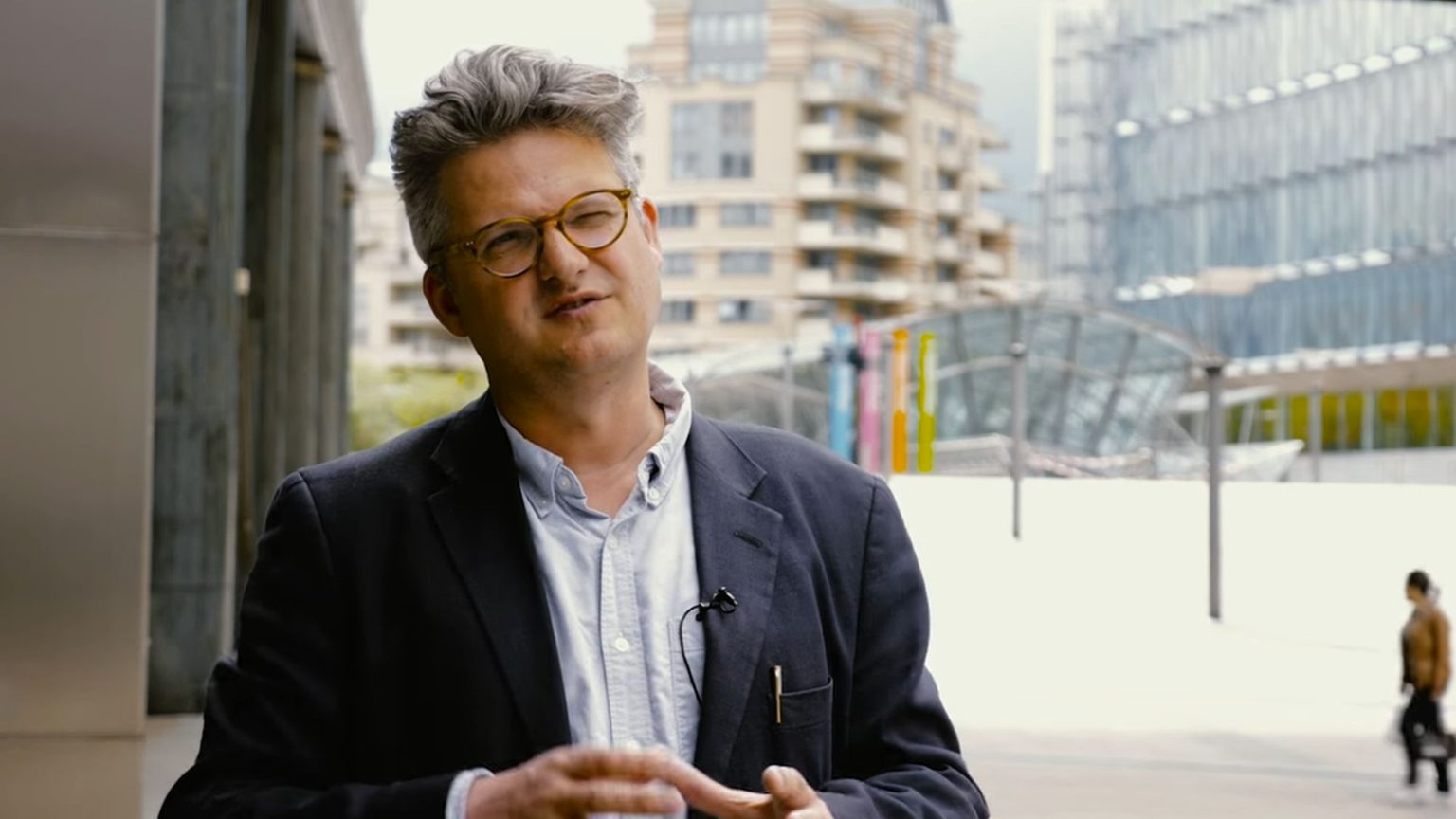
Bruno Waterfield, Brussels correspondent for The Times, recently joined spiked’s deputy editor, Fraser Myers, to discuss the dangers of Starmer’s plans. What follows is an edited version of that conversation. You can watch the full thing here.
Fraser Myers: Are there not enormous implications in handing rule-making powers to Brussels in sectors as significant as, say, energy and agriculture?
Bruno Waterfield: The government would argue this is a trade-off. The benefits to the economy that easing border controls on food would bring, to take one example, is being presented as superior to what the UK would lose in sovereignty. In reality, the cost is very high.
If negotiations go ahead, Britain will have to alter post-Brexit legislation on the authorisation of things like gene-edited crops. This might sound inconsequential, but reverting to EU rules will have a direct impact on some important elements of managing food. What we eat, what’s put on the table, how and what British farmers are and aren’t allowed to do – over time, these rule changes will become significant.
You also have to bear in mind that Britain will not play a role in drawing up those new regulations. That means the French and Italians, who are very robust in sticking up for their own agricultural sectors, could perhaps stick up for their farmers while doing down British farmers. There will inevitably be problems with dynamic alignment when the EU holds the pen on all the major decisions.
Of course, the SPS [sanitary and phytosanitary] agreement is only a fraction of the problem. After that, you’ve got the energy question. Striking a deal with the EU risks becoming a substitute for Britain doing the things it needs to do to regain energy security. Prices are going up – they are rocketing, in fact – particularly electricity prices for industry. Outsourcing control could become a way of avoiding confronting this problem. These are issues the Europeans have become very good at evading, too.
Myers: Given Europe doesn’t appear to be any better off than the UK, why is the Labour government so drawn to adopting its policies?
Waterfield: For all the worst possible reasons. Keir Starmer is very weak and leads a very fragile government. I would wager the only reason we are even considering these negotiations is because of internal ruptures within his cabinet. It’s all wrapped up in this anti-beauty contest between Starmer and Wes Streeting, who’s putting a lot of pressure on the prime minister to move in a more pro-European direction. It’s an absolutely bizarre foundation on which to take really important decisions, but here we are.
Labour’s autumn budget had lots of very unpleasant news for public services. Yet Starmer and David Lammy have decided to splurge £570million on a student-exchange programme through the Erasmus scheme – a decision based on the pre-Brexit benefits Erasmus offered to a minuscule number of middle-class students. The idea that Starmer’s ‘reset’ is going to provide any tangible payoff to ordinary Brits is simply untrue.
The European Union is fairly content with the status quo. It’s Labour ministers who are anxious to reverse Brexit. They’re needy. And the EU – being made up of pretty transactional, hard-nosed negotiators (and not entirely stupid) – is going to extract as much from Britain’s account as possible.
Myers: Isn’t being a member of the EU, in many ways, a worse proposition than it was in 2016 when we voted to leave? Are there not even more restrictions coming from Brussels on how national governments can act?
Waterfield: The EU certainly has its problems – some that the UK already shares, others that we wouldn’t want to inherit. It’s not an area of high economic growth, for one. There are endless debates over controversial legislation like the Digital Services Act, which would just be an extension of the issues Britain currently has with the censorial Online Safety Act. Across Europe, impossible environmental targets have been taken on in a frenzy of virtue-signalling, without any consideration to what achieving Net Zero might do to people’s living standards. None of it is actually particularly appealing.
It’s important to wake up to the fact that the EU is not astride the world like a colossus. In fact, it still hasn’t achieved many of the things pro-Europeans were saying it needed to 10 or 15 years ago. Quite often, it used the fact that Britain was a member state as an excuse for the fact that very important steps hadn’t been taken or treaties hadn’t been signed. It hasn’t got that excuse anymore.
If Britain were to rejoin the EU, it would be at a level of significantly higher budget contributions. Billions upon billions, in fact, because since 2021, the EU has gone on a splurge of common borrowing without having decided how to pay it back. That’s the way the EU does things – without really thinking about the consequences. And if Britain were to sign up to a customs union with the EU, it would instantly render all the trade deals it has done over the past 10 years null and void. With that in mind, it’s actually quite difficult to think of reasons why cosying up to the EU would benefit us.
On defence, there is undoubtedly a need for Europeans to have a really frank discussion about the future and what it means to defend the societies we live in. The EU is not the vehicle for that discussion. The idea you’d want to suck up to it, while failing to build deeper and more timely links with key European countries, is simply bizarre to me. It’s regressive. And it really does show that, particularly among the British elites, the castes that occupy the commanding heights of the state apparatus, they’ve got absolutely nothing going for them. They’ve got no vision, they’ve got no ideas and no future. They’re just looking backwards.
Bruno Waterfield was talking to Fraser Myers. Watch the full interview below: