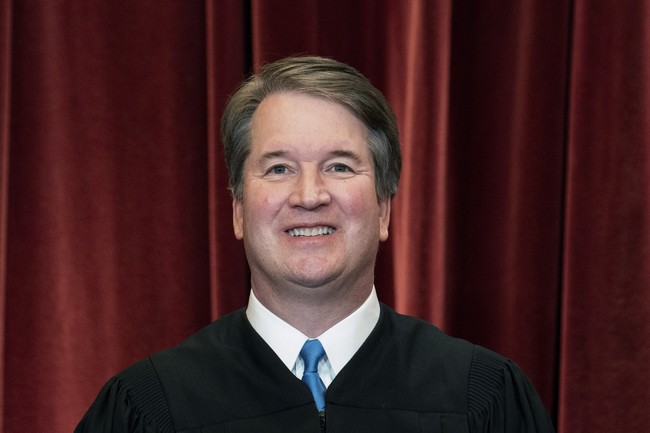
A rare public disagreement between two Supreme Court justices recently pulled back the curtain on how the nation’s highest court operates in urgent legal battles. The exchange involved Justices Brett Kavanaugh and Ketanji Brown Jackson, and the issue at the center of the clash involved the Supreme Court’s emergency docket.
Legal scholars often refer to the emergency docket as the “shadow docket.” The phrase refers to decisions issued quickly when a case demands immediate action. These rulings can block policies, pause lower-court decisions, or allow government actions to proceed while litigation continues. The emergency docket rarely involves oral arguments or lengthy written opinions, yet its impact can reach across the country within hours.
The disagreement surfaced during a public event where both justices discussed the growing role of emergency rulings. Ketanji Brown Jackson argued that the Supreme Court increasingly relies on emergency orders without sufficient explanation. Jackson expressed concern that short orders may leave lower courts and the public uncertain about the Court’s reasoning.
Brett Kavanaugh firmly pushed back, defending the emergency docket as a practical necessity for a court that must quickly respond when nationwide injunctions or conflicting lower-court rulings create legal chaos. Kavanaugh stressed that federal law allows emergency relief precisely because certain disputes can’t wait months or years for a final ruling.
Jackson, a frequent dissenter from the emergency orders, said Kavanaugh and the other conservatives who repeatedly sided with Trump last year were not serving the court or the country well.
“The administration is making a new policy … and then insisting the new policy take effect immediately, before the challenge is decided. This uptick in the court’s willingness to get involved in cases on the emergency docket is a real unfortunate problem,” Jackson said to loud applause.
The court is “creating a kind of warped” legal process by intervening in an early stage of a case and essentially predicting the outcome before arguments are fully developed, she said.
The Justice Department’s rush to the Supreme Court is not unique to the Trump administration, Kavanaugh said, explaining that as enacting legislation through Congress gets harder, administrations “push the envelope in regulations. Some are lawful, some are not.”
He said some critics of the recent orders had no objection when the justices allowed challenged Biden administration policies to take effect even as court cases were proceeding.
The clash matters because the emergency docket often intersects with major policy fights. Immigration rules, federal regulations, and election procedures frequently land on the Court’s emergency calendar. When a lower court blocks a nationwide federal policy, the Supreme Court sometimes quickly steps in to restore or pause that decision.
During the discussion, Ketanji Brown Jackson suggested that the Court’s increasing use of emergency orders risks weakening transparency in the judicial system. Jackson warned that rulings issued with limited explanation may leave observers wondering why the Court acted so quickly.
Kavanaugh offered a sharply different perspective, noting that emergency authority exists because lower courts can issue sweeping nationwide injunctions that disrupt federal law. When that occurs, the Supreme Court must quickly decide whether those rulings should remain in effect while appeals proceed.
The debate carries real consequences for the Trump administration’s legal agenda. President Donald Trump continues to face lawsuits challenging federal policies across multiple states. Those cases often produce emergency appeals when lower courts issue broad injunctions blocking federal actions.
Several emergency orders during Trump’s presidency allowed policies to move forward while litigation continued. Critics argued that the Court intervened too frequently. Supporters responded that the Supreme Court merely corrected lower-court rulings that exceeded the authority of a single district judge.
The exchange between the two justices revealed more than a simple disagreement about procedure, highlighting two very different views on the Supreme Court’s role in managing urgent legal disputes.
Brown Jackson emphasized caution and detailed explanation before the Court’s Act. Kavanaugh emphasized speed and stability when conflicting rulings threaten nationwide legal consistency.
That divide explains why the emergency docket has become one of the most important tools in modern constitutional law. When a single district judge blocks a federal policy affecting millions of Americans, the Supreme Court must decide whether that ruling should remain in force.
In those moments, the Court can’t operate like a slow academic seminar, and the justices must quickly decide whether federal law continues or stops while litigation moves through the appeals process.
The debate between Kavanaugh and Jackson shows how sharply the Court’s members differ over the balance between transparency and urgency. One side prefers longer explanations before acting. The other believes that the country sometimes needs immediate clarity even before the full case reaches the Court.
Those competing instincts will shape the Supreme Court’s emergency docket for years to come. The stakes grow larger each time lower courts issue sweeping nationwide injunctions. When that happens, the justices must decide whether to step in quickly or allow the legal uncertainty to continue.
Serious legal fights often unfold far from the headlines that dominate cable news. PJ Media VIP digs into those battles with deeper analysis and sharper reporting that cut through political spin. A VIP membership unlocks exclusive commentary, investigations, and insider perspectives on the stories shaping the country. Right now, readers can get 60% off a membership with promo code FIGHT.