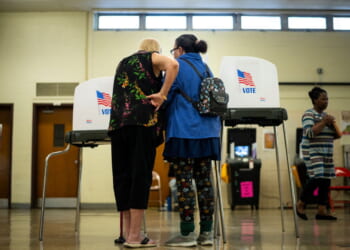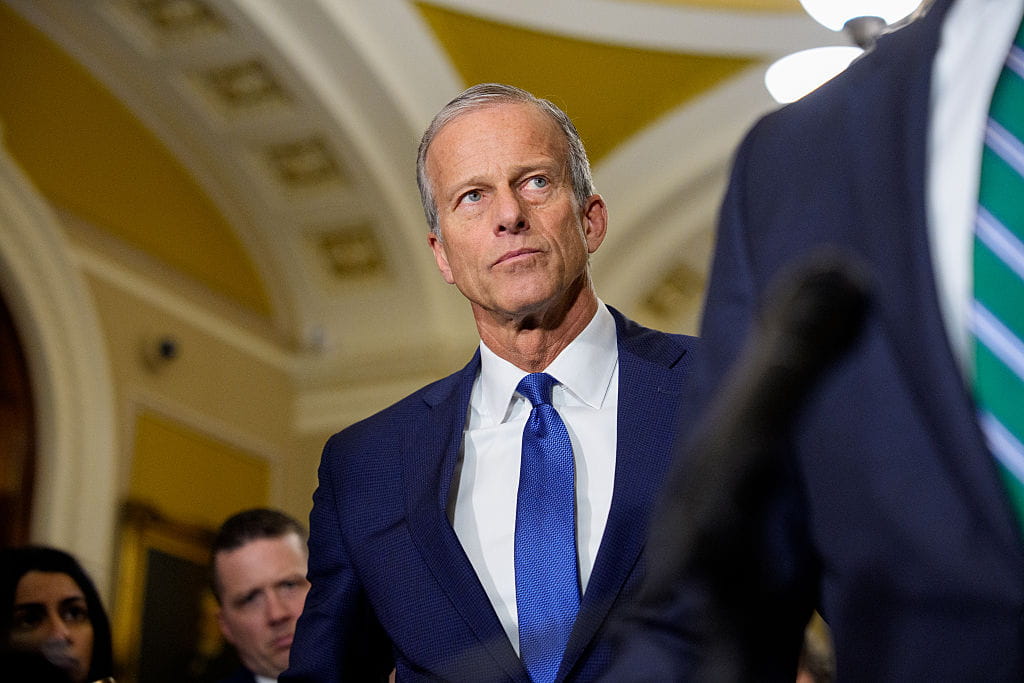
Senate Majority Leader John Thune (R-SD) kicked off what is likely to be a long and arduous process to get a final vote on the SAVE America Act yesterday, March 17. Beginning with a simple procedural vote, the legislation that would see proof of citizenship and ID required for registration and voting become the norm across the nation cleared its first hurdle. What comes next will be a drawn-out test of wills – that, while likely to fail, could prove to be the final arbiter of the 2026 midterm elections.
SAVE America Kickstart
The Senate voted to open the floor debate on this legislation with Republican Senator Lisa Mirkowski of Alaska joining Democrat colleagues in opposing and North Carolina’s Thom Tillis not casting a vote. What happens next is expected to be between ten and fourteen days of debate, at which point the upper chamber will cast its final vote (interestingly using their ID cards to do so), which is almost certainly going to fall far short of the 60-vote threshold.
But maybe the script isn’t quite so set in stone.
There are a number of strong characters who intend to achieve their own personal aims and could well set the stage for an irresistible force versus an immovable object scenario. From President Trump to GOP and Democrat leadership, each has a case to make and a cost to pay – and the toll may be too much for some to bear.
Thune Oversees a Doomed SAVE America Bill?
For many, there appears to be an element of the performative involved. Thune is all too aware that he doesn’t have 60 votes – and so his only two possibilities of success seem to be either enforcing a “talking” filibuster or nuking the filibuster entirely. Yet he has, to date, remained stubborn in his opposition to either.
The Senate leader is in both a tricky and an unenviable position. Kicking off the debate on the SAVE America Act, he said:
“If there’s anything essential to the integrity of elections, it’s ensuring that those who are registered to vote are eligible to vote — by requiring that Americans show PROOF OF CITIZENSHIP when they register to vote, and that they show PHOTO ID at polling places!”
So the legislation would address this most “essential” aspect of election integrity, and yet without Thune’s willingness to go to the mat, it’s basically dead in the water. Unless, of course, the sure-to-be relentless campaign fought behind closed doors can sway him over the next week.

He has three basic options: Let it wither and die on the vine because he can’t get to 60 votes; enact a talking filibuster, which would eventually allow for a simple majority; or nuke the filibuster entirely. Thune has indicated that he is not willing to go for the two latter options, making this a nonstarter that could have severe ramifications come November.
While getting senators on the record voting against an 80-20 issue has value, few serious minds believe that Democrats will not do what he is refusing to when the party eventually returns to the majority.
Democrats Have Hay to Make
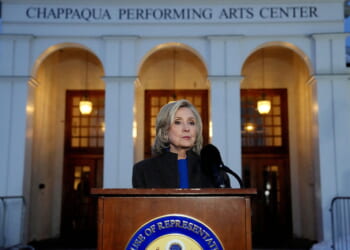
Senate Minority Leader Chuck Schumer (D-NY) has made clear that his party will act as one. He said:
“Not a single Senate Democrat will support the SAVE Act. Not this week. Not next week. Not ever. We will oppose it on the floor as long as it takes.”
To be clear, Schumer was perfectly happy to end the filibuster when it benefited his party. In the heady days of the Biden presidency, when Democrats ruled the Senate, he tried to remove the 60-vote cloture requirement to pass a voting rights bill of an entirely different type. His plans were only thwarted because Senators Joe Manchin (D-WV) and Kyrsten Sinema (D-AZ) refused to go along. The party now has no such roadblocks.
The last time either party held a supermajority (60 Senate seats) was more than 15 years ago – an eternity in political time. And with the increasingly acrimonious political stage, it seems unlikely that such a situation will occur anytime soon.
Going into the November midterms, Democrats will almost certainly campaign on the notion that they blocked Republicans from “stealing” the elections by disenfranchising non-whites and married women. Although more than 70% of Democratic voters support voter ID (and over 90% of Republican voters), messaging will be fast and thick, and it will come down to a narrative game.
Sinema and Manchin approved of Schumer’s own voting reform act in principle, but neither was willing to nuke the filibuster to pass it. Not so for every other Democrat in the caucus. The two flies in the ointment are now long gone, and when the Democratic Party eventually returns to the majority role, no such compunctions will likely remain.
A Trump Gambit
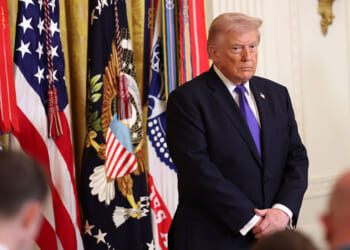
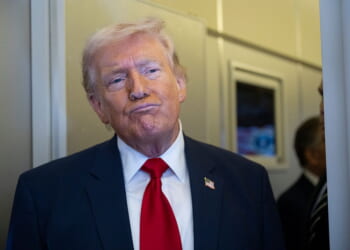
President Donald Trump feels he has one or two remaining cards left to play in this high-stakes saga. He warned that he would not sign any other legislation unless the SAVE America Act goes through. In a vacuum, this could prove to be a solid tactic, but when we consider that there is an ongoing war taking place in Iran and a volatile economy just months out from the midterms, staying the course may prove tricky.
His other option is to use his position as president to crush the electoral hopes of those who do not support the legislation. Senator Murkowski is now almost certainly on this list, as well as Thom Tillis. He wrote in a Truth Social post:
“Only sick, demented, or deranged people in the House or Senate could vote against THE SAVE AMERICA ACT. If they do, each one of these points, separately, will be used against the user in his/her political campaign for office – A guaranteed loss! Get your Senators, REPUBLICAN OR DEMOCRAT, to VOTE ‘YES’ ON ‘THE SAVE AMERICA ACT.’ I WILL NEVER (EVER!) ENDORSE ANYONE WHO VOTES AGAINST ‘SAVE AMERICA!!!’”
That’s a fairly unequivocal position, and yet it might not have any actual teeth. Besides the aforementioned objectors, it seems just about all other GOP lawmakers are willing to back the legislation. But it still will not pass. It is a risk-free vote for Republican senators who can say they backed the bill even as it sidles off into the sunset.
In fact, the individual who might feel the brunt of Trump’s threats most severely is John Thune. He must face the electorate in 2028 as president number 47 makes way for 48; Trump will still play the role of kingmaker until he leaves office in 2029, and the current Senate leader may well face a reckoning.