From voter ID to DHS funding, Senate Democrats have given their GOP colleagues plenty of reasons to consider nuking the legislative filibuster of late. And there have been plenty of frustrated Republicans suggesting they do precisely that. Love it or hate it – say it helps or harms – the filibuster is and has long been a boon to the minority and a bane to the majority. Yes, funding DHS and passing the SAVE America Act would be much easier without it – but so too would all the progressive proposals dreamed up by Democrats both past and future.
Will They Ever SAVE America?
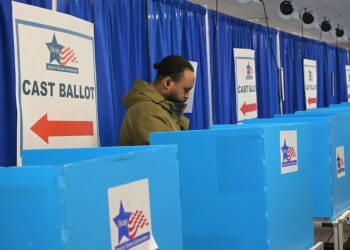
On March 17, the Senate voted 51-48 to advance the SAVE America Act to a full floor debate. Democrats didn’t waver, however, from their line in the sand: Voter ID itself isn’t necessarily a bad thing, but the SAVE America Act is “Jim Crow 2.0.” On March 26, however, they put the lie to their claims of support for reasonable ID requirements by voting unanimously against an amendment that stripped the Act of anything but ID and even made allowances for provisional ballots without ID.
The 52-47 vote, which fell exactly along party lines, cleared the simple majority required for most votes in the House and the Senate aside from invoking cloture. But even the threat of filibuster today means death by inaction for any bill unless that 60-vote threshold can be met. The full SAVE Act, which would require voters in federal elections to show some form of government-issued photo ID to vote and proof of US citizenship to register, among other things, never got its cloture vote – and it likely won’t. The amendment voted on just days ago proves Democrats would never accept the full bill, and even if it ever does get a cloture vote, it’ll only be so much political theater.
Republicans currently enjoy a trifecta government, holding technical majorities in both chambers of Congress and the White House. But when it comes to legislation, that isn’t a practical majority in the Senate. It’s great from the majority perspective when it comes to confirming presidential nominees, sure – but they’d almost be better off in the minority in the Senate when it comes to legislation. At least then it wouldn’t appear to the general public as if they should be able to pass bills. All that said, why not simply eliminate the remaining holdout of this procedural rule?
Understanding the Filibuster – The Short Version
The filibuster is not among the original Senate rules. Rather, it was a practice that grew out of the unlimited debate rule. If a senator didn’t want a bill to pass, he commanded the floor in opposition until he either couldn’t hold out any longer or the supporting majority gave up. Get enough senators from the minority doing this, and clearing the discussion phase to hold that final vote can seem impossible. It all came to a head in 1917, when the majority at the time – the Democrats – adopted Rule XXII, which created a way to force the end of debate through a two-thirds majority “cloture” vote.
In 1917, there were 48 states, so 96 senators. Two-thirds meant 64. For today’s Senate, a two-thirds vote needs 67 senators (rounded from 66.6 repeating). But in 1975, a bipartisan majority changed the rule to three-fifths, or 60 of the 100 we have now.

Around that same time, the requirement for a talking filibuster – the need for one or more senators to actually hold the floor to stave off a vote – disappeared, and the mere threat of filibuster became enough to either force a cloture vote or leave the measure wasting away in limbo for fear of failure.
That all began to change in 2013, however. Republicans opposed then-President Barack Obama’s Cabinet appointments. Under Majority Leader Harry Reid (D-NV), Democrats employed what was called the nuclear option: a simple majority vote to force a rule change to remove the ability to filibuster the confirmation of presidential nominations outside of the Supreme Court. The vote went 52-48, with three Democrats – Carl Levin of Michigan, West Virginia’s Joe Manchin, and Mark Pryor of Arkansas – joined with all Republicans to stop it, but they weren’t enough.
Flash forward to 2017, and a newly minted President Donald Trump was having the same issues. So, once again, someone pushed the big red button. Senate Majority Leader Mitch McConnell (R-KY) held a vote to remove the filibuster for Supreme Court nominations. The final tally went his – and Trump’s – way. Once again, the vote total was 52-48, though this time, no one crossed the aisle.
In 2022, Democrats, under the leadership of Chuck Schumer (D-NY), tried to alter the filibuster for legislation without removing it entirely. Leftist lawmakers had been trying rather unsuccessfully to pass a variety of so-called voting rights acts. Democrats essentially tried to pass a motion that would limit the filibuster, specifically with the voting rights legislation. At the time, the Senate was tied up 50-50, with Vice President Kamala Harris to break any ties in favor of the Democrats.
Because Joe Manchin and Arizona Democrat Kyrsten Sinema wouldn’t support the rule change, however, the vote failed, and the filibuster was left intact. Had there been no Manchin or Sinema, however, the filibuster would have been altered then – and perhaps removed or further amended to the point it might as well be removed shortly after. What would the nation look like today had Democrats succeeded in the 117th Congress?
What Might Have Been
First and foremost, the two bills that would have passed under Biden’s early trifecta would have been the Freedom to Vote Act and the John R. Lewis Voting Rights Advancement Act, the two that sparked the filibuster vote. But they wouldn’t have been all that would be different.
Joe Biden and congressional Democrats actually started earlier in their attempts to “reform” election law. The For the People Act of 2021 would have automatically registered people to vote based on DMV records, expanded early voting, allowed “no excuse” mail-in voting, and made Election Day a federal holiday. It would also have allowed voters without ID to sign an affidavit instead of being turned away, regardless of state law, among many other things both directly and only tangentially related to voting. It passed the House in March of 2021 but failed to advance to a final vote in the Senate when cloture was tied 50-50 in June.
The aforementioned Freedom to Vote Act was a scaled-back compromise version of the For the People Act that failed cloture 49-51 in November of 2021. The John R. Lewis Voting Rights Advancement Act would have once again tackled these issues that Democrats say potentially disenfranchise millions of voters – and are both sexist and racist, to boot – but it failed cloture 49-51 in January of 2022.
Voting rights and election security aren’t the only things that would have changed without the filibuster. The Bipartisan Background Checks Act of 2021 – a rather ironic name, given its lack of Republican support – and the Enhanced Background Checks Act of 2021 both passed the House but never came to a cloture vote because the numbers just weren’t there. They would have essentially criminalized private firearms transfers and required more extensive background checks with more time to complete them across the board. The Raise the Wage Act of 2021 would have forced a “gradual” increase in the federal minimum wage to $15 per hour. Finally, the Equality Act would have extended Civil Rights Act protections to LGBTQ individuals and done away with any religious exceptions, which could have forced even churches and religious schools to hire LGBTQ activists on pain of prosecution.
The current Republican trifecta has also had its share of filibuster-killed bills, but most of them have been funding issues.
Other examples of would-be laws killed by the filibuster from past administrations include an attempt by Republicans under George W. Bush to criminalize flag burning or Democrats under Obama trying to change the rules for political spending in the wake of Citizens United v. FEC with the DISCLOSE Act. Both would have greatly changed the meaning of free speech in the US. During a brief Democrat trifecta under Bill Clinton in 1993 and 1994, partial-birth abortion was almost codified into federal law, and later, under Obama, the Freedom of Choice Act would have invalidated any state’s bans on post-viability abortions.
And back to gun control, the filibuster saved America from a Federal Assault Weapons Ban renewal under Obama and the Manchin-Toomey background check expansion in 2013. For that matter, under Harry S. Truman, Congress almost passed civil rights multiple times years before the Civil Rights Act of 1964, but was stopped by southern Democrats in the Senate.
The filibuster’s days may be numbered – whether Republicans nuke it this term or wait and give Democrats the option later. But there’s no denying the country would be – and still may become – a very different place without it.