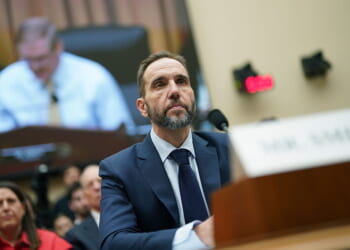
Jack Smith had to defend his actions in front of numerous congressional committees, and he has maintained the same defense at every step of the way: He’s just doing his job, and no one is above the law. But that brings us to the “how” of it and the question of whether the ends justify the means.
How is it that the FBI could pull phone records of private citizens and elected members of Congress alike without their knowledge, but the general public didn’t find out until a few years later, when the targets of said secret surveillance actually took the reins of power? Two words: “prohibited files.” Often marked as “Prohibited Access” or “Restricted Access” in the SENTINEL system, these records aren’t available to the general public, Congress, FOIA requests, or even most FBI personnel.
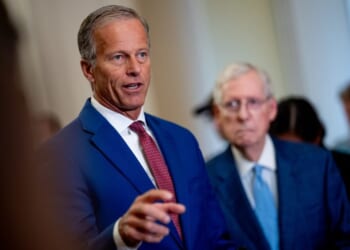
The Bureau was able to conduct its surveillance, then mark it restricted or prohibited because it related to an ongoing investigation or contained sensitive personal information, essentially burying the record so that people not already in the know couldn’t access it. Sen. Chuck Grassley (R-IA), the chairman of the Senate Judiciary Committee, launched an investigation into this practice in June of last year, and this was his message to FBI Director Patel and Attorney General Pam Bondi:
“As I’m sure you are aware, the impact of parking records in a way that impedes, or in some cases prevents, responsive records from being produced to Congress pursuant to a valid request and during the course of court litigation, whether criminal or civil, is wide-ranging and potentially catastrophic to constitutional requirements. Indeed, if the FBI has failed to take steps in the past to access records in ‘Restricted’ or ‘Prohibited’ status, the FBI has not fully responded to many years of my oversight requests.”
There are records of the FBI using prohibited files since at least the 1960s or even the 1950s, so at least for the last 60 to 70 years – but the exact beginning of the practice remains unclear. In any case, the Freedom of Information Act, which allows the public to submit requests for records from any federal agency, went into effect in 1967. Congress wrangled meaningful oversight of the FBI in the 1970s. In short, the very practices that led to these two major reforms apparently never stopped, and the restricted or prohibited access system became a workaround.
Patel’s Cleaning House – And There’s More to Come
But now Kash Patel has gone from victim of secret surveillance to the boss of those doing the surveilling – and he’s cleaning house.
“It is outrageous and deeply alarming that the previous FBI leadership secretly subpoenaed my own phone records – along with those of now White House Chief of Staff Susie Wiles – using flimsy pretexts and burying the entire process in prohibited case files designed to evade all oversight,” Patel said in a statement to Reuters. Patel says he only became aware of the records after taking over the FBI in February 2025, and that the files were so well buried it was difficult for him to find them, even as the director.
Patel told the press he has since “terminated the bureau’s ability to categorize files in that manner.” What’s more, he fired about a dozen agents who worked on the Trump case.
Axios reported that administration officials speaking on the condition of anonymity called this “the tip of the iceberg,” as the Biden FBI may have targeted many more figures in Trump’s orbit. Will this mean more victims revealed and more agency firings to come?