Two of the three went his way – but they were uncomfortably close.
The support and loyalty President Donald Trump once seemed to enjoy among congressional Republicans may be beginning to fade. Five GOP senators joined Democrats on Thursday, January 8, to pass a resolution preventing the Trump administration from taking any further police or military action in Venezuela. Meanwhile, the House came dangerously close to overturning the only two vetoes he has issued so far this term as dozens of Republicans challenged the presidential action.
The Vetoes Stand – Barely
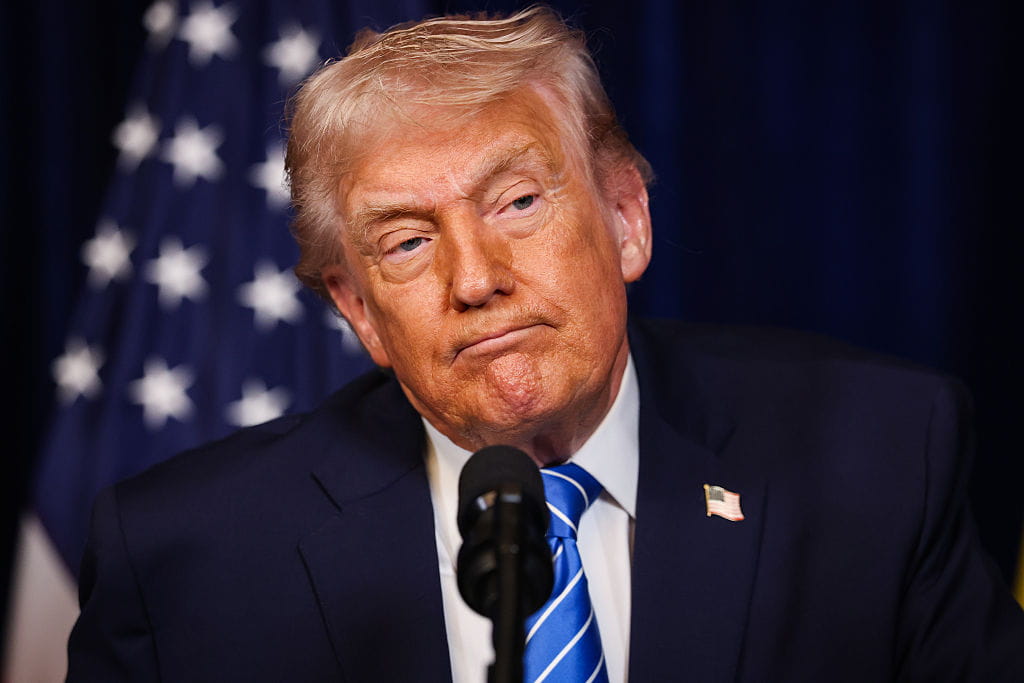
President Trump vetoed the first two bills of this term earlier in the month – and, oddly enough, both were GOP-led efforts that saw unanimous support in both chambers of Congress.
The Miccosukee Reserved Area Amendments Act, introduced in January of last year by Rep. Carlos Gimenez (R-FL), passed both the House and Senate by voice vote without objection. This legislation would have granted the Miccosukee Tribe of Indians of Florida the right to implement flood control measures in the area of the Everglades known as the Osceola Camp, where some tribal members live.
But the tribe famously opposed the Trump-supported, state-run immigration detention center commonly known as Alligator Alcatraz. In his statement after vetoing the bill on December 30, 2025, the president explained: “The Miccosukee Tribe has actively sought to obstruct reasonable immigration policies that the American people decisively voted for when I was elected.”
Another bill introduced in January of 2025, this time by Rep. Lauren Boebert (R-CO), was also vetoed after passing both chambers unanimously. The Finish the Arkansas Valley Conduit Act would have removed interest payments on the money that communities in the Arkansas River Valley must pay the Bureau of Reclamation for the construction of the Arkansas Valley Conduit, a pipeline in Colorado to deliver water. It would have also extended the repayment period to 100 years.
President Trump vetoed the bill on December 29. He called it a waste of taxpayer money and argued it shifted the financial burden for a local water project onto federal taxpayers. As well, he criticized Colorado’s governor, Democrat Jared Polis, and said the state’s residents were leaving in droves anyway.
On January 8, the House voted to overturn both vetoes – and they came very close. While the majority of the GOP voted to accept Trump’s veto, 35 Republicans joined the Democrats to bring the Finish the Arkansas Valley Conduit Act back to life with a final count of 248 to 177, with one Republican voting “present” and five more not voting. The Miccosukee Reserved Area Amendments Act saw 24 Republicans join 212 Democrats, with six Republicans and one Democrat not voting, for a final count of 236-188.
Neither of these votes succeeded – but overturning vetoes takes the support of two-thirds of the lawmakers present and voting. That’s a tall order – and Congress has pulled off the feat just 111 times since 1789, which is only about 4.3% of all vetoes.
What’s most concerning for Trump is both how close they came – a two-thirds majority of representatives present and voting would be 283 for the Miccosukee bill and 284 for the other – and the fact that 248 and 236 are both well above the simple majority required to pass bills through the House in general. Losing two to three dozen Republicans in the House in the future could prove devastating to Trump’s legislative agenda – and it doesn’t bode well for the war powers resolution now headed to the House.
Congress Claims the Power of War
While not nearly as big a defection as seen in the House, five Senate Republicans siding with the full Democratic Party lineup is every bit as heavy a blow to the president. Liberty Nation News reported last week that Republican Senators Susan Collins of Maine, Lisa Murkowski of Alaska, and Josh Hawley of Missouri all seemed poised to vote with Democrats on the war powers resolution to prevent the Trump administration from taking any further military or police action in Venezuela – and they did. But they weren’t alone. They were joined by Todd Young of Indiana and Kentucky’s Rand Paul, the latter being one of the co-sponsors.
While it seemed John Fetterman (D-PA) might side with Republicans based on his social media post, he and every other Democrat toed the party line. Since war powers resolutions only require a simple majority, the 54-47 vote passed the measure on to the House. It would have seemed unlikely even as recently as a week ago that the House would pass such a resolution. After Thursday’s veto overturn attempts, however, it suddenly doesn’t seem so outlandish.
And if the resolution passes the House, as well, it’ll likely end up becoming President Trump’s third veto this term. And, as unlikely as it seems to succeed, that might well bring about the third attempt by Congress this year to overturn a veto.
Liberty Nation does not endorse candidates, campaigns, or legislation, and this presentation is no endorsement.