The Supreme Court recently heard oral argument in Hemani v. United States, the second of two gun-related cases it agreed to decide this term. While the justices typically fall along fairly predictable ideological lines in Second Amendment cases, these arguments featured unexpected indications that we might be in for a wild ride when the Court issues its opinion.
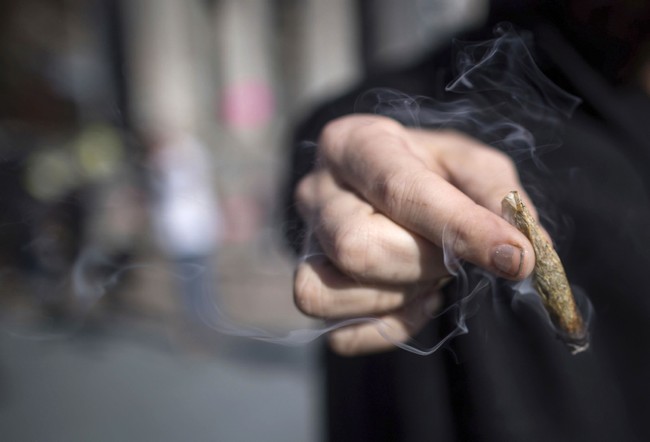
For those unfamiliar with the case, Hemani presents a pretty straightforward Second Amendment challenge to a federal statute prohibiting gun possession by anyone who is “an unlawful user of or addicted to any controlled substance.” In practice, the government interprets “an unlawful user” to mean a “habitual user.” Ali Hemani was charged and convicted of a felony under the statute after federal law enforcement officials serving a warrant on his home for unrelated reasons discovered a handgun in his closet, along with evidence that he regularly smoked marijuana.
The arguments in the case center on whether the statute (18 U.S.C. § 922(g)(3)) passes the test laid down by the Court several years ago in New York State Rifle & Pistol Association v. Bruen, which requires the government to prove that the particular restriction on gun ownership is consistent with the nation’s historical tradition of firearms regulation.
Based solely on what we heard in oral arguments, here are three seemingly wild, but entirely possible, predictions about what will happen when the Court releases its opinion.
Prediction #1: At least six justices will agree that Hemani wins, but there won’t be a majority that agrees on the reasons why he wins.
Only two justices—Samuel Alito and Chief Justice John Roberts—appeared with their questions to be very sympathetic to the government’s position. Justices Elena Kagan, Sonia Sotomayor, Neil Gorsuch, Brett Kavanaugh, Amy Coney Barrett, and Ketanji Brown Jackson, meanwhile, all seemed to be equally skeptical that the statute passes constitutional muster. It’s unclear, however, that all six of them will agree on why the statute is unconstitutional.
Justices Barrett and Kavanaugh will likely agree that the regulation is unconstitutional under the Bruen test because it disarms a far broader category of people than historical laws, based on a standard of “dangerousness” that is incompatible with the historical standard. Justice Gorsuch likely agrees with them that the government cannot bear its burden of proof under Bruen. It’s possible, however, that he also believes the statute is unconstitutionally vague in how it defines an “unlawful user.” In that case, he might conclude that the Court should decide the issue entirely on vagueness grounds and decline to reach a Second Amendment analysis.
Justices Kagan, Sotomayor, and Jackson all loathe the Court’s Second Amendment precedent, and have regularly decried the Bruen test. It’s possible that one or more of them will concur in the judgment only, arguing in the process that the Court should drop the Bruen test altogether and that Hemani would (and should) win under their preferred interest-balancing test.
The only justice who didn’t telegraph his thought process was Justice Clarence Thomas, who, true to form, had very little to say during the arguments.
It’s possible to see him falling either way on this issue.
On the one hand, he was the lone dissenter in United States v. Rahimi, where the rest of the Court upheld a federal statute criminalizing gun possession for people subject to certain domestic violence restraining orders. Thomas’ dissent in that case lambasted the majority for what, in his opinion, was an overly broad application of Bruen’s historical analogue test.
On the other hand, it’s not that Thomas believed Rahimi wasn’t dangerous or that the government couldn’t disarm him—he merely reasoned that the specific process that the government used to disarm him was inappropriate under Bruen.
Prediction #2: Justice Jackson will side with striking down a gun control law that Justice Alito defends.
Yes, you read that prediction correctly. If oral arguments were any indication, prepare for an outcome in Hemani that paints Justice Alito as a gun control advocate—and Justice Jackson as something of a Second Amendment defender, by comparison.
As noted in my first prediction, it seems likely that Justice Jackson will, for the first time, conclude that a law restricting gun possession is unconstitutional, while Justice Alito (normally a reliable proponent of the Second Amendment) is likely to argue that the Court should uphold the gun control restriction.
To be clear, this stunning role-reversal won’t happen because Justice Jackson suddenly agrees with the Court’s Second Amendment precedents, and it won’t mean she should be counted on for a good faith application of Bruen’s historical analogue test in future cases.
Earlier in the term, during arguments in the Court’s other gun case, Wolford v. Hawaii, Jackson had to quite literally be reminded that Hawaii is part of the United States.
Miraculously, however, during the Hemani arguments, Jackson seemed to lose the Second Amendment plot so completely that she managed to find it again (if only by accident).
She rightly pointed out, for example, that the federal government in Wolford accused Hawaii of defending its broadly applicable default prohibitions on public carry with inappropriate analogies to historical antipoaching laws—yet now, in Hemani, the government defends its own ban on gun possession for habitual drug users by similarly appealing to “historical laws that have nothing to do with guns, [and] very little to do with unlawful users of intoxicants.”
Justice Alito, meanwhile, is usually one of the most reliable justices when it comes to faithful and good-faith applications of the Court’s Second Amendment precedents. But he is also a former prosecutor with a tendency to side with the government against criminal defendants, and this is the side of him that certainly came through most heavily during arguments in Hemani.
Prediction #3: The decision will significantly limit the circumstances under which 922(g)(3) prosecutions can take place—and the sky won’t fall.
If a majority of the Court does, indeed, side with Hemani, it’s likely that the opinion will limit gun prohibitions for illegal drug users to a much narrower set of circumstances. Expect the reaction from gun control groups to be roughly the same as it has been any time that any court has struck down any gun laws: hysterics about how we’re all probably going to die now.
In reality, § 922(g)(3) plays a nominal role in public safety, at best. The federal government prosecutes very few cases under §922(g)(3), especially when compared to other gun-related prosecutions, like those for being a felon in possession of a firearm. Additionally, it’s rarely the case that the federal government can prosecute an offender only under § 922(g)(3), and not for any other criminal offense.
Finally, prosecutions under this statute are often motivated by concerns entirely unrelated to the offender’s occasional use of controlled substances. The record strongly indicates that this was precisely the case for Hemani. The FBI’s primary reason for investigating and prosecuting Hemani wasn’t some deep-seated concern about his weed-smoking habits. They were, rather, investigating Hemani over his alleged sympathy for Iranian terror groups, but failed to uncover sufficient evidence to charge him with terrorism-related crimes.
In other words, the government now argues that smoking a joint several times a week makes Hemani a dangerous person who shouldn’t be allowed to own guns. But it makes this argument only because it can’t substantiate the argument it really wants to make—namely, that Hemani is dangerous and shouldn’t be trusted with guns because he holds deeply anti-American beliefs. The drug-use argument is nothing more than a convenient proxy.
At the end of the day, the bottom won’t fall out of the criminal justice system if the Court says the federal government can’t disarm every person who occasionally takes Ambien without a prescription or takes a THC gummy on the weekend, anymore than it fell out any of the other times that gun control groups promised us the sky was falling.
Editor’s Note: Support and follow PJ Media’s coverage of international conflicts and other key news in this midterm election year. Join PJ Media VIP and use promo code FIGHT to get 60% off your membership.