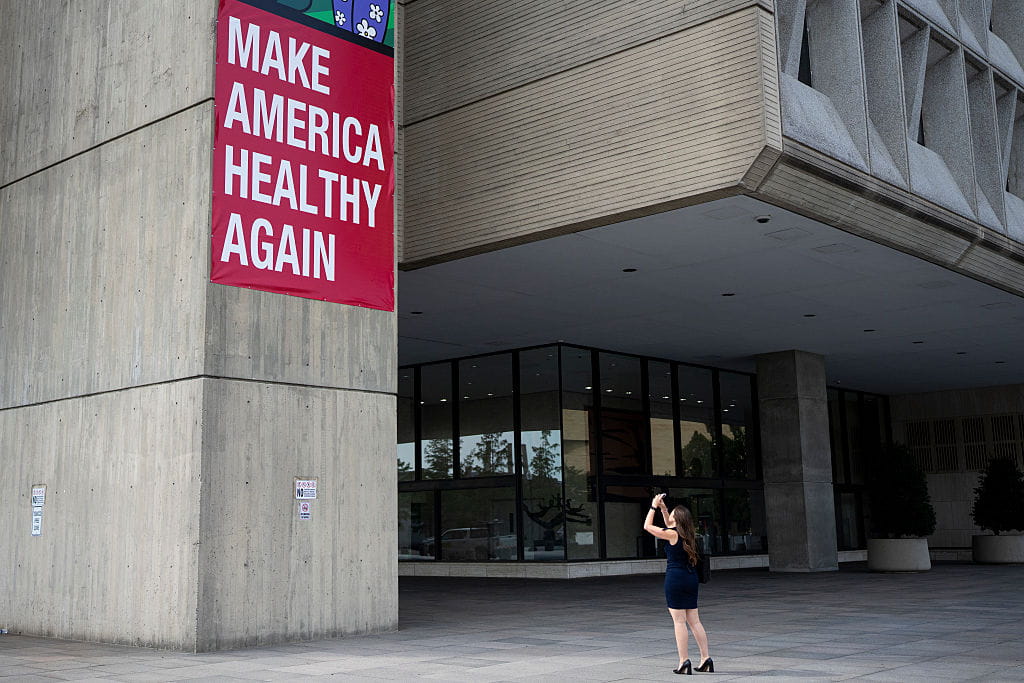
The political world is in a tizzy over alleged backpedaling on toxic food dyes by the Food and Drug Administration (FDA), compounded by President Donald Trump’s executive order supporting the domestic production of glyphosate. Beneath the kerfuffle are nuanced realities that elude most non-farmers (or are ignored by those with axes to grind). The sky is not falling. The MAHA movement is not betraying Americans. Everything will be okay.
A Tale of Two Toxins
The first alleged transgression of the Make America Healthy Again (MAHA) movement is leveled against Health and Human Services Secretary Robert F. Kennedy Jr. for supposedly approving the ongoing use of synthetic and natural colorings as food additives under a new FDA rule. The Guardian framed the move as “a further retreat from its pledge,” claiming the FDA “would loosen labeling requirements.”
However, the new rule allows manufacturers to use synthetic and natural ingredients as alternatives to the petroleum-based dyes Kennedy pledged to eliminate from food supplies. A Feb. 5 FDA press release stated:
“Today, the U.S. Food and Drug Administration took additional steps to support the transition of our nation’s food supply from the use of artificial petroleum-based colors to alternatives derived from natural sources. Companies will now have the flexibility to claim products contain ‘no artificial colors’ when the products do not contain petroleum-based colors.
“’This is real progress,’ said Kennedy. ‘We are making it easier for companies to move away from petroleum-based synthetic colors and adopt safer, naturally derived alternatives.‘”
Critics complain that even natural additives may pose health threats and are particularly concerned about titanium dioxide, a whitener widely used in cakes, pastries, candy, cookies, and dessert toppings. The European Union has prohibited the substance because it has not been proven safe; in the United States, under the Generally Recognized as Safe (GRAS) system, companies may use substances so long as they have not been proven harmful. Kennedy has been a vocal critic of GRAS, including in a recent 60 Minutes interview, and he has pledged to revoke GRAS approval for ingredients for which there is scientific evidence of harm. Existing FDA rules consider titanium dioxide safe; the scientific evidence is mixed.
The Glyphosate Battle
The other hotbed of controversy surrounds the Trump administration’s recent executive order protecting domestic glyphosate production as a national security issue. As with food dyes, some purists expect Kennedy to accomplish a complete transformation of a long-entrenched industry overnight, an impossible task. This is even more difficult with glyphosate, a widely applied herbicide used for decades in US agriculture. Farmers depend on it as a weedkiller.
The first MAHA Commission Report openly criticized Roundup, the trademarked weedkiller that incorporates glyphosate as a key ingredient. The backlash against Kennedy and the Trump administration by commodity crop farmers was swift and profound. The second MAHA Commission Report barely even mentioned glyphosate, prompting howls of betrayal by the MAHA base. Kennedy strives for a middle position. Why?
I am an organic beef farmer. I have never used a drop of glyphosate on anything. But I understand the reality of modern US agriculture, in which only about 1% of US food is organically grown. It took decades to ensnare Americans in the cheap-food recipe that glyphosate and crop insurance subsidies created. Most people do not comprehend the economic realities this presents.
The MAHA Challenge
Kennedy has revised the nation’s food pyramid to favor healthier foods, including whole-fat dairy and meat proteins. Yet if the nation undertook to procure glyphosate-free foods for its schoolchildren, military, and SNAP beneficiaries, it would unveil the quandary that the Trump-Kennedy MAHA partnership must confront.

A swift shift to banning glyphosate would inflict massive economic losses on the nation’s farmers, undermine investments in farm equipment, and compel farmers to employ more toxic herbicide alternatives to control weeds. Either more toxic options would taint foods, or yields would plummet. So many farms would fail while grocery store prices skyrocketed, in a vicious economic cycle that would send prices higher.
An analogy might be made to cigarette smoking. Smoking rates dropped as Americans became aware that tobacco consumption caused lung and other cancers. However, cigarettes remain legal. Food is far more important than smoking, and some Americans will still want cheap, ultra-processed products no matter the glyphosate content. Farmers do not respond well to bans and mandates; they are more likely to shift their farming methods in response to improved market prices for glyphosate-free products that offer higher returns.
The Middle Road Less Traveled
The attacks on Kennedy and MAHA are politically driven. Barack Obama’s administration backed Monsanto in a patent suit against a farmer (Vernon Bowman) to little fanfare. Obama, then President Joe Biden appointed Tom Vilsack (aka “Mr. Monsanto”) as head of the USDA; Trump removed Vilsack in his first term. The hypocrisy is that Democrats did not ban petroleum food dyes during their decades in power, nor did they curb glyphosate use. Now they deem the failure to completely eliminate both immediately as some kind of betrayal.
Environmental Working Group President Ken Cook unleashed a rant against Kennedy, claiming he “can’t envision a bigger middle finger to every MAHA mom than this.” In a CNBC report, Cook declared:
“Elevating glyphosate to a national security priority is the exact opposite of what MAHA voters were promised … If Secretary Kennedy remains at HHS after this, it will be impossible to argue that his past warnings about glyphosate were anything more than campaign rhetoric designed to win trust — and votes.”
Perhaps Cook is clueless about agriculture or just ignores modern industrial farming realities. If glyphosate were banned overnight, US corn, soy, and other production would wither, grocery store prices would soar, and consumers would erupt in inflation-fueled outrage. The effort to reform the agricultural system would be crippled by chaos.
In remarks defending his support of President Trump’s executive order, Kennedy stated:
“Donald Trump’s Executive Order puts America first where it matters most — our defense readiness and our food supply … We must safeguard America’s national security first, because all of our priorities depend on it. When hostile actors control critical inputs, they weaken our security. By expanding domestic production, we close that gap and protect American families.”
The middle MAHA road relies on gradually shifting production methods, with the cooperation of farmers rather than their opposition. America’s food system is much like a Titanic grounded on an iceberg. Kennedy is beginning to turn the ship; his detractors are out to sink it.