OAN Staff Katherine Mosack and Brooke Mallory
2:40 PM – Wednesday, March 18, 2026
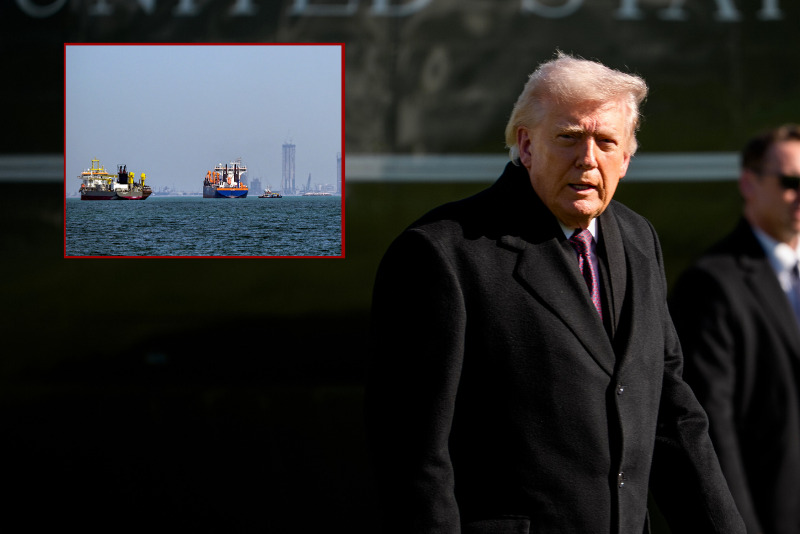
President Donald Trump has issued a temporary waiver of the Jones Act, a century-old shipping law, in an effort to stabilize gas prices. The move aims to streamline domestic fuel distribution as the ongoing conflict with Iran continues to disrupt energy markets.
The move plays into the Trump administration’s “Energy Dominance” agenda, demonstrating a refusal to let foreign conflicts dictate American prosperity.
It also aligns with the broader priority of American energy dominance by reducing regulatory barriers that can hinder efficient domestic energy distribution — especially when foreign conflicts create supply shocks. By cutting through century-old red tape, the administration is ensuring that domestic energy production reaches American families without delay.
White House Press Secretary Karoline Leavitt explained on Wednesday that the 60-day waiver will help “mitigate the short-term disruptions to the oil market” and “allow vital resources like oil, natural gas, fertilizer, and coal to flow freely to US ports.”
In the U.S., gas prices have jumped up roughly 80 to 90 cents per gallon over the last month — following disruptions in the Strait of Hormuz and attacks on energy infrastructure.
The waiver is set for an initial 60-day period, as it is part of a broader strategy that includes releasing 172 million barrels from the Strategic Petroleum Reserve and easing some sanctions on Venezuelan oil to increase global supply.
The law in question, the Jones Act of 1920, requires goods shipped between U.S. ports to be carried on ships built, owned and operated by the United States, even mandating that 75% of crew members are American citizens.
By waiving the law, the administration is allowing foreign-flagged vessels to transport oil, natural gas, fertilizer, and coal between U.S. ports. Normally, the Jones Act mandates that such cargo be carried only by ships that are U.S.-built, U.S.-owned, and U.S.-crewed.
Meanwhile, the temporary suspension of the Jones Act follows the escalation of Operation Epic Fury, the U.S.-led military campaign, in collaboration with Israel, that commenced on February 28th in Iran. Amid the conflict, the resulting combat has paralyzed the Strait of Hormuz, a vital maritime chokepoint responsible for carrying approximately 20% of the world’s oil supply from the Persian Gulf to the Indian Ocean.
President Donald Trump took to Truth Social to question the necessity of American intervention in the waterway, suggesting the U.S. could simply “finish off” what remains of the “Iranian Terror State” and leave the countries that rely on the Strait to manage the fallout themselves.
This rhetoric appears aimed at U.S. allies who have resisted joining the military effort. By highlighting that the U.S. is not personally dependent on the Strait, Trump is signaling that those with more at stake may soon be forced to support U.S. and Israeli objectives.
On the flip side, critics of the Jones Act argue that the century-old law is an “archaic barrier” to domestic trade, contending that its requirements are overly restrictive and inefficient.
They often point to the high cost of living in non-contiguous states and territories where the law effectively inflates the price of essential goods and slows down delivery timelines. While the law is rarely suspended, the Trump administration’s current 60-day waiver follows a precedent of temporary relief during national crises.
Previous administrations have also issued similar waivers in the wake of chaotic events, most notably following Hurricane Katrina in 2005 and Hurricane Maria in 2017, to ensure that emergency supplies and fuel could reach impacted areas without delay.
Stay informed! Receive breaking news alerts directly to your inbox for free. Subscribe here. https://www.oann.com/alerts
What do YOU think? Click here to jump to the comments!
Sponsored Content Below