OAN Staff Brooke Mallory
5:18 PM – Monday, March 23, 2026
President Donald Trump announced on Monday a five-day extension of his ultimatum for Iran to reopen the Strait of Hormuz, noting that “productive” high-level negotiations are underway with a “respected” Iranian official to resolve the four-week-old conflict.
However, Iranian parliament speaker Mohammad Baqher Ghalibaf later responded to the statement by claiming that President Trump’s assertion about ending the conflict was untrue.
“No negotiations have been held with the U.S., and fakenews is used to manipulate the financial and oil markets and escape the quagmire in which the U.S. and Israel are trapped,” Ghalibaf wrote on X. “Iranian people demand complete and remorseful punishment of the aggressors,” he added. “All Iranian officials stand firmly behind their supreme leader and people until this goal is achieved.”
The United States will also reportedly postpone military strikes on Iranian power plants, according to the U.S. president, announcing a five-day delay on planned operations against Iran’s energy infrastructure, citing the “very good and productive” conversations aimed at a total resolution of hostilities in the Middle East.
This decision marks a reversal of the 48-hour ultimatum issued on Saturday, which threatened to “obliterate” Iranian power plants if the Strait of Hormuz was not fully reopened by Monday evening. However, the postponement is reportedly contingent on the success of ongoing meetings throughout the week, with U.S. envoys Steve Witkoff and Jared Kushner leading the discussions.
The situation at hand, nonetheless, appears to remain propped up by conflicting messaging. While the White House describes the talks as constructive, the Iranian Foreign Ministry has still flatly denied that any bilateral negotiations are taking place.
Meanwhile, Trump’s announced reprieve came just hours before a 48-hour deadline was set to expire, during which the president had threatened to “obliterate” Iran’s power plants and energy infrastructure. Nonetheless, the extension temporarily averts a massive escalation that some analysts believed could have crippled global energy markets.
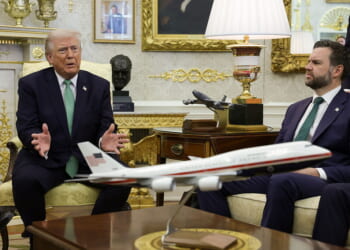
Speaking to reporters before boarding Air Force One, Trump struck an optimistic tone, making a sharp pivot from the “total destruction” rhetoric used over the weekend.
“I am pleased to report that the United States and the country of Iran have had, over the last two days, very good and productive conversations,” Trump stated. “They want to make a deal. We have major points of agreement — I would say almost all points of agreement.”
Trump also confirmed Witkoff and Kushner held marathon discussions on Sunday. While the president did not name the Iranian representative, he clarified that the U.S. has not yet spoken directly with Supreme Leader Ayatollah Mojtaba Khamenei — leading to more speculation regrading Mojtaba’s possible demise.
In Tehran, Iranian state television continued to dismiss Trump’s claims as “fake news” intended to manipulate oil prices.
Mohammad Bagher Qalibaf, the speaker of the Iranian parliament, denied any direct negotiations had taken place, adding that the U.S. “backed down” only after Iran threatened to retaliate by destroying desalination plants and energy hubs across the Gulf.
The five-day pause is subject to several U.S. demands.
- Reopening the Strait: Immediate cessation of Iranian interference with international shipping.
- Materials: Trump indicated any final deal must include the U.S. taking possession of Iran’s enriched uranium.
- Security: A permanent halt to Iran’s missile program and proxy financing.
The news immediately jolted global markets, with oil prices dipping as investors bet on a diplomatic exit.
According to Egyptian President Abdel-Fattah el-Sissi, Turkey and Egypt are reportedly acting as intermediaries, with Sissi confirming “clear messages” have been delivered to Tehran to de-escalate.
Despite the widening diplomatic opening, the prevailing military posture remains at a high state of alert as the Pentagon clarified that the temporary postponement of strikes on Iranian power plants does not extend to broader combat operations against active military targets.
While back-channel negotiations continue, Iranian forces have reportedly begun deploying Maham-series limpet mines throughout the Strait of Hormuz. This tactical escalation suggests that even if a high-level political settlement is reached, the technical challenge of clearing these sophisticated explosives could significantly delay a peaceful reopening of the waterway and the restoration of global maritime security.
Stay informed! Receive breaking news alerts directly to your inbox for free. Subscribe here. https://www.oann.com/alerts
What do YOU think? Click here to jump to the comments!
Sponsored Content Below