Mark: The internet exploded with random folks demanding that companies they neither know nor care about be reimbursed for tariffs they may or may not have paid. Naturally, there was an element of TDS surrounding the outburst, but did the court rule that tariff sums had to be returned?
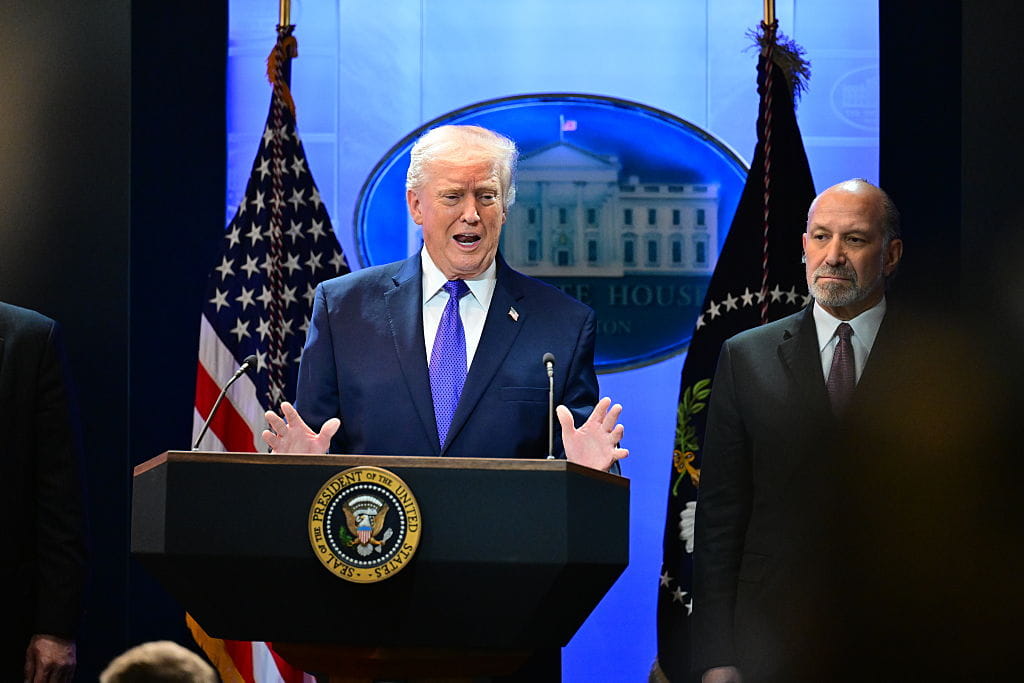
Scott: Reimbursement for tariffs that were never paid? It takes a leftist or government bureaucrat to make sense of that. One can’t be reimbursed for an outlay they never made. What about the rest? Who knows? The Court’s opinion did not address the issue at all. At a White House press conference after the Court released this opinion on Friday afternoon, President Trump mentioned the point with exasperation:
“They take months and months to write an opinion and they don’t even discuss that point. We’ve taken in hundreds of billions of dollars, not millions, hundreds of billions of dollars. And so I said, well, what happens to all the money that we took in? It wasn’t discussed.
Under what terms must the country return taxes collected in violation of the law? The idea that the Court can decide this issue without the benefit of full briefing after a lower court trial and subsequent appeal is not a strong one for this lawyer. Nothing is stopping the administration from simply making a massive effort to return the money it took from people in violation of the Constitution, though that seems most unlikely.
Mark: President Trump declared at his presser that he was raising tariffs under several different authorizing vehicles elsewhere in the federal law. It seems to me that he took what was essentially a roadmap courtesy of Justice Brett Kavanaugh in his dissent and decided, why not run with it.
Scott: Perhaps – or that was a plan the administration had ready to implement in reaction to a defeat here. And, Justice Roberts mentions the issue raised by the defense and offers a reply. He wrote in a footnote:
“The principal dissent surmises that the President could impose ‘most if not all’ of the tariffs at issue under statutes other than IEEPA. The cited statutes contain various combinations of procedural prerequisites, required agency determinations, and limits on the duration, amount, and scope of the tariffs they authorize. We do not speculate on hypothetical cases not before us.”
Dissent in the Ranks
Mark: I was surprised that Justice Amy Coney Barrett sided with the majority here. Especially based on her questioning during oral arguments last year. She asked just how much of a mess any form of reimbursement would be, expressing a credulity that it could even be done. Did you see this coming?
Scott: No, Mark, I wasn’t surprised, because I don’t think the two issues are closely related. Is it terribly cumbersome, and perhaps even impossible, to return all the tariffs collected? Sure! And I struggle to see how that can serve as a legal basis for deciding the underlying case. When the Supreme Court accepts a case, they publish a question they expect to answer. In this case, the question presented is simply “Whether IEEPA authorizes the President to impose tariffs.” If the government demanded and took money without legal right, the challenges to returning it doesn’t determine whether it was unconstitutional in the first place.
Mark: I think everyone basically has two questions on their minds right now. What is likely to happen with the renewed tariffs? And does yesterday’s ruling make it harder for potential plaintiffs to challenge now?
Scott: President Trump has already imposed a new 10% tariff under other authorizing language (unless and until successfully challenged).
Mark: Will lawsuits against the new tariffs, expected to start in three days, begin pretty much immediately?
Scott: Yes. There will be a stampede to the courts, given the money and attention the issue commands. The only prediction I am comfortable making is that any action the administration takes will be challenged in court. At least the attorneys can look forward to favorable economic conditions for a while.
Mark: It seems to me, Scott, that this ruling is the beginning of a battle rather than the end of one, which is unusual in Supreme Court cases. Why do you suppose that is?
Scott: I understand your question and get the same feeling, but I don’t quite understand why. President Trump seemed especially strident in his press conference, calling Justice Barrett and Justice Neil Gorsuch both an embarrassment to their families. And those in the room reported that, when the Chief Justice issued the opinion, he seemed to go out of his way to signal that he did not wish to antagonize the administration.
Perhaps because the administration was corrected not via establishment messaging and argument, but the opposite? It’s a bad look to be called out for essentially stealing money from Americans who bought imports from certain countries. I’ll look forward to more about that from keen political analysts. For me, the principal takeaway is that the Constitution jealously guards the people’s liberty, which is cause for celebration, not ire.